The banknotes in pictures


The Colonial Legacy and Its Contradictions (1788-1910)
The Monetary Challenges of Penal Colonisation
Australia's monetary history begins in unique circumstances: the creation of a penal colony at the opposite end of the world from what Europeans regarded as the civilised world in 1788. This exceptional situation generates unprecedented monetary challenges that colonial authorities must resolve through innovation and improvisation.
Captain Arthur Phillip, the first governor of New South Wales, faces a chronic shortage of coins. The few Spanish and British coins that arrived with the First Fleet prove wholly insufficient for an emerging economy. This situation prompts monetary experiments remarkable for their time.
The most famous innovation remains the "Holey Dollars" of 1813. Governor Lachlan Macquarie has the centres cut out of Spanish dollars to create two coins: the pierced "dollar", worth 5 shillings, and the "dump" (the cut-out centre), worth 15 pence. This ingenious solution instantly doubles the colonial currency stock while preventing coins from being exported.
Meanwhile, a system of payment in rum develops spontaneously. Officers of the New South Wales Corps, nicknamed the "Rum Corps", use alcohol as a medium of exchange, creating a parallel economy that challenges colonial authority. This anomalous situation illustrates the difficulties of transplanting European monetary systems into an extreme colonial setting.
The Era of Private Banks and the Gold Rush
The arrival of the first free settlers in the 1820s gradually transforms Australia's economy. The Bank of New South Wales (1817), the first colonial bank, introduces banknotes and modernises commercial transactions. This pioneering institution adapts British banking practices to Australian realities.
The discovery of gold in 1851 revolutionises Australia's economy and tests its emerging monetary system. Within a few years, the population doubles, a subsistence economy becomes a market economy and enormous quantities of gold flow into world markets. This rush transforms Australia from a peripheral economy into a significant player in the global economy.
The goldfields generate unprecedented monetary challenges. Miners pay in gold dust, traders develop sophisticated weighing systems and private banks proliferate to finance this expanding economy. Victoria and New South Wales establish their own Royal Mints to turn local gold into British sovereigns.
This period also sees the first debates about Australia's monetary identity. Some economists advocate a distinctly Australian monetary system, while colonial authorities remain loyal to the British system. These tensions foreshadow future debates over monetary emancipation.
Federation and Monetary Unification (1901-1939)
The Creation of the Commonwealth and Its Monetary Challenges
The Australian federation of 1901 inherits a complex monetary landscape. Each colony has developed its own banking system, commercial practices and financial relationships with London. Monetary unification becomes a national priority for the new Commonwealth of Australia.
The Australian Constitution grants the federal government exclusive monetary powers, but practical implementation proves more complex. The Currency Act of 1910 establishes the Australian pound as the national currency while maintaining strict parity with sterling. This decision reflects continued economic dependence on Britain.
Labour Prime Minister Andrew Fisher creates the Commonwealth Bank in 1910, Australia's first public banking institution. Led by Denison Miller, this rudimentary central bank aims to reduce dependence on private banks and assert the Commonwealth's emerging monetary sovereignty.
The First World War tests this young institution. Australia finances much of its war effort by issuing Commonwealth bonds and expanding bank credit. This experience reveals the possibilities and limits of semi-autonomous monetary policy within the British Empire.
1910 : Currency Act and creation of the Commonwealth Bank
1914-1918 : Financing the war effort
1924 : Temporary abandonment of the gold standard
1931 : Devaluation of the Australian pound
1959 : Creation of the Reserve Bank of Australia
The Interwar Years: Towards Monetary Autonomy
The 1920s see growing tensions between British orthodoxy and Australian pragmatism. The deflationary policy imposed by London to maintain gold parity conflicts with the Australian economy's development needs. These tensions fuel a growing debate over monetary autonomy.
The Great Depression accelerates this development. In January 1931, Australia unilaterally devalues its pound by 25% against sterling, becoming the first Dominion to break imperial monetary parity. Taken by the Scullin government under pressure from Jack Lang (Premier of New South Wales), this bold decision marks a historic turning point.
Although controversial, this devaluation proves economically beneficial. Australian exports regain competitiveness, the economy emerges from depression faster than Britain's and confidence in national economic management grows. This successful experience legitimises the idea of a distinctly Australian monetary policy.
Institutional innovation accompanies this development. The Commonwealth Bank gradually develops its central banking functions, establishes direct relationships with other central banks and begins designing monetary policy suited to Australian economic cycles rather than solely to London's requirements.
The Second World War and National Assertion (1939-1960)
The War Economy and Monetary Innovation
The Second World War accelerates Australia's monetary emancipation. Unlike in 1914, Australia enters the war with mature financial institutions and proven experience in autonomous monetary management. This preparation enables remarkably effective economic mobilisation.
Ben Chifley, Treasurer and later Prime Minister, orchestrates an innovative economic policy combining price controls, compulsory saving and controlled monetary expansion. Adapted from the American New Deal to Australian circumstances, these techniques maintain stability while financing a considerable war effort.
The most remarkable innovation remains Australia's "war bonds" system. Marketed extensively to the population, these securities finance 40% of the war effort while absorbing excess savings. This public financing campaign simultaneously strengthens public finances and national identification with the Australian economy.
Wartime economic agreements with the United States transform Australia's international monetary relations. Lend-lease, American military purchases and the establishment of US bases create massive financial flows in US dollars, reducing traditional dependence on London.
The Post-War Period and Institutional Modernisation
The post-war period consolidates Australia's monetary autonomy with the creation of the Reserve Bank of Australia (RBA) in 1959. Led by Robert Menzies, this reform definitively separates central banking functions from the Commonwealth Bank's commercial banking activities.
Nugget Coombs, the RBA's first governor (1960-1968), establishes the doctrinal foundations of modern Australian monetary policy. Combining rigorous economic analysis with political pragmatism, his approach has a lasting influence on the culture of Australia's central bank.
This period also sees growing discussion of monetary modernisation. The pound-shilling-penny system, inherited from the colonial era, appears increasingly anachronistic in a modern economy. Preparatory studies for decimalisation begin in the early 1960s.
International monetary relationships gradually diversify. Australia develops growing financial ties with the United States and Japan, inevitably reducing the relative importance of its links with London. This geoeconomic development prepares the future monetary transition.
A closer look at the banknotes
The C-Day Revolution: Birth of the Australian Dollar (1966)
Preparing for Decimalisation
The decision to decimalise Australian currency and adopt the "dollar" reveals a deliberate desire for modernisation and cultural emancipation. Although a well-known Anglophile, Robert Menzies supports the project out of economic pragmatism, recognising the colonial system's obsolescence.
The Currency and Banking Act of 1963 officially launches the process. A specialist commission led by Sir Walter Scott studies every technical detail: the new currency's name, the conversion rate, coin and banknote designs and the logistics of replacement. This meticulous preparation guarantees the operation's success.
The choice of name prompts passionate debate. "Austral", "Emu" and "Boomerang" are considered before "Dollar" prevails for its simplicity and international recognition. This decision symbolically marks Australia's alignment with modern monetary standards rather than colonial traditions.
The public information campaign, organised with remarkable care, prepares the population for this radical transformation. The slogan "C-Day is coming" and the characters "Dollar Bill" and "Dollar Doll" familiarise Australians with their future currency. This public education effort foreshadows modern institutional communication techniques.
Implementation and Its Challenges
On 14 February 1966, Australia switches entirely to the Australian dollar at a rate of 2 dollars = 1 pound. This massive conversion mobilises all the resources of banking, public administration and commerce. The first few days reveal some difficulties adjusting, but the economy as a whole adapts remarkably quickly.
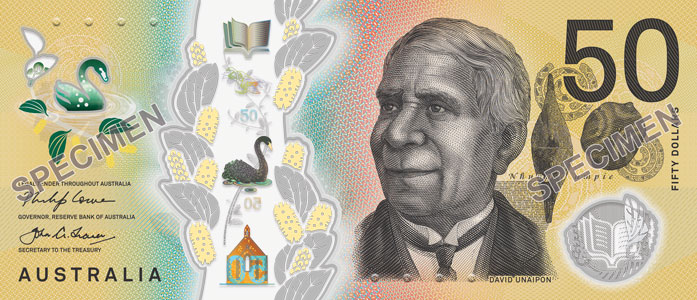
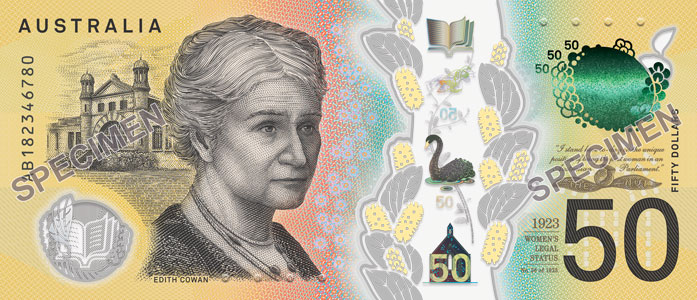
Technical innovation accompanies this monetary revolution. The new banknotes, printed by Note Printing Australia, incorporate security features advanced for their time. Designed by Stuart Devlin, the coins combine traditional Australian symbols (kangaroo and echidna) with contemporary aesthetics.
The Australian dollar's first years coincide with exceptional economic growth. The mining boom of the 1960s, mass immigration and increasing integration into the Asian economy create a favourable environment for the new currency. These fortunate circumstances facilitate public acceptance of the change.
The psychological impact of decimalisation extends beyond technical matters. Adopting the dollar symbolises Australia's entry into modernity and its gradual emancipation from British tutelage. This monetary transformation accompanies and accelerates the country's cultural and political evolution.
Contemporary Development: Towards a Global Currency (1970-2024)
Liberalisation and the Floating Exchange Rate
The abandonment of Bretton Woods in 1971 frees Australia from the constraint of a fixed exchange rate with sterling. Initially imposed by circumstances, this development quickly becomes an opportunity to develop a fully autonomous monetary policy. The Australian dollar gradually finds its place in the international monetary system.
In the 1980s, Bob Hawke and Paul Keating orchestrate revolutionary financial liberalisation. Banking deregulation (1983), capital account liberalisation (1984) and the adoption of a floating exchange rate (1983) radically transform Australia's monetary environment. Initially controversial, these reforms prove decisive for economic modernisation.
RBA governor Bernie Fraser (1989-1996) manages this delicate transition to an open economy. His pragmatic monetary policy, combining anti-inflation discipline with support for growth, establishes the Australian dollar's emerging international credibility. This balanced approach inspires other emerging central banks.
The innovation of inflation targeting (1993), adopted alongside New Zealand, revolutionises Australian monetary policy. Ian Macfarlane (1996-2006) refines the system, making Australia a global model of modern monetary management. This technical expertise strengthens the AUD's international appeal.
Asian Integration and Globalisation
Asian economic growth fundamentally transforms the Australian dollar's environment. Japan's emergence (1970s-1980s), followed by China's (1990s-2000s), as major trading partners creates structural demand for the AUD linked to commodity exports.
Glenn Stevens (2006-2016), governor during the global financial crisis, demonstrates the resilience of Australia's monetary system. Australia avoids recession, maintains growth and preserves financial stability. This exceptional performance considerably strengthens the AUD's international appeal as a regional safe haven.
Technological innovation simultaneously revolutionises currency circulation. The introduction of polymer banknotes (1988), an Australian invention, inspires many countries. This technological lead reinforces the Australian monetary system's modern image and generates significant export revenue through Note Printing Australia.
Philip Lowe (2016-2023) faces contemporary challenges: historically low interest rates, property bubbles and Sino-American geopolitical pressures. His prudent management maintains the delicate balance between supporting growth and financial stability, confirming the RBA's institutional maturity.
| Period | RBA Governor | Major Innovation | AUD Performance |
|---|---|---|---|
| 1960-1968 | Coombs | Creation of the RBA | Pre-decimal stability |
| 1983-1989 | Johnston | Floating exchange rate | Initial volatility |
| 1996-2006 | Macfarlane | Inflation targeting | Successful stabilisation |
| 2006-2016 | Stevens | Crisis management | Exceptional resilience |
Economic Position and Contemporary Challenges
The AUD as a Regional Reserve Currency
Today, the Australian dollar occupies a unique position as the leading developed-economy "commodity currency". Accounting for around 1.8% of global reserves and 6.8% of daily foreign exchange transactions, the AUD enjoys remarkable liquidity for a medium-sized economy such as Australia (the world's 13th-largest GDP).
This specialisation has advantages and disadvantages. The AUD benefits from commodity supercycles, reaching parity with the USD in 2010-2012. Conversely, falling commodity prices (2014-2016) severely penalise the currency. This structural volatility complicates monetary management but attracts investors seeking exposure to commodities.
Regional financial integration strengthens the AUD's role in Asia-Pacific. Currency swap agreements with China, Japan and South Korea position Australia as an alternative regional financial hub to Hong Kong and Singapore. This "middle power" strategy skilfully draws on Australia's strengths.
Michele Bullock, the RBA's first female governor (2023-), faces the challenges of the 21st century: post-COVID inflation, Sino-American geopolitical tensions and the energy transition. Her balanced management maintains international confidence in the AUD despite a complex geopolitical environment.
Future Innovations and Adaptations
The RBA actively explores central bank digital currencies (CBDCs), collaborating with other central banks through Project "Dunbar". This research aims to maintain monetary sovereignty in the face of private cryptocurrencies and initiatives by other central banks.
The energy transition gradually transforms the AUD's economic base. From a coal-exporting country, Australia evolves towards an economy based on green hydrogen and critical minerals (lithium and rare earths). This transformation could fundamentally alter the factors determining the Australian dollar's value.
Australian fintech innovation, driven by companies such as Afterpay and digital neobanks, revolutionises domestic monetary practices. Exported internationally, these innovations strengthen the Australian financial system's influence and the AUD's appeal for technology investment.
Conclusion: Exemplary Modernisation
The Australian dollar's history, from Macquarie's "Holey Dollars" to the contemporary CBDC project, illustrates a remarkable capacity for modernisation and adaptation. The transformation on 14 February 1966 from an archaic colonial system into a modern, respected currency remains one of contemporary monetary history's most spectacular successes.
This evolution demonstrates enduring Australian qualities: institutional pragmatism, innovative capacity and adaptability to economic realities. Forged during the colonial experience and then affirmed through gradual independence, these strengths continue to characterise contemporary management of the Australian dollar.
Today, the AUD faces the challenges of the 21st century with solid foundations built over sixty years of modern monetary experience. Its role as a developed-economy "commodity currency", its position as a regional financial hub and its capacity for technological innovation place it in a strong position for future economic transformations.
This article draws on the editorial collection supplied in 2025. Figures and descriptions should be read in their original context. About the content