The banknotes in pictures
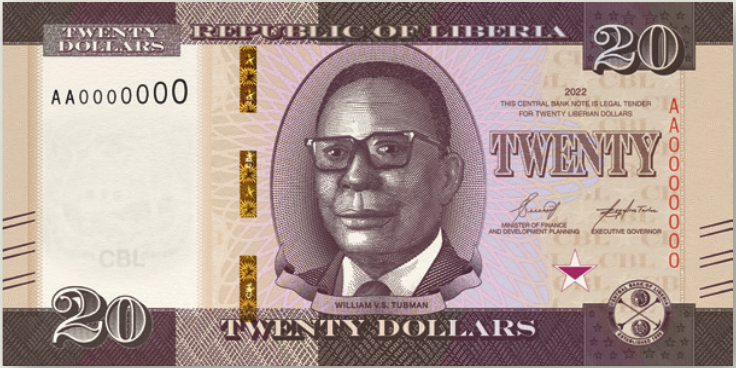
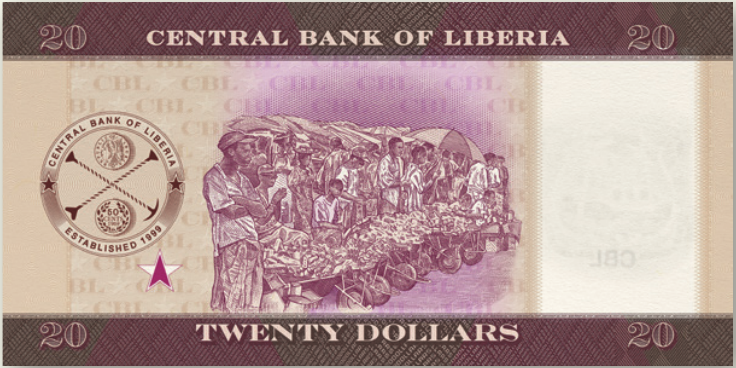
A Unique Beginning: The Birth of a Nation of Freedom (1822-1847)
The American Colonization Society and the Dream of Freedom
Liberia's economic history begins with the revolutionary initiative of the American Colonization Society (ACS), founded in 1816 by white American philanthropists and free Black Americans to establish a colony for emancipated people in West Africa. This unique social experiment aimed to offer freed slaves and free Black Americans an alternative to the systemic discrimination they faced in the post-revolutionary United States.
The first settlers, who landed on Providence Island (the future Monrovia) on 7 January 1822, brought with them American institutions, technologies and, above all, the American monetary system. This institutional transplantation immediately created a hybrid economy combining American models with African realities, foreshadowing the enduring characteristics of Liberian development.
Although these African American pioneers had experienced the oppression of slavery, they nevertheless possessed Western technical and institutional training that enabled them to develop a modern economy rapidly on the African coast. This unique synthesis of experience of oppression and mastery of modern techniques characterised the emerging Liberian economic identity.
The early colonial economy rested on tropical agriculture (coffee, sugar cane and rice), trade with inland tribes and, above all, privileged commercial links with the United States. This Atlantic economic orientation fundamentally distinguished Liberia from other African economies traditionally oriented towards trans-Saharan or Indian Ocean trade.
Early Independence and the Creation of a Currency
The declaration of independence of 26 July 1847, drafted by Hilary Teage on the model of the American Declaration of 1776, was immediately accompanied by the creation of the Liberian dollar as an assertion of monetary sovereignty. This simultaneous achievement of political independence and monetary autonomy, rare in African history, reflected the exceptional institutional maturity of the Americo-Liberian leaders.
Joseph Jenkins Roberts, the first president and a former slave who became a prosperous businessman in Virginia, intuitively understood the importance of currency as a symbol of national identity. The immediate creation of the LRD asserted this new Black republic's equal dignity with the United States while maintaining privileged economic ties.
The first Liberian banknotes, printed in the United States with imagery combining American symbols (stars and stripes) and African ones (palm trees and elephants), projected the image of a bicultural nation fully embracing its dual identity. This unique visual synthesis reflected the originality of the Liberian experience in the context of 19th-century Africa.
Immediate coexistence with the US dollar, freely accepted in all transactions, created from the outset the dual monetary system that still characterises Liberia's economy today. This monetary flexibility, dictated by historical links with the United States, facilitated trade while preserving symbolic national autonomy.
1822 : First settlers on Providence Island (Monrovia)
1847 : Independence and creation of the Liberian dollar
1926 : Firestone concession (rubber)
1989-2003 : Civil wars
2018 : Modern monetary reforms
The Americo-Liberian Golden Age and the Rent-Based Economy (1847-1980)
The Oligarchic Republic and Economic Development
The independent Republic of Liberia quickly developed a modern economy under the direction of the Americo-Liberian elite, which, although representing less than 5% of the total population, monopolised political and economic power for more than a century. This enlightened oligarchy developed a sophisticated economic strategy based on exploiting natural resources, international trade and attracting American investment.
This period saw the emergence of the major economic concessions that durably structured Liberia's economy: Firestone Plantations Company (1926) for rubber, Republic Steel Corporation for iron ore and various forestry companies for tropical timber extraction. These investments transformed Liberia into a modern rent-based economy integrated into global value chains.
The dual monetary system gradually consolidated, with the Liberian dollar used for domestic and local transactions, while the US dollar dominated international trade and major commercial transactions. This monetary segmentation facilitated international economic integration while preserving a degree of domestic monetary autonomy.
This oligarchic economy generated relative prosperity that financed the modernisation of Monrovia, the development of an advanced education system (the University of Liberia was founded in 1862) and the emergence of an educated Americo-Liberian middle class. This accumulation of human capital remains one of Liberia's enduring development assets.
The Rubber Economy and Modern Transformation
The signing of the agreement with Firestone in 1926, granting 1 million acres for 99 years, radically transformed Liberia's economy by creating the world's largest rubber plantation. This industrial agricultural revolution positioned Liberia as a strategic supplier of natural rubber to the rapidly expanding American automotive industry.
This industrialisation of agriculture generated substantial tax revenues that financed the modernisation of national infrastructure: roads, ports, telecommunications and public services. These investments created the conditions for a modern economy that distinguished Liberia from most other African territories of the time.
Iron ore extraction, developed after 1945 in the Nimba Mountains, diversified the export economy and generated additional revenues that strengthened the Liberian dollar's stability. This diversification of export resources reduced vulnerability to fluctuations in the rubber market and consolidated the country's external position.
This economic prosperity attracted complementary investment in processing industries (an oil refinery, textile factories and food processing), creating urban jobs and developing an emerging manufacturing sector. This industrial diversification laid the foundations for a more sophisticated economy.
The Era of Democratisation and Social Tensions (1980-1989)
The 1980 Coup and the Economic Revolution
Sergeant Samuel Doe's coup on 12 April 1980, which violently overturned 133 years of Americo-Liberian domination, triggered an economic and social revolution that radically transformed the nature of the Liberian state. This historic rupture, the first seizure of power by the indigenous majority, challenged the foundations of the rent-based economy inherited from the oligarchic era.
The new indigenous military elite, lacking experience in modern economic management, developed a populist approach to wealth redistribution that gradually destabilised macroeconomic balances. This abrupt transfer of power was accompanied by the flight of Americo-Liberian capital and skills to the United States.
The Doe regime initially benefited from American support in the context of the Cold War, temporarily stabilising the economy and maintaining the convertibility of the Liberian dollar. This geopolitical protection prevented immediate economic collapse despite management errors and growing corruption.
However, this period saw the development of a predatory economy in which natural resources (diamonds, gold and timber) financed the enrichment of new elites at the expense of productive investment. This drift towards kleptocracy gradually undermined the foundations of economic prosperity and prepared the ground for future conflicts.
Economic Deterioration and the First Signs of Crisis
The 1980s saw Liberia's economic situation gradually deteriorate under the effects of poor governance, systemic corruption and unfavourable movements in world commodity prices. This economic deterioration was reflected in the weakening Liberian dollar, which gradually lost its informal parity with the US dollar.
External debt soared to finance unproductive spending and prestige projects, reaching unsustainable levels that compromised macroeconomic stability. This fiscal deterioration forced the government to officially devalue the LRD and accept the first IMF structural adjustment programmes.
Economic growth stopped and then turned negative, urban unemployment soared and social inequalities worsened dramatically. This deterioration in living conditions fuelled ethnic tensions and prepared the social explosion that would lead to civil wars.
The emerging political opposition, led by Liberian intellectuals educated in the United States, denounced corruption and demanded genuine democratisation. This growing dissent destabilised the regime and contributed to economic instability through the political uncertainty it generated.
| Period | Regime | LRD/USD Rate | GDP/capita (USD) |
|---|---|---|---|
| 1970 | Americo-Liberian | 1:1 | 280 |
| 1985 | Samuel Doe | 2:1 | 450 |
| 1990 | Civil war | 5:1 | 180 |
| 2005 | Post-conflict | 65:1 | 160 |
The Devastation of the Civil Wars (1989-2003)
State Collapse and the War Economy
Charles Taylor's invasion from Côte d'Ivoire on 24 December 1989 plunged Liberia into fourteen years of civil war that completely destroyed the modern economy and turned the Liberian dollar into a depreciated, unstable wartime currency. Within a few years, this national tragedy wiped out the achievements of 150 years of economic and social development.
The collapse of the central state led to the disintegration of the formal monetary system: the Central Bank of Liberia ceased to function, commercial banks closed and the Liberian dollar lost all credibility. This destruction of the financial system forced people to return to barter and foreign currencies for economic survival.
The war economy turned Liberia's natural resources into "conflict minerals": diamonds, gold and tropical timber financed arms purchases and fuelled violence. This systematic plundering of national wealth enriched warlords while dramatically impoverishing the civilian population.
Infrastructure destruction was total: roads, ports, airports and industrial facilities were destroyed or abandoned. This infrastructural regression returned the country to a pre-modern level of development and durably compromised its prospects for economic reconstruction.
Monetary Survival amid Chaos
Despite institutional collapse, the Liberian dollar paradoxically survived as a currency of necessity in areas controlled by different factions. This monetary persistence, albeit under degraded conditions, demonstrated the population's attachment to the currency as a symbol of Liberian national identity.
International humanitarian organisations developed parallel economic systems using mainly the US dollar and creating an aid economy that maintained a minimum level of economic activity. This humanitarian economy saved hundreds of thousands of Liberians from famine but intensified de facto dollarisation.
The informal economy expanded massively as a survival mechanism: border markets, subsistence trade and an economy of resourcefulness allowed people to survive despite the collapse of formal structures. This popular economic resilience represents valuable social capital for future reconstruction.
The Liberian diaspora, mainly settled in the United States (more than 500,000 people), developed informal money transfer networks that supported the survival of families who remained in the country. These diaspora flows, denominated in US dollars, reinforced dollarisation but maintained vital economic links.
Post-Conflict Rebirth (2003-2024)
Institutional and Monetary Reconstruction
The Comprehensive Peace Agreement of 2003 and the election of Ellen Johnson Sirleaf in 2005 — Africa's first female president — marked the beginning of remarkable institutional and economic reconstruction that gradually restored the Liberian dollar's credibility. This post-conflict transition, strongly supported by the international community, succeeded in stabilising the country and reviving the economy.
The reconstitution of the Central Bank of Liberia, with technical assistance from the IMF and the US Federal Reserve, gradually re-established orthodox monetary management and institutional credibility. This monetary reconstruction rested on strict international standards and benefited from the expertise of the US-educated Liberian diaspora.
Post-conflict monetary policy prioritised price stabilisation and the restoration of confidence in the banking system. This conservative approach, although limiting short-term growth, allowed the gradual rebuilding of the foundations of a stable modern economy.
This period also saw significant financial system modernisation through the introduction of modern banking technologies, development of electronic payments and improvements in financial supervision. These innovations facilitated financial inclusion and improved the efficiency of the monetary system.
Modern Monetary Coexistence
The contemporary Liberian economy maintains a unique dual monetary system in which the Liberian and US dollars coexist within a sophisticated functional division. The LRD dominates local transactions, public-sector salaries and rural trade, while the USD prevails in major transactions, international trade and savings.
Although complex to manage, this monetary duality offers remarkable flexibility, combining stability (through the USD) with monetary autonomy (through the LRD). This creative synthesis allows Liberia to preserve monetary sovereignty while benefiting from US dollar stability.
The challenges of this coexistence include managing differential inflation, the complexity of transactions involving two currencies and the difficulty of conducting autonomous monetary policy. These constraints require particularly sophisticated macroeconomic management and close coordination with the United States.
This period also saw the development of an emerging digital economy through the expansion of mobile phone services and electronic payments. These technological innovations facilitate transactions involving both currencies and improve the efficiency of the dual payment system.
A closer look at the banknotes
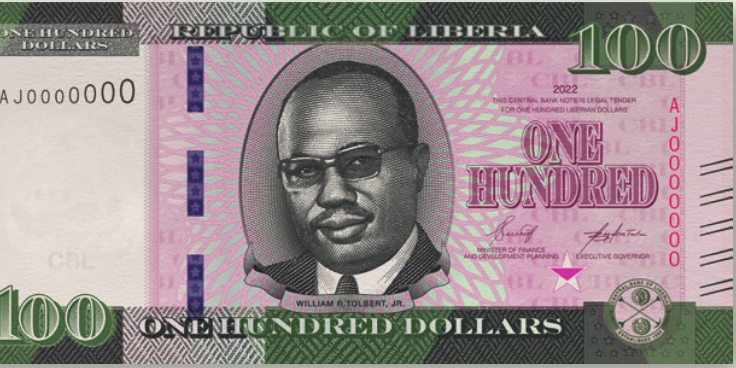
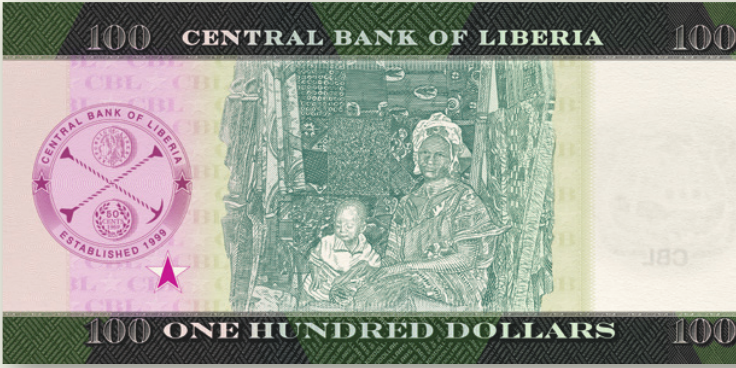
Contemporary Liberia: Challenges and Opportunities
The Post-Ebola Economy and Resilience
The Ebola epidemic of 2014-2016, which killed more than 4,800 Liberians and paralysed the economy for two years, once again tested the resilience of Liberia's monetary system. This major health crisis caused a severe recession (-1.6% in 2014, -0.7% in 2015) but also revealed the institutional strength acquired since post-conflict reconstruction.
Management of this crisis demonstrated the maturity of Liberian institutions: monetary stability was maintained, coordination with international partners was effective and democracy was preserved despite the state of emergency. This institutional resilience strengthened the international credibility of Liberia and its currency.
Post-Ebola reconstruction, extensively financed by international aid, modernised the healthcare system and strengthened state capacity. These investments improved human capital and created the conditions for more sustainable and inclusive economic growth.
This period also brought recognition of the need to diversify the economy beyond traditional natural resources. This strategy prioritises the development of commercial agriculture, services and processing industries to create an economy more resilient to external shocks.
Natural Wealth and Development Potential
Contemporary Liberia possesses exceptional natural resource potential that positions the country favourably for the decades ahead. With West Africa's second-largest tropical forest (45% of its territory), substantial mineral deposits (iron ore, gold and diamonds) and enormous agricultural potential, the country has the assets needed for sustainable development.
The mining industry is experiencing a renaissance with ArcelorMittal's resumption of iron ore extraction and exploration of new gold deposits. These activities generate growing tax revenues and jobs that support the Liberian dollar's stability and finance public investment.
Agriculture, which employs 70% of the workforce, benefits from investment in modernising techniques and improving value chains. The development of commercial agriculture (oil palm, cocoa and coffee) generates export revenues that diversify the economy beyond mining.
The forestry sector is developing a sustainable approach to harvesting that makes use of tropical species while preserving biodiversity. This responsible forest management attracts international investment and generates environmental certification revenues that complement traditional export earnings.
Contemporary Monetary Innovations and Challenges
Modernising the Financial System
Liberia's financial system is undergoing accelerated modernisation driven by the adoption of digital technologies and improvements in banking regulation. This transformation facilitates management of the dual monetary system and improves financial inclusion in a geographically dispersed country.
The development of mobile banking services is revolutionising access to financial services in traditionally underbanked rural areas. These innovations enable rapid money transfers between urban and rural areas, facilitate commercial payments and simplify the management of the two national currencies.
The Central Bank of Liberia is exploring the issuance of a central bank digital currency (CBDC) to modernise the payment system and facilitate coexistence of the two currencies. This technological innovation could revolutionise Liberian monetary management and serve as a model for other dual-currency economies.
Fintech partnerships with American and Ghanaian companies accelerate digital transformation while reducing development costs. This cross-border technological cooperation illustrates the advantages of Liberia's unique geopolitical position between the United States and West Africa.
Improved banking supervision, with assistance from the US Federal Reserve and the BCEAO, strengthens the stability of the dual financial system. This regulatory modernisation attracts international banking investment and improves confidence in Liberia's monetary system.
Governance Challenges and Institutional Reforms
Contemporary Liberian economic governance faces persistent challenges of corruption, institutional weakness and natural resource management that limit development potential and affect the national currency's credibility. These structural challenges require deep reforms to guarantee sustainable growth.
The election of George Weah in 2018, a former international footballer with no previous political experience, tests the maturity of Liberia's democratic institutions. His presidency reveals tensions between popular expectations of radical change and the technical constraints of modern economic management.
The economic reforms undertaken include modernising tax administration, improving transparency in natural resource exploitation and strengthening state capacity. These reforms, supported by international partners, aim to improve governance and attract investment.
Liberia's young population (60% is under 25) represents both a challenge and a major opportunity. These dynamic demographics require massive job creation but also offer considerable potential for economic and social transformation if supported by adequate education and training.
Regional Integration and International Positioning
Liberia in the West African Economy
Liberia is gradually developing its integration into the West African economy while preserving its historically privileged ties with the United States. This dual geopolitical affiliation provides a unique asset for diversifying economic partnerships and stabilising the national currency.
Participation in ECOWAS initiatives facilitates regional trade and reduces dependence on traditional US and European markets. This geographical diversification of trade strengthens the economy's resilience to shocks specific to particular regions.
Regional infrastructure projects (the Monrovia-Freetown-Conakry road and electricity interconnections) improve Liberia's connectivity and create new commercial opportunities. These investments generate transit revenues and position the country as a regional logistics hub.
Nevertheless, this regional integration raises questions about the future of Liberia's dual monetary system in relation to West African monetary integration plans. Coexistence between the LRD/USD system and the prospect of adopting the Eco (the future ECOWAS single currency) will require complex strategic choices.
Special Relations with the United States
Liberian-American economic relations remain exceptionally privileged, founded on unique historical links and reinforced by the Liberian diaspora in the United States (more than 250,000 people). This special relationship is a pillar of stability for Liberia's economy and currency.
The United States remains Liberia's leading trading partner, source of investment and provider of development aid. Although this economic dependence entails risks, it also offers valuable stability and predictability for national economic planning.
American monetary cooperation, through Federal Reserve technical assistance and acceptance of the dual system, facilitates Liberian macroeconomic management. This unique cooperation illustrates the persistence of historical ties despite changing geopolitical contexts.
This privileged relationship also facilitates access to international financial markets and improves Liberia's credit rating. This international credibility, acquired through American backing, reduces financing costs and facilitates public and private investment.
| Indicator | 2005 | 2015 | 2024 | Change |
|---|---|---|---|---|
| GDP (USD billion) | 0,8 | 2,1 | 4,2 | ×5,25 |
| GDP per capita (USD) | 160 | 460 | 810 | ×5,06 |
| Exchange rate (LRD/USD) | 65 | 85 | 190 | -66% |
| Annual inflation | 6,9% | 8,0% | 9,8% | +42% |
Future Prospects: Towards a Sustainable Modern Economy
Vision 2030 and Structural Transformations
The national "Pro-Poor Agenda for Prosperity and Development" (PAPD) 2018-2023 strategy and its extension towards 2030 set out an ambitious vision of structural economic transformation aimed at diversifying the economy, reducing poverty and modernising institutions. This ambition requires deep reforms and massive investment in human capital and infrastructure.
This strategy prioritises the development of commercial agriculture, processing industries and modern services to create skilled jobs and reduce dependence on raw commodity exports. This economic diversification aims to stabilise revenues and strengthen the resilience of the national currency.
Investment in technical and higher education is a national priority to develop the skills needed for the modern economy. This development of human capital, financed by natural resource revenues and international aid, prepares the economic transformation beyond resource dependence.
This vision relies on democratic governance and institutional transparency to attract international investment and build domestic confidence. These institutional reforms are essential to successful economic transformation and long-term monetary stability.
Technological Innovation and the Digital Economy
The development of the digital economy offers exceptional opportunities for a country such as Liberia to "skip" stages of traditional development and gain direct access to modern technologies. This strategy of technological "leapfrogging" could revolutionise Liberia's economy and modernise its monetary system.
The expansion of mobile Internet and digital services is transforming traditional sectors: precision agriculture, e-commerce, digital financial services and e-government improve economic efficiency and facilitate social inclusion.
This digital transformation is accompanied by the development of local technical skills through partnerships with American universities and diaspora training. This accumulation of technological human capital positions Liberia to participate in the global digital economy.
Innovation in financial services, particularly mobile payment systems and digital lending platforms, is revolutionising financial inclusion and facilitating management of the dual monetary system. These innovations could serve as a model for other dual-currency economies.
The Liberian Dollar: Symbol of a Unique Identity
Cultural and Political Significance
The Liberian dollar transcends its economic function to become a powerful symbol of Liberian national identity and the unique legacy of freedom that the country represents in Africa. This symbolic weight explains popular attachment to the currency despite its technical weaknesses and coexistence with the US dollar.
This currency embodies the extraordinary history of a people who won their freedom through adversity and built an enduring nation despite every challenge. This dimension of memory and identity in the LRD goes far beyond economic considerations and anchors the currency in Liberia's collective imagination.
Peaceful coexistence with the US dollar also reflects Liberia's capacity for creative synthesis between American heritage and African reality. This unique cultural synthesis, symbolised by the dual monetary system, may be Liberia's most original contribution to world heritage.
This distinctive monetary identity inspires other experiments in monetary coexistence around the world and demonstrates that national autonomy and international integration can be reconciled creatively under certain specific historical and geopolitical conditions.
Lessons for the Global Economy
The Liberian experience offers valuable lessons about the viability of dual monetary systems, the management of small open economies and strategies for preserving monetary autonomy in a globalised world. These lessons resonate particularly with other small nations facing the challenges of monetary sovereignty.
This experience demonstrates that monetary stability depends not only on economic fundamentals but also on political legitimacy, social cohesion and institutional quality. These qualitative factors, often neglected in economic analysis, prove decisive for monetary confidence.
The Liberian case also illustrates the importance of privileged geopolitical relationships for small economies. Although it entails constraints, American backing offers stability and credibility that small nations generally cannot achieve in isolation.
Finally, this experience suggests that monetary innovation can emerge from apparent constraints. Born of historical necessity, the Liberian-American dual system now constitutes an original model studied by other countries facing similar challenges of monetary coexistence.
Conclusion: The Dollar of a Long Tradition of Freedom
The history of the Liberian dollar, from its creation in 1847 to its contemporary position, extraordinarily illustrates the trajectory of a unique nation that has preserved its independence and identity through nearly two centuries of existential challenges. This currency, a symbol of Africa's first Black republic, carries the exceptional legacy of a people who transformed the experience of slavery into a project of freedom and dignity.
The LRD's journey reveals the complexities of African nation-building and the particular challenges facing post-colonial societies, even when they have never formally been colonised. This experience demonstrates that political independence does not automatically guarantee economic prosperity and that monetary stability requires solid institutional and social foundations.
The exceptional resilience of this currency, which survived 14 years of civil war, the Ebola epidemic and multiple political crises, demonstrates the Liberian people's deep attachment to their national identity and democratic institutions. This monetary loyalty, despite every challenge, illustrates the strength of symbolic links between currency and collective identity.
The Liberian-American dual monetary system, unique in the world, offers an original model for reconciling national autonomy with international integration. This creative synthesis demonstrates that geopolitical constraints can be transformed into strategic advantages through intelligent economic diplomacy and pragmatic management of historical legacies.
Today, the Liberian dollar accompanies a nation in transition, striving to make the most of its exceptional natural wealth while building a modern, inclusive and sustainable economy. This ambition, carried by a dynamic young population and a talented diaspora, illustrates the potential for contemporary African renewal when it draws on its own values while opening to the world.
The LRD, currency of the "Land of Freedom", will continue to accompany the Liberian people in their ongoing search for balance between preserving their unique heritage and adapting to the challenges of the 21st century. This distinctive experience, even in its modest scale, offers valuable lessons about possible paths towards authentic African development and the ability of small nations to contribute to the creative diversity of our globalised world.
This article draws on the editorial collection supplied in 2025. Figures and descriptions should be read in their original context. About the content