The banknotes in pictures
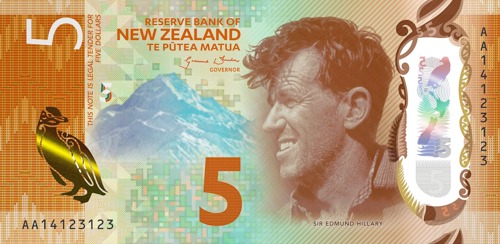
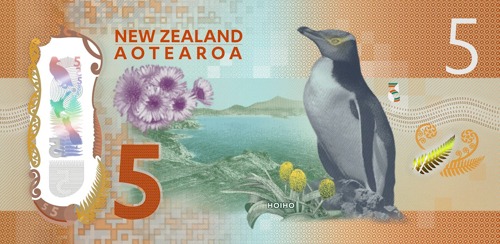
Colonial Origins and Bicultural Society (1840-1914)
The Treaty of Waitangi and the Initial Monetary Challenges
New Zealand's monetary history begins with the Treaty of Waitangi (1840), the founding document that simultaneously establishes British sovereignty and recognises Māori rights. This unique cultural duality profoundly influences the country's monetary development, creating challenges of economic integration unprecedented in the British Empire.
The first colonial decades see European and Māori systems of exchange coexist. Māori traditionally use barter and early forms of money (jade and rare bird feathers), while British settlers attempt to impose the pound-shilling-penny system. This coexistence generates complex informal exchange rates and recurring economic conflicts.
Edward Gibbon Wakefield, a theorist of systematic colonisation, devises an original economic model for New Zealand. His New Zealand Company (1839) organises immigration according to strict economic criteria, aiming to create a balanced society equipped with modern monetary institutions from the outset. This planned approach contrasts with the disorderly colonisation of other territories.
Practical difficulties quickly reveal the limits of these theories. Chronic coin shortages, extreme geographical isolation and the New Zealand Wars (1845-1872) regularly disrupt monetary circulation. Settlers develop pragmatic solutions: merchant notes, municipal vouchers and sophisticated systems of personal credit.
The Otago Gold Rush and Economic Modernisation
The discovery of gold at Gabriel's Gully (1862) radically transforms New Zealand's economy. Within a few years, the South Island's population triples, Dunedin temporarily becomes the country's largest city and enormous quantities of gold flow into world markets. Proportionately more intense than the Californian rush, this gold rush abruptly modernises the colonial monetary system.
The goldfields generate remarkable monetary innovations. Gold escort services, forerunners of modern cash-in-transit services, organise the secure collection and transport of gold to banking centres. Meanwhile, traders develop sophisticated credit systems to finance prospectors' equipment.
Julius Vogel, Prime Minister from 1873 to 1875, uses this gold-fuelled prosperity to finance the colonial era's most ambitious infrastructure programme. His "Great Public Works Policy" plunges the colony into heavy debt but creates the foundations of the modern economy: railways, telegraph lines, ports and a national banking network.
This period sees the emergence of the first distinctively New Zealand financial institutions. The Bank of New Zealand (1861), the first colonial banking institution, adapts British practices to local realities. Its success inspires other regional banks, establishing the foundations of the national banking system.
1861 : Creation of the Bank of New Zealand
1862 : Gold discovered at Gabriel's Gully
1870s : Julius Vogel's infrastructure programme
1893 : First nation to grant women the vote
1907 : Dominion status
Social and Monetary Innovation (1890-1940)
The "Social Laboratory" and Its Monetary Implications
At the end of the 19th century, New Zealand earns a worldwide reputation as a "social laboratory" thanks to the revolutionary reforms of the Liberal government of John Ballance and Richard Seddon. These social innovations—women's suffrage (1893), old-age pensions (1898) and compulsory industrial arbitration (1894)—are accompanied by remarkable monetary experiments.
The Industrial Conciliation and Arbitration Act (1894) creates a unique wage-setting system that profoundly influences monetary policy. By stabilising wage costs, this mechanism facilitates economic forecasting and allows more sophisticated monetary policies than in comparable economies.
Labour Minister William Pember Reeves develops an original economic theory adapted to New Zealand's particular circumstances. His "State Experiments" combine public intervention with market mechanisms, foreshadowing the mixed economic policies of the 20th century. This pragmatic approach leaves a lasting mark on the national economic culture.
Institutional innovation accompanies these social reforms. The creation of the Government Life Insurance Office (1869), Public Trust Office (1872) and Post Office Savings Bank (1876) develops a public financial sector alongside private banks. This public-private duality becomes an enduring feature of New Zealand's financial system.
The Great Depression and Monetary Innovation
The Great Depression hits New Zealand, a rural economy dependent on exports, particularly hard. Between 1929 and 1933, agricultural prices collapse by 45%, unemployment reaches 12% and the banking system comes close to failure. This crisis catalyses revolutionary thinking about money.
Michael Joseph Savage, leader of the first Labour government (1935), launches an unprecedented programme of economic reforms. The Reserve Bank of New Zealand Act (1933), prepared under the previous government but implemented by Labour, creates the South Pacific's first central bank.
Leslie Lefeaux, the RBNZ's first governor (1934-1940), develops a monetary doctrine suited to New Zealand's circumstances. His expansionary policy, combining controlled devaluation and directed credit, quickly lifts the country out of depression. This successful experience influences emerging Keynesian economic theories.
The most remarkable innovation remains experimentation with "social currency". Several rural communities create local monetary systems to address the shortage of liquidity. Although short-lived, these experiments demonstrate New Zealand's monetary creativity and foreshadow contemporary alternative currencies.
The Second World War and National Assertion (1940-1967)
The War Economy and Monetary Autonomy
The Second World War accelerates New Zealand's monetary emancipation. Unlike in 1914, the country now has an experienced central bank and mature financial institutions. This preparation enables remarkably effective economic mobilisation for a nation of only 1.6 million inhabitants.
Bernard Ashwin, RBNZ governor (1940-1948), orchestrates an innovative wartime monetary policy. Price controls, compulsory saving and rationing maintain monetary stability while financing a proportionately substantial war effort. Adapted to the island economy's circumstances, these techniques inspire other small economies.
Geographical isolation paradoxically becomes a strategic advantage. New Zealand develops import-substitution industries, diversifies its economy and strengthens its monetary autonomy. This relative self-sufficiency facilitates monetary control and prepares post-war reforms.
Wartime agreements with the United States create new monetary flows. American bases, military purchases and lend-lease agreements introduce substantial quantities of US dollars into New Zealand's economy. This early exposure to the American monetary system influences post-war choices.
The Post-War Period and Preparations for Decimalisation
The post-war period consolidates New Zealand's monetary autonomy through the development of monetary policy specifically adapted to national economic cycles. Allan Low (1948-1962), followed by Gerald Wilson (1962-1967), gradually modernises monetary policy instruments.
This period sees the start of discussions about modernising the monetary system. Retaining pounds, shillings and pence appears increasingly anachronistic in a modern economy integrated into international trade. Australia's example in 1966 catalyses this discussion.
Keith Holyoake, Prime Minister from 1960 to 1972, supports monetary modernisation out of economic pragmatism. His decision to adopt a decimal system and the name "dollar" reflects a desire to modernise New Zealand's economy and facilitate trade with non-British partners.
The technical preparations for decimalisation reveal New Zealand's organisational strengths. Created in 1963, the Decimal Currency Board meticulously coordinates every aspect of the transition: the design of new currency, distribution logistics, staff training and a public information campaign.
The Birth of the New Zealand Dollar (1967)
New Zealand's "C-Day", 10 July 1967
On 10 July 1967, New Zealand follows Australia's example by adopting the decimal dollar. Locally nicknamed "C-Day" (Currency Day), this transition proceeds with remarkable efficiency thanks to meticulous preparation and exemplary public cooperation.
The conversion rate—2 dollars = 1 pound—considerably simplifies everyday monetary calculations. Identical to Australia's choice, this standardisation facilitates trans-Tasman trade and forms part of gradual regional economic integration.
James Fletcher, chairman of the Decimal Currency Board, personally supervises this historic operation. Inspired by Australia's experience but adapted to New Zealand's circumstances, his methodical management guarantees a successful transition. The first few days reveal remarkably rapid public adaptation.
The design of the new banknotes and coins reflects New Zealand's emerging identity. The chosen symbols—kiwi, silver fern and tūī—assert a cultural identity distinct from Australia's while departing from purely British imagery. This symbolic development accompanies gradual political emancipation.
The Era of Economic Revolutions (1970-1990)
The Oil Shocks and Monetary Adaptation
The oil shocks of the 1970s severely test New Zealand's young currency. Still largely agricultural and dependent on energy imports, the economy is hit hard by rising oil prices. This vulnerability catalyses deep reflection on monetary and economic policy.
Robert Muldoon, Prime Minister from 1975 to 1984, pursues a controversial interventionist economic policy. His system of price and wage controls, accompanied by accommodative monetary policy, artificially maintains short-term stability but generates growing structural imbalances.
Spencer Russell, RBNZ governor (1967-1977), and later Roderick Deane (1982-1988) struggle to navigate between political constraints and economic necessities. This period reveals the limits of monetary policy subordinated to short-term political objectives.
Inflation reaches worrying levels—more than 15% in the early 1980s—eroding the New Zealand dollar's credibility. This confidence crisis prepares the radical reforms that follow and raises public awareness of the importance of monetary stability.
The Neoliberal Revolution and Douglas's Reforms
The election of David Lange's Labour government in 1984 triggers an unprecedented economic revolution. Finance Minister Roger Douglas launches a radical liberalisation programme that fundamentally transforms New Zealand's economy and revolutionises global monetary policy.
Financial liberalisation (1984-1986) fully deregulates banking, liberalises capital movements and introduces a floating exchange rate. Carried out at a breakneck pace, these reforms create an entirely new monetary environment requiring new policy instruments.
Don Brash, RBNZ governor (1988-2002), inherits this complex situation and revolutionises global monetary policy. His appointment, controversial because of his private-sector background, marks the beginning of a new era for New Zealand's central bank.
The major innovation comes with the Reserve Bank of New Zealand Act of 1989, which introduces the world's first inflation-targeting system. Initially greeted sceptically by the economics profession, this conceptual revolution rapidly transforms international monetary practice.
The Modern Dollar and Continuous Innovation (1990-2024)
The Golden Age of Inflation Targeting
The 1990s-2000s confirm the success of New Zealand's inflation targeting. Under Don Brash and then Alan Bollard (2002-2012), the RBNZ refines this revolutionary system, keeping inflation within its target band while supporting economic growth. This exceptional performance considerably strengthens the NZD's international credibility.
Institutional innovation accompanies this technical success. The Policy Targets Agreement, a public contract between the government and the central bank governor, creates a unique mechanism of democratic accountability. This institutional innovation inspires many other countries seeking to modernise their monetary institutions.
Monetary communication also revolutionises international practice. Quarterly Monetary Policy Statements, the governor's press conferences and the RBNZ's exceptional transparency establish new communication standards for central banks worldwide.
During this period, the NZD acquires an international stature disproportionate to the size of New Zealand's economy. High-quality monetary management, institutional transparency and political stability attract international investors, making the "Kiwi" a reference currency for emerging economies.
| RBNZ Governor | Period | Main Innovation | Inflation Performance |
|---|---|---|---|
| Don Brash | 1988-2002 | Inflation targeting | 15% → 2% |
| Alan Bollard | 2002-2012 | Modern communication | Exceptional stability |
| Graeme Wheeler | 2012-2017 | Macroprudential policy | Target maintained |
| Adrian Orr | 2018-present | Dual mandate, digital innovation | Post-COVID adaptation |
Contemporary Challenges and Continuous Innovation
Adrian Orr, governor since 2018, faces the challenges of the 21st century with New Zealand's traditional spirit of innovation. The introduction of a dual mandate (inflation + employment) in 2019 modernises the monetary policy framework, while the management of the COVID-19 crisis reveals new intervention instruments.
The ultra-accommodative monetary policy adopted during the pandemic—interest rates at 0.25% and a bond-buying programme—protects New Zealand's economy while maintaining international confidence in the NZD. This balanced management confirms the RBNZ's institutional maturity.
Exploration of central bank digital currencies (CBDCs) once again positions New Zealand at the forefront of monetary innovation. The "digital NZD" project aims to maintain monetary sovereignty in the face of private cryptocurrencies and initiatives by other central banks.
Climate policy gradually incorporates monetary concerns. The RBNZ develops climate stress tests for the banking system and studies climate change's impact on monetary policy. This holistic approach inspires other central banks concerned with sustainability.
International Position and Disproportionate Influence
The "Kiwi" on Global Markets
The New Zealand dollar occupies a unique position on international financial markets. Despite the economy's small size (0.25% of global GDP), the NZD accounts for nearly 2% of daily foreign exchange transactions, demonstrating remarkable liquidity and disproportionate appeal.
Several factors explain this popularity: historically high interest rates (carry trade), exceptional institutional quality and remarkable political stability. The "Kiwi" also benefits from its role as a proxy for the Asian economy, with its cycles correlated to Chinese growth through dairy exports.
Monetary innovation continues to attract international attention. Regular reforms of the monetary policy framework, excellent central bank communication and rapid adaptation to new challenges make New Zealand a laboratory watched by central banks worldwide.
This intellectual influence far exceeds the country's economic weight. Former RBNZ governors (Brash, Bollard and Wheeler) regularly advise other central banks, exporting New Zealand's expertise and strengthening the influence of its model.
Future Challenges and Opportunities
The NZD's future depends largely on its ability to maintain its innovative lead in the face of growing challenges. The rise of cryptocurrencies, regional geopolitical change and climate pressures create a complex environment requiring continuous adaptation.
The transition to a low-carbon economy offers unique opportunities. New Zealand, an environmental pioneer, could develop a "green monetary policy" attractive to ESG investors. This specialisation would strengthen the NZD's distinctiveness on international markets.
Regional economic integration through the CPTPP and RCEP agreements gradually transforms the NZD's environment. This growing integration into the Asian economy could make the "Kiwi" a regional reference currency, a remarkable status for an economy of this size.
Conclusion: Constant Innovation by a Small but Great Nation
The New Zealand dollar's history, from colonial experiments to global leadership in monetary policy, vividly illustrates the innovative capacity of a small, pragmatic nation. The invention of inflation targeting, copied by more than thirty central banks, demonstrates that size does not determine monetary influence.
This exceptional journey rests on enduring New Zealand qualities: institutional pragmatism, openness to innovation and the ability to adapt rapidly to change. Forged through colonial experience and then affirmed through gradual independence, these strengths continue to characterise contemporary NZD management.
Today, the "Kiwi" faces the challenges of the 21st century with the same innovative qualities that established its reputation. Its position as a global monetary laboratory, its disproportionate intellectual influence and its continuing adaptability place it in a strong position for future economic transformations, confirming that innovation matters more than size in monetary affairs.
This article draws on the editorial collection supplied in 2025. Figures and descriptions should be read in their original context. About the content