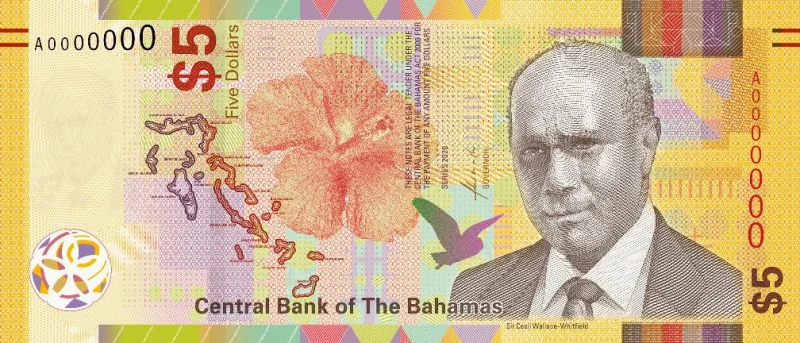
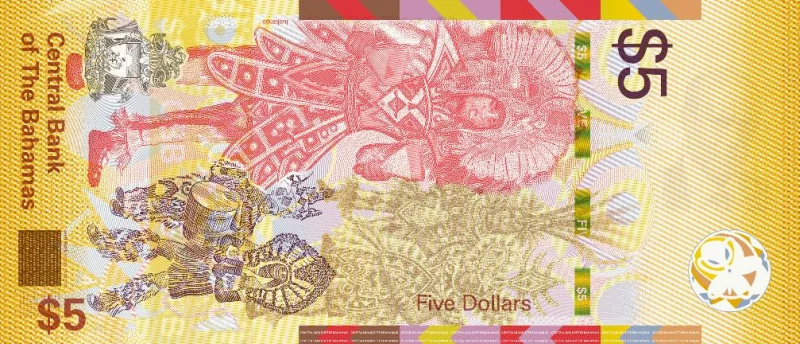
The banknotes in pictures
Foundations of Monetary Stability
The USD Peg and Economic Integration
Strict 1:1 parity with the US dollar is more than a technical choice for The Bahamas: it reflects a deep economic reality. More than 6 million visitors a year, mainly Americans, generate tourism flows representing over half of national GDP. This dependence, often seen as a weakness, becomes a remarkable source of monetary stability here.
The Bahamian economy benefits from exceptional geographical proximity to the United States — Miami is only 80 kilometres from Nassau — facilitating trade, tourism and financial exchanges. This natural integration provides an economic rationale for maintaining parity and reduces transaction costs for local businesses.
The Central Bank of The Bahamas maintains foreign exchange reserves generally equivalent to 3-4 months of imports, primarily in US dollars, providing a comfortable buffer to support parity. This strict monetary discipline, inherited from the British tradition, guarantees the credibility of the exchange rate commitment.
Pioneering Digital Innovation
The Sand Dollar: The World's First CBDC
In October 2020, The Bahamas made monetary history by deploying the "Sand Dollar", becoming the first country in the world to launch a fully operational central bank digital currency (CBDC). This revolutionary initiative addresses the unique geographical challenges of an archipelago of 700 islands, where conventional financial inclusion remains complex and costly.
The Sand Dollar facilitates inter-island payments, removes geographical barriers and drastically reduces transaction costs for isolated populations. This innovation delivers tangible improvements in banking access for remote communities, demonstrating that technology can serve social equity.
The technical infrastructure, developed in partnership with NZIA (a local technology company), uses a private blockchain that allows full control over monetary policy while benefiting from the advantages of distributed technology. This balanced approach preserves monetary sovereignty while embracing innovation.
The gradual adoption of the Sand Dollar — more than 20% of the population uses it regularly — validates the concept and inspires other central banks worldwide. This exportable technical expertise strengthens Bahamian soft power in international monetary forums.
A Sophisticated Financial Ecosystem
An International Financial Centre
The Bahamian economy benefits from an exceptionally developed financial sector, the legacy of decades of growth as a prestigious offshore centre. More than 400 financial institutions operate in the archipelago, managing assets exceeding USD 600 billion, more than 50 times national GDP.
This financial expertise, concentrated mainly in Nassau, attracts international talent and global capital. Wealth management, private banking and financial structuring services generate substantial foreign currency revenue, naturally strengthening the position of the BSD.
Bahamian financial regulation, aligned with international standards, maintains a delicate balance between tax attractiveness and regulatory credibility. This reputation for reliability, built over several decades, is a valuable intangible asset for monetary stability.
Resilience to Shocks
A Remarkable Capacity to Adapt
The Bahamian economy has demonstrated an exceptional capacity to adapt during recent major crises. Hurricane Dorian in 2019, one of the most destructive in Atlantic history, did not undermine confidence in the BSD, thanks to rapid reconstruction supported by catastrophe insurance and international aid.
The COVID-19 pandemic certainly had a dramatic impact on tourism (an 80% decline in 2020), but diversification into digital financial services and the innovation of the Sand Dollar softened the effects on the currency. This ability to redirect the economy reveals Bahamian institutional maturity.
Emergency financing mechanisms, including IMF facilities and regional partnerships, provide additional safety nets that strengthen investor confidence. This preventive financial framework distinguishes The Bahamas from other, more vulnerable small island economies.
A Pragmatic Vision for the Future
A Balanced Monetary Strategy
The Bahamas is developing a long-term monetary strategy that combines tradition and innovation with remarkable consistency. Maintaining USD parity remains the priority, grounded in structural economic realities, but the pioneering Sand Dollar experience opens up prospects for greater monetary autonomy.
The authorities are exploring the use of the CBDC for transactions within the Caribbean, potentially reducing dependence on the traditional US banking system. This vision of a more integrated Caribbean monetary ecosystem, with The Bahamas as its technological hub, illustrates the nation's strategic ambition.
Training local talent in financial technologies, supported by international university partnerships, is preparing the next generation of specialists needed to maintain a competitive advantage. This long-term educational approach ensures the sustainability of monetary innovation.
This balance between proven stability and responsible innovation positions the BSD as an inspiring model for small island economies facing the challenges of monetary modernisation. The Bahamian experience demonstrates that innovation and tradition can work harmoniously together in the service of national prosperity.
This article draws on the editorial collection supplied in 2025. Figures and descriptions should be read in their original context. About the content