The banknotes in pictures
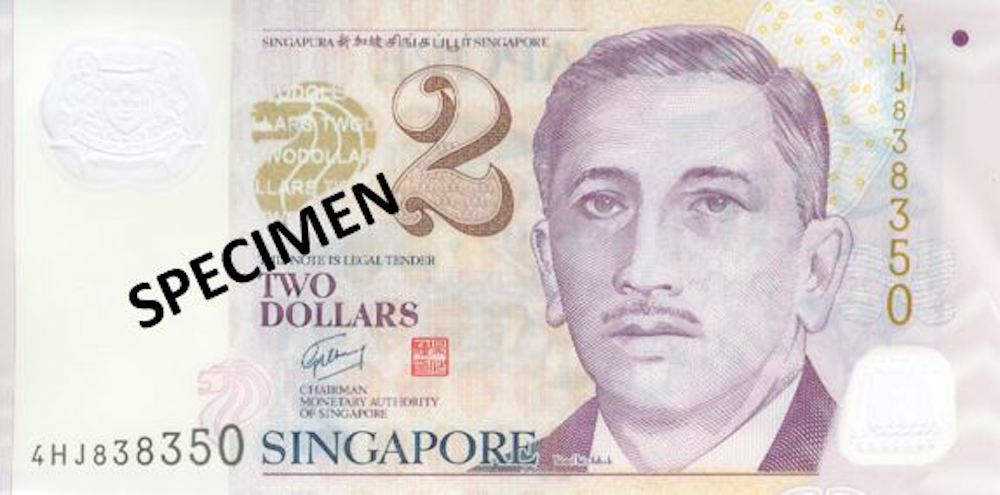
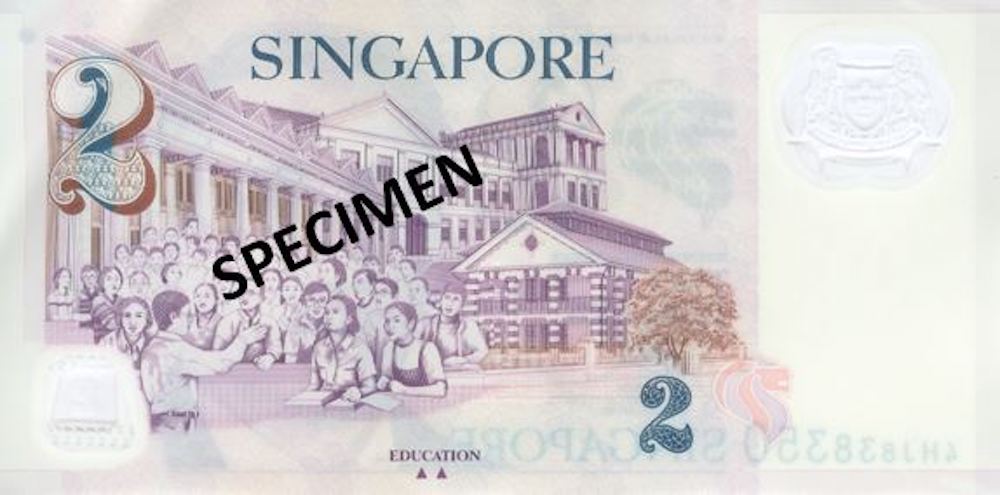
Colonial Heritage and Commercial Foundations (1819-1963)
Raffles and the Vision of a Free Entrepôt
Singapore's monetary history begins with Sir Stamford Raffles's revolutionary vision in 1819. By establishing Singapore as a free port, Raffles unwittingly creates the conditions for a future monetary revolution. Intended to compete with Dutch trading monopolies, this strategic decision lays the foundations of an open economy that still characterises Singapore's monetary policy today.
The absence of customs duties and trade restrictions immediately attracts Chinese, Malay, Indian and Arab merchants. This commercial diversity generates extraordinary monetary complexity: Spanish dollars, Indian rupees, Chinese coins and local currencies circulate simultaneously. Their harmonious coexistence foreshadows Singapore's future international role.
The first financial institutions pragmatically adapt their practices to this monetary diversity. The Oriental Bank Corporation (1851), the first European bank established in Singapore, develops sophisticated exchange systems to handle multiple currencies. This early expertise in foreign exchange management has a lasting influence on Singapore's financial culture.
The opening of the Suez Canal (1869) revolutionises Singapore's geostrategic position. The port becomes an essential stop between Europe and East Asia, multiplying trade and monetary flows. This expansion transforms Singapore from a regional entrepôt into an international trading hub, preparing its future role as a financial centre.
Integration into the Sterling System (1867-1939)
The adoption of the Straits Settlements dollar in 1867 marks the first attempt at regional monetary unification. Covering Singapore, Malacca and Penang, this innovation creates a coherent monetary area that facilitates trade. Pegged to the pound sterling, the new dollar combines international stability with a distinctive regional identity.
The creation of the Board of Commissioners of Currency (1899) centralises monetary management and modernises colonial financial institutions. Unique within the British Empire, this administrative innovation reflects Singapore's growing economic importance and foreshadows its future sophisticated monetary institutions.
The plantation economy transforms regional monetary flows. The boom in Malayan rubber and tin generates enormous profits passing through Singapore. This position as a financial intermediary develops local banking expertise and attracts the first international financial institutions.
The crisis of 1929 tests the resilience of the colonial monetary system. Unlike industrial economies, Singapore withstands it relatively well thanks to its diversified commercial activities. This experience reveals the advantages of the entrepôt economy and influences future economic choices.
1867 : Creation of the Straits Settlements dollar
1899 : Board of Commissioners of Currency
1939-1945 : Japanese occupation and monetary disruption
1953 : Creation of the Board of Commissioners of Currency of Malaya and British Borneo
1963 : Malaysian independence, including Singapore
Forced Independence and the Creation of the SGD (1963-1967)
The Malaysian Merger and Its Monetary Tensions
Malaysia's independence in 1963, including Singapore, immediately creates tensions over economic policy. Singapore's Prime Minister, Lee Kuan Yew, advocates an open, liberal vision, while Kuala Lumpur favours a more interventionist, Malay-centred approach. These ideological differences quickly generate monetary and economic conflicts.
The Malaysian ringgit, the federation's common currency, poorly reflects Singapore's economic characteristics. Singapore's entrepôt economy requires a different monetary policy from Malaysia's plantation economy. These structural incompatibilities fuel growing political tensions.
Goh Keng Swee, Singapore's Finance Minister, discreetly develops the foundations of an independent monetary system. Initially secret, this preparation reveals Singapore's leaders' foresight and their capacity for long-term strategic planning.
Singapore's abrupt expulsion from Malaysia (9 August 1965) transforms the political crisis into a monetary opportunity. This unwanted independence forces Singapore to rapidly develop its own institutions, including monetary institutions. The challenge seems insurmountable for a city-state of 1.9 million inhabitants without natural resources.
Designing the Singapore Dollar
The Currency Act of 1967 officially creates the Singapore dollar and establishes the Board of Commissioners of Currency Singapore. Led by Lim Kim San, this institution must manage the monetary transition while maintaining international confidence. The technical and psychological challenge appears considerable.
On 12 June 1967, Singapore launches its national dollar at parity with the Malaysian ringgit and the Brunei dollar. This apparently technical decision reveals a subtle geopolitical strategy: maintaining regional economic integration while asserting monetary sovereignty.
The design of the first banknotes reflects Lee Kuan Yew's multicultural vision. The chosen symbols—colonial architecture, industrial modernity and ethnic harmony—project the image of an inclusive, dynamic nation. This visual communication supports the emerging international marketing strategy.
The monetary agreement with Malaysia and Brunei (Currency Interchangeability Agreement) facilitates the economic transition. Allowing the three currencies to circulate in each other's territories, this innovation maintains regional trade integration while preserving monetary autonomy. This pragmatic solution illustrates Singapore's diplomatic ingenuity.
The First Decades: Building a Miracle (1967-1980)
The Industrialisation Strategy and Its Monetary Implications
Dutch economic adviser Albert Winsemius works with Lee Kuan Yew's team to devise a revolutionary industrialisation strategy. Combining the attraction of foreign investment, workforce training and modern infrastructure, this approach requires sophisticated monetary policy to manage massive capital flows.
The creation of the Economic Development Board (1961) and its growing influence after independence transform Singapore into a magnet for investment. This strategy generates substantial foreign currency inflows requiring careful monetary management to avoid inflation and maintain competitiveness.
Institutional innovation accompanies this economic transformation. The Development Bank of Singapore (1968), Jurong Town Corporation (1968) and other development bodies create a unique financial ecosystem, combining public and private actors in a model of directed development that remains open to markets.
This period sees the birth of Singapore's reputation for monetary discipline. Inflation remains consistently controlled, the exchange rate stable and public finances balanced. This emerging credibility gradually attracts international investors and lays the foundations of the future financial centre.
Emergence as a Regional Financial Centre
Paradoxically, the closure of the Suez Canal (1967-1975) strengthens Singapore's position by consolidating its role as a logistical and financial hub. Traffic diverted around the Cape of Good Hope increases the importance of Singapore stopovers and develops associated financial services.
The establishment of the Asian Dollar Market in 1968 marks the beginning of the financial transformation. Inspired by London's Eurodollar market, this innovation attracts international banks and develops local financial expertise. Singapore gradually becomes the London of Asia.
Hon Sui Sen, Finance Minister from 1968 to 1975, orchestrates this transformation with remarkable vision. His policy of controlled financial liberalisation attracts capital without destabilising the domestic economy. This balanced approach becomes Singapore's hallmark.
Regulatory innovation accompanies this financial expansion. Singapore develops a sophisticated legal framework inspired by British law but adapted to Asian realities. This legal and financial expertise strengthens its international appeal and differentiates Singapore from Hong Kong.
A closer look at the banknotes
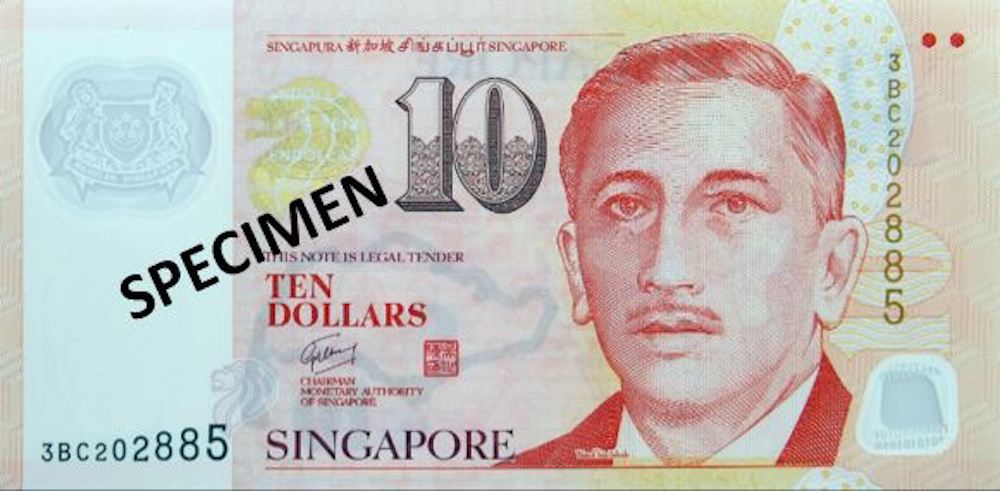
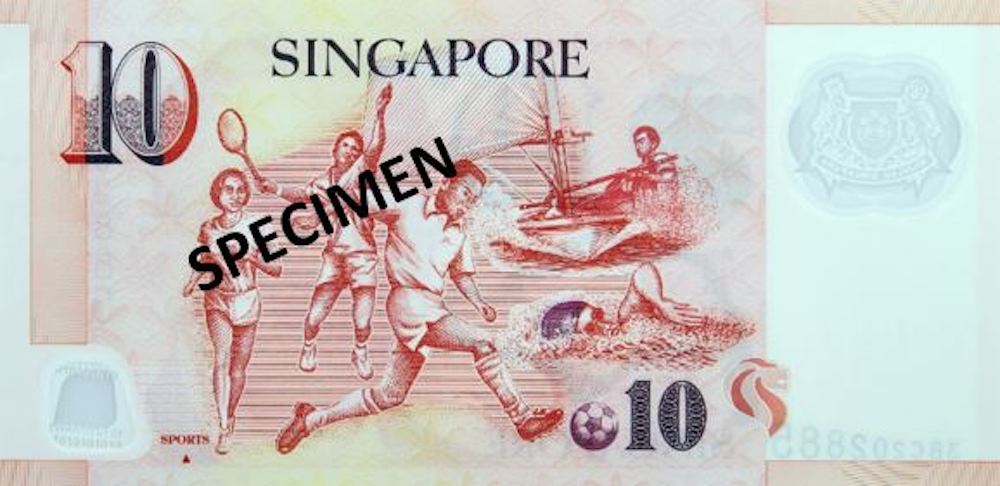
Institutionalisation: The Birth of MAS (1971-1990)
The Creation of the Monetary Authority of Singapore
The creation of the Monetary Authority of Singapore (MAS) in 1971 marks the culmination of Singapore's monetary strategy. Combining the functions of a central bank, banking supervisor and financial markets regulator, this unique institution reflects Singapore's integrated approach to economic governance.
Hon Sui Sen, MAS's first Managing Director, establishes Singapore's monetary doctrine: price stability, a competitive exchange rate and financial market development. This seemingly contradictory triple mission requires remarkable technical sophistication and exemplary institutional coordination.
The major innovation lies in exchange rate policy. Unlike other countries, Singapore gradually abandons interest rate targeting in favour of managing the nominal effective exchange rate (NEER). Adapted to a small open economy, this revolutionary approach has a lasting influence on MAS's technical reputation.
Integrated banking supervision attracts international financial institutions while maintaining systemic stability. This intelligent regulation, neither too lax nor too restrictive, creates an optimal environment for the development of sophisticated financial services.
The Innovation of the Currency Basket System
Singapore's monetary revolution culminates in the adoption of a currency basket system in 1973. This globally unique innovation manages the SGD by reference to a basket of currencies weighted according to trade. This sophisticated technical approach optimises external competitiveness while maintaining domestic stability.
Initially misunderstood by international markets, this policy gradually demonstrates its superiority. Singapore avoids the currency crises affecting other emerging economies while maintaining sustained growth. This exceptional performance strengthens the SGD's international credibility.
Lim Kim San and later Richard Hu develop this approach with remarkable technical rigour. Their teams, trained at the world's best universities, gradually establish MAS's reputation for excellence and position Singapore as a benchmark in monetary policy.
Financial expansion accompanies this monetary sophistication. In the 1980s, Singapore becomes the world's third-largest financial centre after London and New York. This meteoric rise in less than twenty years demonstrates the effectiveness of Singapore's strategy.
| Decade | GDP per Capita (USD) | Major Innovation | Regional Position |
|---|---|---|---|
| 1970s | 1 000 → 4 000 | Asian Dollar Market | Emerging financial hub |
| 1980s | 4 000 → 12 000 | Currency basket system | World's 3rd-largest financial centre |
| 1990s | 12 000 → 25 000 | Integrated supervision | Rival to Hong Kong |
| 2000s | 25 000 → 40 000 | Wealth management | Gateway to Asia |
The SGD in the Global Economy (1990-2024)
The Asian Crisis and Singapore's Resilience
The Asian financial crisis of 1997-1998 is the first major test of Singapore's mature monetary system. Unlike its neighbours (Thailand, Indonesia and Malaysia), Singapore weathers the storm without a major devaluation or severe recession. This extraordinary resilience confirms the superiority of the Singapore model.
Lee Hsien Loong, then Deputy Prime Minister and Finance Minister, manages this crisis with remarkable skill. His clear communication, targeted countercyclical measures and coordination with MAS maintain international confidence. This exemplary management strengthens Singapore's reputation as a haven of stability.
Institutional innovation continues during this difficult period. The Government Investment Corporation (GIC) and Temasek Holdings develop their international investment strategies, transforming budget surpluses into sovereign wealth. This long-term vision distinguishes Singapore from its neighbours' short-term approaches.
The crisis also reveals the advantages of a diversified financial system. Unlike economies dependent on a single sector, Singapore offsets banking losses with gains in technology and logistics. This structural resilience attracts new investors after the crisis.
The Digital Era and Fintech Innovation
As the 21st century begins, Singapore once again revolutionises its monetary and financial approach. Under the successive leadership of Tharman Shanmugaratnam (2001-2007) and Ravi Menon (2011-present), MAS becomes a global pioneer in fintech innovation.
The "Smart Financial Centre" strategy transforms Singapore into a global fintech laboratory. Project Ubin (blockchain), the regulatory sandbox and API banking initiatives position the city-state at the forefront of the digital financial revolution. This forward-looking vision attracts global technology giants.
Monetary innovation accompanies this digital transformation. MAS actively explores central bank digital currencies (CBDCs), collaborates with other central banks on international payments and develops next-generation infrastructure. This proactive approach maintains Singapore's competitive lead.
The management of the COVID-19 pandemic once again reveals Singapore's institutional excellence. Rapid economic measures, tailored accommodative monetary policy and coordination with health authorities keep the economy afloat. This performance strengthens the SGD's international appeal.
Contemporary Position and Future Challenges
The SGD as a Regional Reference Currency
Today, the Singapore dollar occupies a unique position as Southeast Asia's most stable currency. Accounting for around 1.8% of global foreign exchange transactions despite an economy representing 0.4% of world GDP, the SGD enjoys exceptional liquidity and remarkable international confidence.
This credibility rests on exceptional fundamentals: no net public debt (instead, net assets of 250% of GDP), controlled inflation, external account surpluses and exemplary governance. These structural strengths make the SGD a regional safe haven during periods of uncertainty.
The interchangeability agreement with Brunei, maintained since 1967, illustrates Singapore's monetary diplomacy. This globally unique monetary cooperation demonstrates Singapore's ability to maintain privileged relations with its neighbours while developing its autonomy.
Ravi Menon, MAS Managing Director since 2011, faces contemporary challenges with Singapore's traditional spirit of innovation. His management of rising geopolitical tensions, post-COVID inflation and technological transformations maintains Singapore's position as a monetary leader.
Continuous Innovation and a Vision for the Future
MAS positions Singapore at the forefront of future monetary transformations. Projects involving digital currency, artificial intelligence in banking supervision and sustainable finance establish the city-state as a global pioneer in financial innovation.
The "Green Finance" strategy gradually transforms Singapore into a global centre for climate finance. Green bonds, sustainability taxonomies and climate stress tests attract international ESG capital and position the SGD as Asia's reference "green currency".
Regional financial integration through ASEAN+3 initiatives, currency swap agreements and cross-border payment projects strengthens the SGD's role as a regional reference currency. This multilateral strategy compensates for small size through institutional influence.
Growing geopolitical challenges—Sino-American tensions, technological fragmentation and evolving value chains—require continuous monetary policy adaptation. Singapore's historical capacity for innovation suggests it can successfully adapt to these new challenges.
Conclusion: The Genius of the City-State
The history of the Singapore dollar, from its launch in 1967 to contemporary fintech innovations, vividly illustrates a small nation's ability to turn constraints into competitive advantages. This exceptional success rests on enduring Singaporean qualities: institutional excellence, continuous innovation and a long-term strategic vision.
Singapore's transformation from a colonial entrepôt into a global financial centre, orchestrated through sophisticated monetary policy, demonstrates that size does not determine monetary influence. MAS's technical expertise, exceptional political stability and international openness make the SGD a global benchmark.
Today, the "Sing dollar" faces the challenges of the 21st century with the same adaptability that created the Singapore miracle. Its position as a global fintech laboratory, its role as a bridge between West and East and its continuous capacity for innovation place it in a strong position to maintain its status as a regional reference currency in a rapidly changing world.
This article draws on the editorial collection supplied in 2025. Figures and descriptions should be read in their original context. About the content