The banknotes in pictures
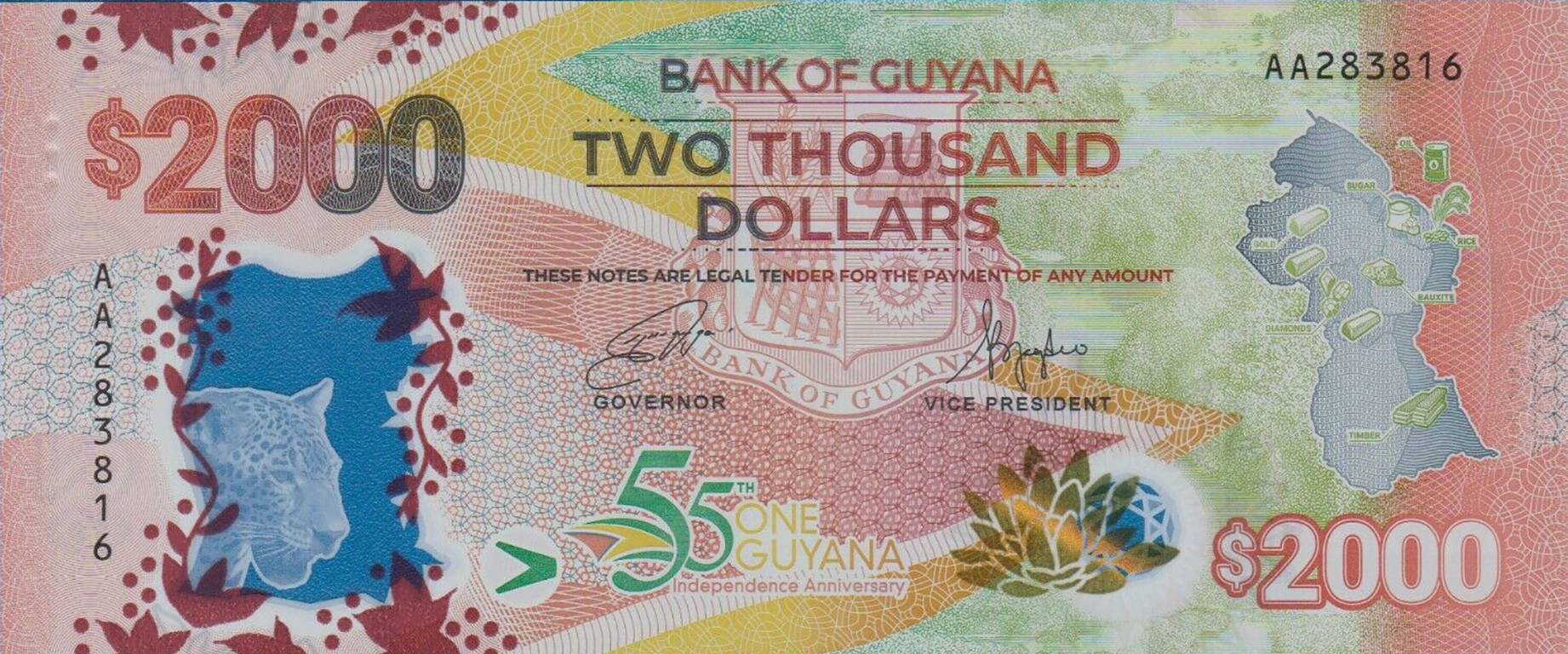
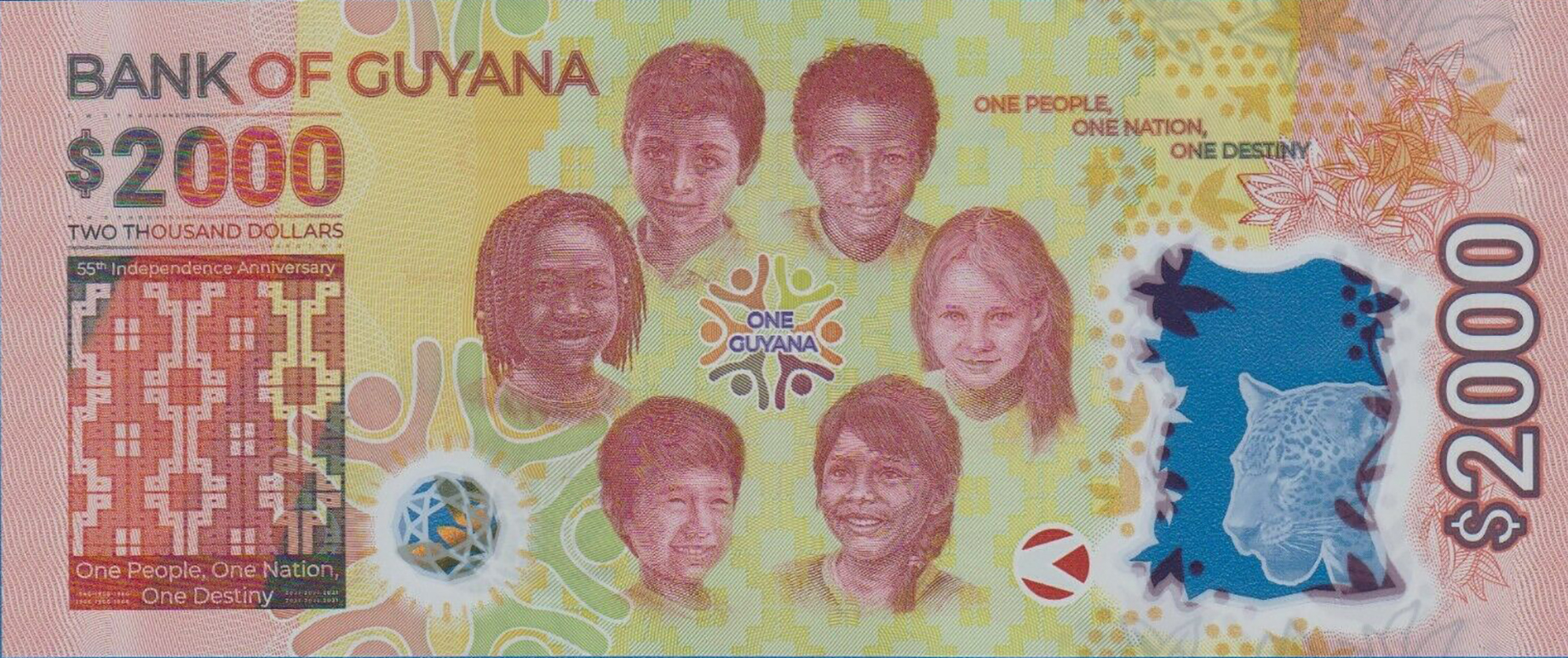
Multiple Colonial Legacies and Ethnic Complexity (1600-1966)
The Three Guianas and Successive Colonial Powers
Guyana's monetary history begins with the geopolitical complexity of the Guianas coast, contested by European colonial powers. British Guiana, formed by the union of Demerara, Berbice and Essequibo (1831), inherited a composite monetary system reflecting successive Dutch, British and French influences.
This colonial succession generated remarkable monetary diversity: Dutch guilders, British pounds sterling and various local currencies coexisted in a complex exchange system adapted to commercial realities. This diversity had a lasting influence on Guyana's pragmatic approach to monetary management.
The sugar plantation economy, developed by Dutch and then British settlers, relied heavily on African slavery. This economic foundation generated considerable profits that financed colonial infrastructure but created structural inequalities that still mark Guyanese society today.
The abolition of slavery (1838) triggered a labour crisis resolved through the mass immigration of indentured workers: 239,000 Indians (1838-1917), 14,000 Chinese and Portuguese migrants, creating the contemporary multiethnic society. This diversity profoundly influenced future economic and monetary developments.
The Sugar Economy and Its Transformations (1850-1950)
The golden age of Guyana's sugar economy (1850-1920) transformed the colony into one of the most prosperous territories in the British Empire. Technical innovations — railways, modern irrigation and centralised factories — revolutionised productivity and generated substantial foreign currency revenues.
This prosperity attracted British capital and expertise, developing a sophisticated colonial financial sector. Colonial banks, insurance companies and trading houses created the monetary infrastructure required for the international sugar trade.
However, this dependence on sugar created a structural vulnerability exposed by the crisis of the 1920s-1930s. Competition from European beet sugar and the emergence of other tropical producers gradually eroded Guyana's position in world markets.
The first discoveries of bauxite (1914) diversified the colonial economy and prepared the transition towards independence. This mineral resource attracted US investment and technical expertise, laying the foundations for a post-colonial economy less dependent on traditional sugar production.
1838 : Abolition of slavery
1838-1917 : Mass immigration of indentured workers
1914 : Discovery of bauxite
1953 : First democratic elections
1966 : Independence and creation of the GYD
Independence and Early Turbulence (1966-1985)
Forbes Burnham and the Socialist Experiment
Guyana gained independence on 26 May 1966 under Forbes Burnham, leader of the People's National Congress (PNC), amid ethnic and geopolitical tensions exacerbated by the Cold War. His rivalry with Cheddi Jagan, the Indo-Guyanese leader, durably structured national politics along ethnic lines.
The creation of the Guyana dollar on 29 February 1966 symbolised this political emancipation but took place in an already fragile economic context. Initial parity with the pound sterling revealed continuing dependence on the former colonial power and the weakness of the national economy.
Burnham gradually developed an ideology of cooperative socialism inspired by the Non-Aligned Movement. This evolution, initially pragmatic, became increasingly radical and authoritarian, directly influencing economic and monetary policy choices.
The gradual nationalisation of major businesses — bauxite (1971), sugar (1976) and banks (1970s) — radically transformed Guyana's economy but quickly exposed the socialist state's managerial incompetence. These economic failures progressively destabilised the Guyana dollar.
The Descent into Economic Disaster (1975-1985)
The gradual collapse of Guyana's economy under socialist management generated one of Latin America's most serious monetary crises. Inflation reached 100% annually, the Guyana dollar collapsed on parallel markets and widespread shortages paralysed everyday economic life.
This period saw the emergence of a parallel economy dominated by the black market and smuggling. The official exchange rate (2.55 GYD/USD) became purely fictitious compared with the parallel rate (15-20 GYD/USD), revealing the complete loss of credibility of government economic policies.
Mass emigration — more than 200,000 departures between 1970 and 1990 — deprived the country of essential skills while paradoxically generating vital remittances for the families who remained. This diaspora became an unintended economic lifeline.
Burnham's death in 1985 revealed the scale of the economic catastrophe: GDP had halved since 1975, infrastructure had collapsed, institutions were corrupt and the currency was completely discredited. This desperate situation required a complete reconstruction of the economic system.
Reconstruction and Reforms (1985-2015)
Desmond Hoyte and the Turn towards Market Liberalisation
Desmond Hoyte, Burnham's successor, courageously began the transition to a market economy through the Economic Recovery Programme (ERP), launched in 1988. This ideological revolution, supported by the IMF and the World Bank, aimed to rebuild the collapsed economy in its entirety.
The massive devaluation of the Guyana dollar — from 2.55 to 126 GYD/USD in 1991 — gradually restored monetary credibility by bringing official rates into line with economic reality. This shock therapy, although socially painful, was a necessary prerequisite for any reconstruction.
Extensive privatisations — sugar, bauxite and telecommunications — attracted foreign investors and technical expertise while reducing the burden on the budget. This liberalisation gradually transformed Guyana from a socialist state economy into an open market economy.
These reforms were accompanied by institutional innovations: an independent central bank, modern banking supervision and foreign exchange liberalisation. This technical modernisation, inspired by international best practices, laid the foundations for future monetary stability.
The Jagdeo Era and Renewed Growth
Bharrat Jagdeo, president from 1999 to 2011, consolidated market reforms while developing a growth strategy based on economic diversification. His pragmatic management combined macroeconomic orthodoxy with targeted public investment in infrastructure and education.
This period saw China emerge as a major economic partner, financing roads, bridges and energy infrastructure. These investments gradually transformed Guyana's economy and diversified funding sources beyond traditional donors.
The gold industry experienced a spectacular boom thanks to high prices and modern extraction techniques. This mining prosperity generated vital foreign currency and stimulated the domestic economy, helping to stabilise the Guyana dollar.
Donald Ramotar (2011-2015) continued this development strategy but faced growing challenges: corruption, social inequalities and persistent ethnic tensions. These structural problems limited the impact of economic successes on national cohesion.
| Period | GDP/capita (USD) | GYD/USD Rate | Inflation | Major Reform |
|---|---|---|---|---|
| 1985 | 600 | 4,0 | 25% | End of socialism |
| 1995 | 800 | 140 | 8% | Privatisations |
| 2005 | 1 200 | 200 | 5% | Gold boom |
| 2015 | 4 500 | 206 | 2% | Oil discovery |
The Oil Revolution (2015-2024)
The Discovery of Liza and Economic Transformation
ExxonMobil's discovery of the Liza oil field in May 2015 instantly transformed Guyana's economic prospects. This offshore discovery, revealing reserves estimated at more than 11 billion barrels, suddenly propelled this small country into the ranks of the world's leading emerging oil powers.
This energy revolution coincided with changes of political leadership: David Granger (2015-2020) and then Irfaan Ali (2020-present) had to manage this exceptional windfall while preserving democratic and social stability. This historic responsibility tests the maturity of Guyanese institutions.
The first oil revenues (2019) immediately generated debates about their optimal use. The creation of the Natural Resource Fund, inspired by the Norwegian model, aimed to avoid the "resource curse" that affects many oil-producing countries.
Gobind Ganga, governor of the Bank of Guyana since 2017, must adapt monetary policy to this structural transformation. Managing sudden abundance requires unprecedented technical skills from a central bank accustomed to managing shortages rather than excess.
The Economic Boom and Its Challenges
The start of oil production in December 2019 triggered a spectacular economic transformation. Economic growth reached 43.5% in 2020 and then 19.9% in 2021, a world-record performance propelling Guyana towards high-income country status in just a few years.
This exceptional growth generates unprecedented monetary challenges: managing foreign currency inflows, preventing inflation and preserving the competitiveness of non-oil sectors. The Bank of Guyana is developing sophisticated instruments inspired by best practices in producing countries.
Oil revenues are transforming public finances: chronic deficits have given way to massive surpluses, allowing substantial public investment in infrastructure, education and healthcare. This new fiscal capacity facilitates the country's accelerated modernisation.
However, this sudden prosperity exacerbates certain social tensions. Economic inequalities, ethnic rivalries and potential corruption require sophisticated political management to preserve national cohesion and democratic stability.
Contemporary Challenges and Managing Abundance
The Resource Curse and Governance
International experience reveals the dangers of the "natural resource curse": corruption, authoritarianism, neglect of other sectors and social instability. Aware of these risks, Guyana is developing governance mechanisms inspired by the successes of Norway and Botswana.
The Natural Resource Fund, managed under strict rules of transparency and responsible investment, aims to turn temporary oil rents into lasting national wealth. This long-term approach prioritises investment in human capital and infrastructure over immediate consumption.
Guyanese civil society, strengthened by the educated diaspora, keeps a vigilant watch on the use of oil revenues. This citizen mobilisation provides an essential democratic safeguard against the excesses seen in other producing countries.
The constructive political opposition, although weakened electorally, maintains constant pressure for transparency and accountability. This democratic dynamic, inherited from post-socialist reforms, is a valuable asset for responsible management of oil wealth.
The Diaspora and Its Economic Impact
The Guyanese diaspora, estimated at more than one million people (more than the remaining resident population), plays a crucial role in this economic transformation. Remittances, technical expertise and diaspora investments stimulate national economic development.
This expatriate population, mainly established in the United States, Canada and the United Kingdom, brings the skills and capital needed for economic modernisation. Programmes encouraging the return of expertise facilitate knowledge transfer to the domestic economy.
The emergence of diaspora-government partnerships is revolutionising the approach to development. These collaborations combine private funding, international expertise and local knowledge to maximise the impact of public and private investments.
This diaspora mobilisation also contributes to democratic stability. The international attention generated by this influential expatriate population discourages authoritarian tendencies and encourages transparent governance.
Geopolitical Prospects and Regional Challenges
Relations with Venezuela and Energy Security
Venezuela's claim to the Essequibo region (two-thirds of Guyanese territory) is complicated by the offshore oil discovery. This long-dormant geopolitical tension has resurfaced with the energy stakes, requiring active international diplomacy to preserve territorial integrity.
International support — from the United States, the United Kingdom and Brazil — strengthens Guyana's position but also reveals the geostrategic stakes of offshore oil. This international protection facilitates energy investment but creates complex diplomatic obligations.
The ongoing international arbitration before the International Court of Justice will be a major test for regional stability. The outcome of these proceedings directly affects the security of oil investments and confidence in the Guyanese currency.
This geopolitical situation influences monetary policy choices: maintaining substantial reserves, diversifying trade partners and strengthening ties with protective powers. These security considerations add to traditional economic challenges.
Regional Integration and Caribbean Cooperation
Guyana's economic transformation is changing regional balances within CARICOM. From an aid-dependent economy, Guyana is potentially becoming the main financial contributor to Caribbean integration, a major geoeconomic reversal requiring institutional adjustments.
This new prosperity attracts migration from within the Caribbean and regional investment. Georgetown is emerging as an alternative economic hub to Port-of-Spain and Bridgetown, a transformation that influences regional monetary and trade flows.
Energy partnerships with Caribbean islands create opportunities for deeper integration. Projects to supply affordable energy strengthen Guyana's geoeconomic influence while supporting regional development.
This evolution positions the Guyana dollar as a potential regional reference currency, a status unthinkable a decade ago. This growing monetary influence requires responsible management that preserves traditional Caribbean cooperation.
Conclusion: A Nation at a Crossroads
The history of the Guyana dollar, from its colonial origins to the contemporary oil revolution, illustrates the challenges and opportunities facing a small nation suddenly confronted with abundance after decades of deprivation. This exceptional trajectory demonstrates Guyanese resilience and its capacity to adapt to radical transformations.
The GYD's survival through socialist collapse, hyperinflation and mass emigration reveals the strength of Guyana's social and cultural foundations. This historical resilience is a valuable asset for managing oil wealth responsibly and avoiding the pitfalls of the resource curse.
Guyana's emergence as a regional oil power is transforming not only the national economy but also Caribbean and South American geopolitical balances. This new influence brings international responsibilities requiring mature and balanced diplomacy.
Today, the Guyana dollar stands at a crossroads: a symbol of spectacular economic transformation, but also a witness to persistent challenges in governance, social equity and national cohesion. The future of this currency will depend largely on the ability of Guyanese elites to turn the oil opportunity into sustainable and inclusive development, confirming that natural wealth is a blessing only when accompanied by political wisdom and social solidarity.
This article draws on the editorial collection supplied in 2025. Figures and descriptions should be read in their original context. About the content