The banknotes in pictures
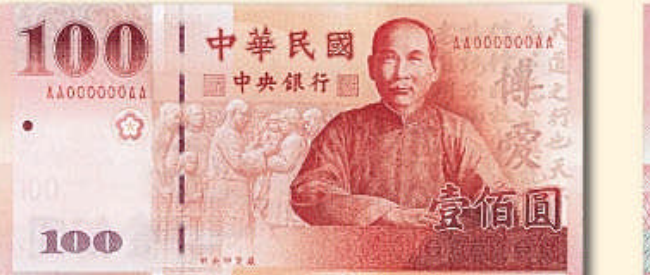
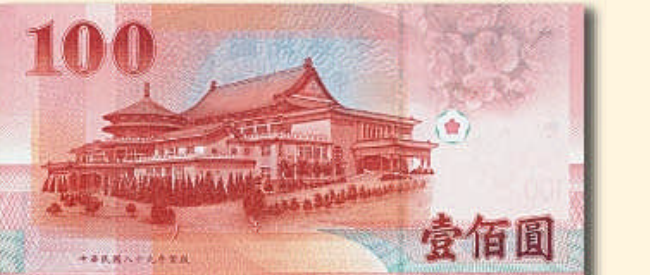
The Imperial and Colonial Legacy (1624-1945)
Formosa: The Empires' Monetary Crossroads
Taiwan's monetary history begins with its strategic position at the maritime crossroads between China, Japan and Southeast Asia. From the 17th century, the island of Formosa attracted competing ambitions and diverse influences: the Dutch (1624-1662), Ming loyalists (1662-1683), and then full integration into the Chinese empire under the Qing (1683-1895). This succession of occupations generated remarkable monetary complexity.
The Dutch East India Company introduced the first modern European currencies, but had to accommodate traditional Chinese monetary systems. Silver taels, bronze cash coins and various local currencies circulated simultaneously, creating a complex exchange system that the colonial authorities struggled to control.
Zheng Chenggong (Koxinga), a Taiwanese national hero, established an autonomous monetary system between 1662 and 1683. Although short-lived, this experiment foreshadowed Taiwan's future aspirations for monetary independence. Coins struck during this period, combining Chinese symbols and local features, already reflected an emerging Taiwanese identity.
Integration into the Qing empire gradually standardised monetary systems, but Taiwan retained certain distinctive features linked to its plantation economy and international trade. This period forged a pragmatic monetary culture, open to outside influences while preserving local characteristics.
The Japanese Era: Modernisation and Integration (1895-1945)
The Japanese colonial administration transformed Taiwan with remarkable efficiency. Governor-General Kodama Gentarō and his civilian administrator Gotō Shinpei systematically modernised the economic infrastructure: establishing banks, unifying the currency and developing trade. This administrative revolution laid the groundwork for Taiwan's future economic development.
The Bank of Taiwan, created in 1899, became the pillar of the new colonial financial system. Unique within the Japanese empire for its extensive powers, this institution managed local currency issuance, financed economic development and facilitated Taiwan's integration into the regional economy. Its expertise had a lasting influence on Taiwanese banking culture.
The plantation economy developed by the Japanese generated substantial monetary flows. The growth of sugar, rice and later industrial production transformed Taiwan from a subsistence economy into a modern export economy. This transformation was accompanied by increasingly sophisticated monetary and financial mechanisms.
The period 1920-1945 saw Taiwan industrialise rapidly under Japanese direction. Financed by a modern banking system and supported by a stable currency, this early industrialisation created the technical and human foundations of Taiwan's future "economic miracle". The Japanese institutional legacy had a lasting influence on Taiwan's approach to development.
1899 : Creation of the Bank of Taiwan
1920s : Colonial industrialisation
1937-1945 : War economy and total mobilisation
1945 : Return to the Republic of China
1949 : Arrival of the Nationalist government and creation of the TWD
Monetary Catastrophe and Rebirth (1945-1950)
The Chaos of Retrocession (1945-1949)
Taiwan's retrocession to the Republic of China in October 1945 triggered a major monetary and economic crisis. Military governor Chen Yi abruptly replaced the Japanese yen with the Chinese yuan under disastrous conditions. Lack of preparation, administrative corruption and economic incompetence turned the joy of liberation into profound bitterness.
Chinese hyperinflation, already catastrophic on the mainland, quickly spread to Taiwan. Between 1945 and 1949, prices multiplied by 70 000, destroying local savings and paralysing the economy. This traumatic experience left a lasting mark on Taiwanese collective memory and influenced future conservative monetary policies.
The incident of 28 February 1947, triggered in part by the economic crisis, revealed growing tensions between the local population and the mainland administration. Long suppressed, this tragedy illustrates the social consequences of monetary disorder and fuelled a sense of distinct Taiwanese identity.
The Chinese civil war further worsened the economic situation. Military requisitions, political instability and the collapse of trade plunged Taiwan into recession. This dark period contrasted sharply with the relative prosperity of the Japanese era and prepared the way for the radical reforms that followed.
The Monetary Revolution of 1949
The arrival of the Nationalist government led by Chiang Kai-shek in December 1949 required drastic monetary reform. Finance minister Yen Chia-kan and Liu Cheng-hung designed the "New Taiwan Dollar" (TWD) to replace the hyperinflationary old yuan at the severe rate of 40 000 : 1. This surgical intervention aimed to restore monetary confidence immediately.
This reform brought major institutional innovations. The creation of the Central Bank of the Republic of China (Taiwan), led by Chou Jun-shu, established a modern monetary authority equipped with sophisticated technical instruments. Drawing on mainland banking expertise, this institution quickly adapted to Taiwan's specific circumstances.
American aid played a crucial role in this monetary stabilisation. The economic assistance programme, managed by the Joint Commission on Rural Reconstruction, provided the foreign currency needed to support the new currency. Motivated by the Cold War, this Sino-American cooperation facilitated the economic transition and strengthened the emerging TWD's credibility.
The TWD's early years immediately demonstrated its success: inflation fell spectacularly, trade resumed and the economy stabilised. This exceptional performance, in contrast to the chaos on the mainland, validated the reforms and established the foundations of future economic development.
The Taiwanese Economic Miracle (1950-1980)
The Foundations of Development (1950-1960)
The 1950s saw Taiwan methodically lay the foundations of its economic development under the enlightened leadership of a team of exceptional technocrats. K.Y. Yin at the Ministry of Economic Affairs, Yen Chia-kan at Finance and T.C. Liu at Planning designed a coordinated development strategy based on rigorous monetary policy and ambitious structural reforms.
Land reform (1949-1953), partly financed through controlled money creation, revolutionised rural social structures. This transformation, the most successful in Asia, freed the capital and labour needed for future industrialisation. A stable TWD facilitated the transition by maintaining the confidence of investors and farmers.
Import-substitution industrialisation benefited from a favourable monetary environment. Positive real interest rates encouraged domestic saving, while price stability facilitated planning for industrial investment. Inspired by development theories but adapted to Taiwan's constraints, this policy proved remarkably effective.
American aid, channelled through sophisticated monetary mechanisms, stimulated the economy without generating excessive inflation. This remarkable technical management revealed the Taiwanese monetary authorities' growing expertise and ability to adapt to external constraints.
The Era of Export-Oriented Industrialisation (1960-1980)
The transition to export-oriented industrialisation (1960) marked a decisive turning point in Taiwan's economic strategy. Li Kwoh-ting, the "father of the economic miracle", revolutionised the development approach by opening Taiwan to international competition. This bold strategy required sophisticated monetary policy that simultaneously maintained external competitiveness and domestic stability.
The creation of special economic zones (SEZs) clearly illustrates this new approach. Benefiting from special monetary and tax advantages, these enclaves attracted large volumes of foreign investment. The TWD's stability and convertibility for commercial transactions facilitated this integration into the global economy.
This period saw Taiwanese exports surge: from 164 million USD in 1960 to 19,8 billion in 1980. This spectacular growth generated enormous foreign-currency inflows, requiring careful monetary management to prevent excessive TWD appreciation. The authorities developed innovative instruments for sterilisation and capital-flow control.
The emergence of major Taiwanese companies—Formosa Plastics, Far Eastern Group and Taiwan Semiconductor—transformed the national economic landscape. Financed by a modern banking system and supported by a stable currency, these groups gradually became significant regional players.
| Decade | GDP per Capita (USD) | Growth Rate | Dominant Sector |
|---|---|---|---|
| 1950s | 145 → 200 | 8,2% | Agriculture |
| 1960s | 200 → 400 | 9,7% | Light industry |
| 1970s | 400 → 2 300 | 10,2% | Heavy industry |
| 1980s | 2 300 → 8 000 | 7,8% | Electronics |
A closer look at the banknotes
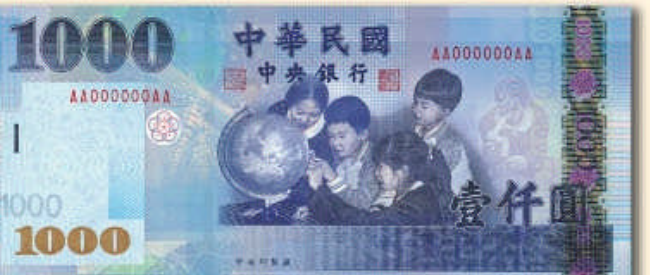
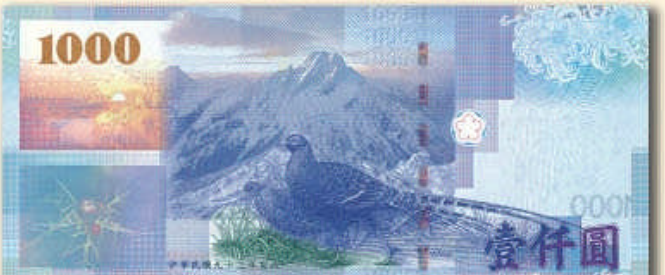
Democratic Transition and Liberalisation (1980-2000)
Democratisation and Its Monetary Implications
The lifting of martial law in 1987 and the democratic transition gradually transformed the environment in which Taiwan's monetary policy operated. Chiang Ching-kuo and then Lee Teng-hui orchestrated this historic transition while carefully preserving economic and monetary stability. This remarkable performance contrasted with the instability often accompanying democratic transitions.
Liang Guo-shu, central bank governor (1989-1998), skilfully navigated between new democratic constraints and the requirements of monetary stability. The central bank's growing independence, formalised through institutional reforms, strengthened monetary policy's credibility while partly shielding it from political pressure.
During this period, Taiwan gradually liberalised its financial system. Opening up to foreign banks, deregulating interest rates and modernising financial markets transformed the monetary landscape. Inspired by international experience but adapted to Taiwan's circumstances, these reforms strengthened the financial system's efficiency.
The emergence of a free press and public economic debate also transformed monetary communication. The authorities now had to explain and justify their policies to an informed and critical public, a development that improved the quality of national economic debate.
Integration into the Global Economy and Its Challenges
WTO accession (2002) under the name "Separate Customs Territory of Taiwan, Penghu, Kinmen and Matsu" clearly illustrates the paradoxes of Taiwan's economic integration. Despite diplomatic isolation, Taiwan became a major global economic player, a performance facilitated by the TWD's stability and de facto convertibility.
This period saw Taiwanese investment in mainland China surge. Although officially prohibited until 1990 and then strictly regulated, these flows gradually transformed Taiwan's economy. Managing these capital movements required constant regulatory innovation and stronger monetary oversight.
Taiwan's emergence as a global technological power revolutionised its economic position. Taiwan Semiconductor Manufacturing Company (TSMC), founded in 1987, became the world leader in chip manufacturing. Supported by a stable currency and sophisticated financial markets, this technological specialisation strengthened Taiwan's economic resilience.
The Asian crisis of 1997-1998 tested the resilience of Taiwan's monetary system in a democratic environment for the first time. Its remarkable performance—Taiwan avoided massive devaluation and severe recession—strengthened international confidence in the TWD and validated the institutional reforms.
The TWD in the 21st Century: Performance and Uncertainty (2000-2024)
Political Change and Monetary Continuity
The election of Chen Shui-bian (2000) marked the first democratic change of governing party in Taiwan's history. This historic transition was accompanied by remarkable continuity in monetary policy, demonstrating Taiwan's institutional maturity. Fai Nan Perng, central bank governor since 1998, embodied this technical stability that transcended political divisions.
During this period, Taiwan faced the challenges of globalisation and growing Chinese competition. Large-scale relocation to the mainland, China's emergence as a direct competitor and changes in global value chains required constant adjustments to monetary policy.
The emergence of the "Golden Triangle" (Taiwan-Hong Kong-Shanghai) transformed regional monetary flows. This de facto integration, despite political restrictions, generated new challenges for managing the TWD: interest-rate arbitrage, speculative capital movements and exchange-rate pressures.
The Kuomintang's return under Ma Ying-jeou (2008-2016) accelerated economic rapprochement with China. The Economic Cooperation Framework Agreement (ECFA) and its sectoral agreements transformed Taiwan's economic environment, requiring continuous adaptation of monetary policy.
The Tsai Era and New Geopolitical Challenges
The election of Tsai Ing-wen (2016) and the deterioration in cross-strait relations created a more complex environment for managing the TWD. Yang Chin-long, the new central bank governor (2018-2023), and then Chen Nan-kuang (2023-present) had to navigate between geopolitical pressure and the requirements of monetary stability.
The Sino-American trade war (2018-2020) paradoxically benefited Taiwan. The "reshoring" of Taiwanese companies, increased technological investment and diversification of supply chains generated exceptional growth supported by accommodative monetary policy.
The COVID-19 pandemic once again revealed the resilience of Taiwan's economic system. Exemplary public-health management, targeted economic support measures and expansionary monetary policy kept Taiwan among the world's best-performing economies.
Taiwan's emergence as a "democratic fortress" facing Chinese authoritarianism strengthened its international appeal despite diplomatic isolation. Supported by the TWD's stability and economic performance, this position attracted new investments and technological partnerships.
Current Position and Prospects
The TWD in the Global Economy
Today, the Taiwan dollar occupies a unique position: the currency of an unrecognised political entity whose economic weight exceeds that of 80% of UN member states. With GDP of 790 billion USD and foreign-exchange reserves of 550 billion USD, Taiwan has a remarkable monetary foundation.
Taiwan's technological specialisation gives the TWD exceptional stability. Global dominance in semiconductors (63% of world production), manufacturing excellence and constant innovation create structural demand for Taiwan's currency that transcends political uncertainty.
This performance is gradually attracting international investors' attention. Although geopolitical constraints limit the TWD's internationalisation, its intrinsic quality and the sophistication of Taiwan's financial system make it a respected currency in the Asia-Pacific region.
The Taiwanese central bank's expertise in managing foreign-exchange reserves—among the largest in the world—earns it recognition and international cooperation despite diplomatic isolation. This technical competence transcends political considerations and strengthens the TWD's credibility.
Future Challenges and Opportunities
The TWD's future depends largely on regional geopolitical developments. Growing Sino-Taiwanese tensions, changes in American policy and Taiwan's democratic dynamics create an uncertain environment requiring constant adaptation.
The energy transition and technological revolution offer new opportunities. Taiwan, a world leader in renewable energy and the digital economy, could develop a "green" specialisation that strengthens its currency's appeal to ESG investors.
Digital currency projects, actively explored by the central bank, could revolutionise the use of the TWD. This technological innovation, an area in which Taiwan excels, could partly offset geopolitical constraints by facilitating international trade.
The historical resilience of Taiwan's economic system in the face of adversity suggests an enduring ability to adapt. This unique experience of a prosperous economy despite diplomatic isolation inspires other entities seeking autonomous economic development.
Conclusion: The Currency of a Contested Miracle
The history of the Taiwan dollar, from its birth in the ashes of the 1949 hyperinflation to contemporary geopolitical challenges, illustrates a currency's ability to prosper despite political adversity. This exceptional trajectory demonstrates the excellence of Taiwan's institutions and the resilience of its economic model.
The TWD's lasting success rests on exceptional fundamentals: remarkable technical expertise, consistent fiscal discipline, continuous economic innovation and institutional adaptability to changing challenges. Forged by Taiwan's unique historical experience, these qualities continue to support the currency despite geopolitical uncertainty.
Today, the Taiwan dollar embodies the paradoxes of outstanding economic success in a complex political context. Its ability to maintain stability and credibility despite diplomatic isolation demonstrates that economic excellence can transcend political constraints—a valuable lesson for other economies seeking their path in an uncertain multipolar world.
This article draws on the editorial collection supplied in 2025. Figures and descriptions should be read in their original context. About the content