The banknotes in pictures


Colonial Foundations: Three Centuries of Exploitation (1667-1975)
Dutch Guiana and the Plantation Economy
Suriname's economic history truly began in 1667 with the Dutch takeover of this South American coastal colony, exchanged for New Amsterdam (the future New York) in the Treaty of Breda. This strategic acquisition quickly transformed the territory into one of the Atlantic world's most prosperous and cruellest plantation colonies, establishing the foundations of a dual economy that still profoundly shapes contemporary society.
Suriname's colonial economy relied on the intensive exploitation of sugar, coffee and cocoa plantations using enslaved African labour on a massive scale. This agricultural specialisation generated considerable profits for Dutch and British investors while creating a deeply stratified society and lasting structural economic imbalances.
The colonial monetary system initially used various European currencies (Dutch guilders, pounds sterling and Spanish coins), supplemented by local emergency money. This monetary plurality reflected the complex integration of this peripheral economy into Atlantic trade networks and shifts in the European geopolitical balance of power.
The gradual abolition of slavery (1863) and the large-scale arrival of Indian indentured workers (130 000 between 1873-1916), Javanese workers (32 000 between 1890-1939) and Chinese workers transformed the population and created today's multiethnic society. This human diversification brought more complex economic networks and monetary practices.
The Emergence of Mining and Economic Transformation
The discovery and exploitation of bauxite deposits in the early 20th century revolutionised Suriname's economy and prepared its future monetary independence. From 1916, the Aluminum Company of America (Alcoa) developed a modern extractive industry that quickly became the pillar of the national economy and its main source of foreign exchange.
This mining industrialisation transformed the colonial economic structure: a relative decline in plantation agriculture, accelerated urbanisation and the emergence of a modern working class. These socioeconomic changes created the conditions for growing demands for autonomy and the search for an independent economic identity.
The war economy (1939-1945) accelerated this transformation by positioning Suriname as a strategic aluminium supplier for the Allied war effort. This period generated exceptional revenues that financed the first significant modern infrastructure and developed the local technical expertise needed for future autonomy.
The post-war period saw growing demands for autonomy from a multiethnic political elite educated at Dutch universities. These leaders developed a post-colonial economic vision in which national natural resources would serve domestic development rather than metropolitan enrichment.
1863 : Abolition of slavery
1916 : Beginning of bauxite extraction (Alcoa)
1954 : Autonomy within the Kingdom of the Netherlands
1975 : Independence
2004 : Creation of the Surinamese dollar
Independence and Monetary Turbulence (1975-2004)
The Difficult Birth of a National Currency
Suriname's independence on 25 November 1975 brought the adoption of the Surinamese guilder (SRG) in place of the Dutch guilder, symbolically marking the new nation's monetary sovereignty. Initially established at parity with the Dutch guilder, this monetary transition reflected the Surinamese leaders' ambition to maintain economic stability while asserting national autonomy.
This initial period of monetary optimism rested on the prosperity of the bauxite industry, which generated substantial export revenues and maintained a stable exchange rate. Significant foreign-exchange reserves, inherited from the colonial era and replenished by mining revenues, supported the new currency's credibility on international markets.
However, excessive dependence on a single export industry made Suriname's economy extremely vulnerable to fluctuations in world aluminium prices. This structural dependence, compounded by inadequate economic diversification, prepared the crises that would destabilise the national currency for years to come.
The first years of independence also revealed the challenges of macroeconomic management in a small post-colonial state with limited technical expertise and facing growing domestic political pressure to redistribute mining revenues.
Political Instability and Monetary Collapse
The military coup of 25 February 1980, led by Sergeant Desi Bouterse, plunged Suriname into a period of chronic political instability that gradually destroyed confidence in the national currency. Characterised by economic incompetence and systemic corruption, this military dictatorship ushered in two decades of monetary chaos unprecedented in South America.
The collapse of economic governance produced massive budget deficits financed through money creation, triggering a destructive inflationary spiral. The Surinamese guilder quickly lost its international credibility and its role as a store of value, forcing the population to adopt ways of avoiding the currency (informal dollarisation, barter and a subsistence economy).
This period also saw the emergence of a parallel economy linked to drug trafficking that further corrupted institutions and fuelled monetary instability. Mainly denominated in US dollars, illicit revenues intensified the economy's de facto dollarisation and further marginalised the official national currency.
The civil war (1986-1992) completed the destruction of the formal economy and triggered a mass exodus to the Netherlands (120 000 people, or 20% of the population). This demographic drain deprived the country of technical skills and worsened the collapse of economic and monetary institutions.
Monetary Reform and Rebirth (2004-2015)
The Creation of the Surinamese Dollar
The creation of the Surinamese dollar on 1 January 2004 marked a historic turning point in this Amazonian nation's search for monetary stability. Replacing the devalued guilder at the rate of 1 SRD = 1 000 SRG, this radical monetary reform symbolised the political determination to break decisively with past mistakes and rebuild the national currency's credibility.
The name "dollar" reflected a sophisticated psychological and economic strategy: draw on the American currency's international credibility while asserting a national monetary identity. This pragmatic approach demonstrated the maturity Surinamese policymakers had acquired through two decades of painful lessons in monetary management.
The Centrale Bank van Suriname simultaneously adopted a new monetary policy framework prioritising the fight against inflation and exchange-rate stabilisation. Supported by international financial institutions, this orthodox approach aimed gradually to restore domestic and international confidence in the national currency.
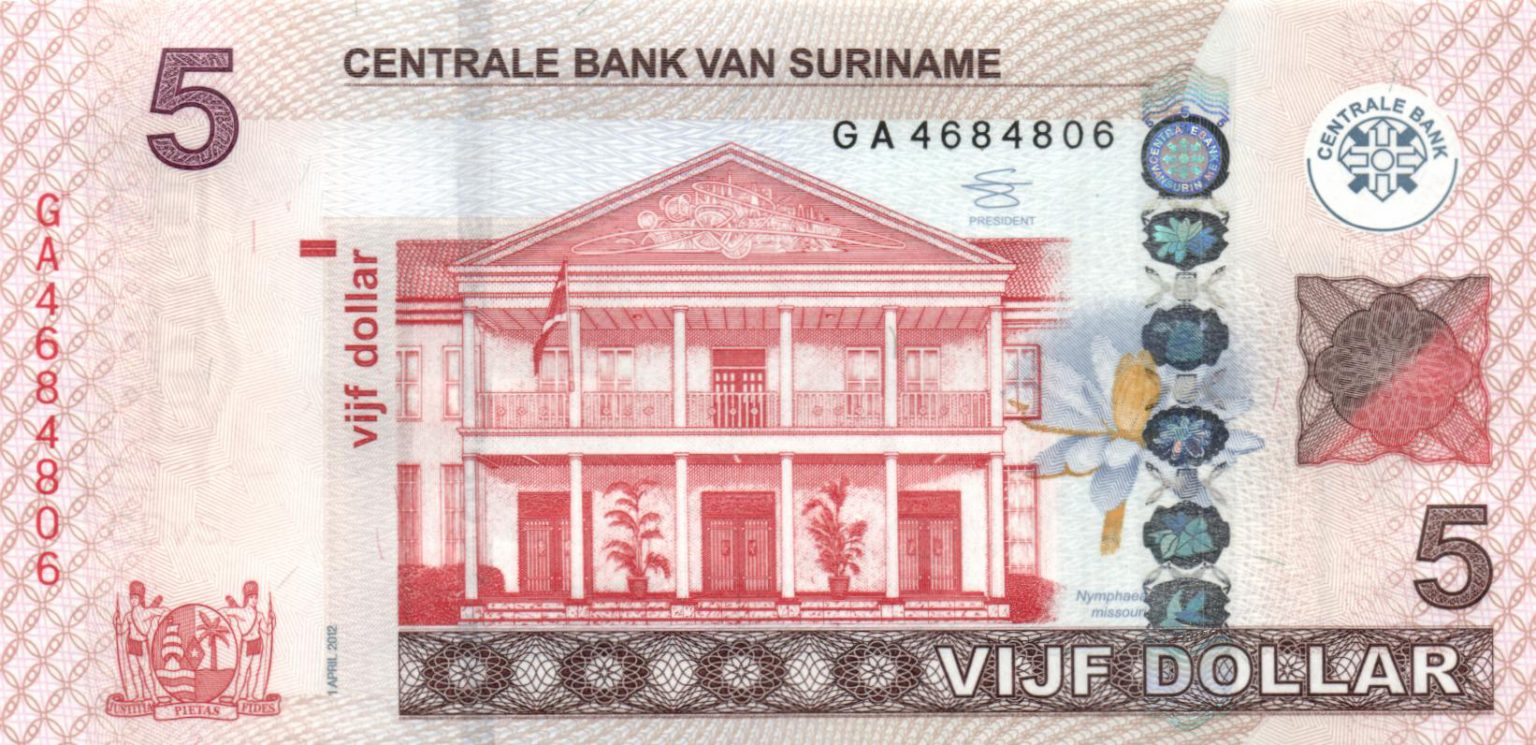
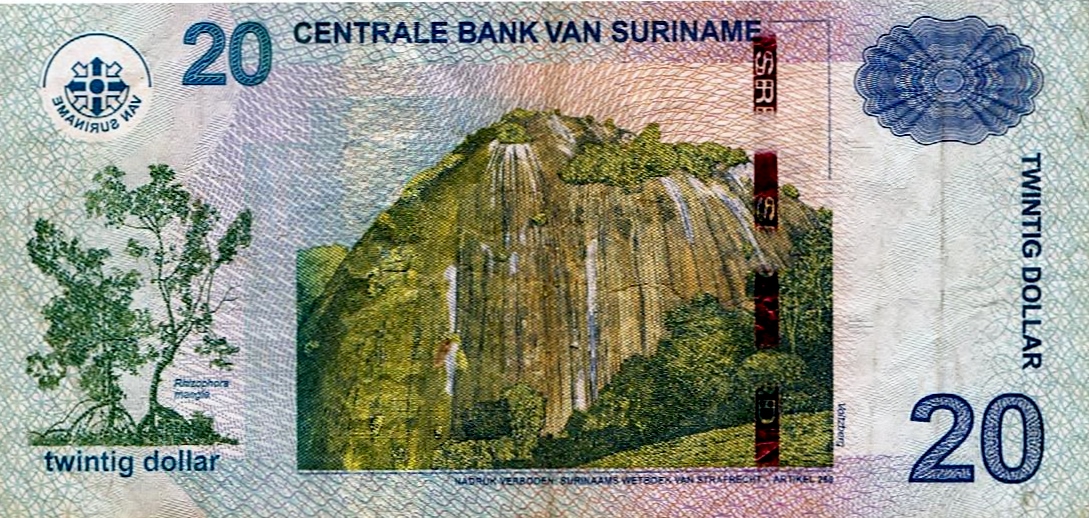
The new dollar's first banknotes, with modernised designs celebrating Suriname's cultural diversity and natural wealth, projected the image of a nation reconciled with itself and confident in its future. This carefully chosen symbolism accompanied the strategy of rebuilding the national monetary identity.
Gradual Stabilisation and Structural Challenges
The Surinamese dollar's first years (2004-2008) benefited from a favourable economic context: a commodity boom, restored political stability and the gradual return of the Surinamese diaspora. These positive conditions facilitated the new currency's stabilisation and allowed substantial foreign-exchange reserves to accumulate.
This period saw significant modernisation of the financial system: bank recapitalisation, improved banking supervision and the development of new financial instruments that strengthened financial intermediation in the national currency. These structural reforms supported the new dollar's credibility.
However, the Surinamese economy's structural weaknesses persisted: excessive dependence on commodity exports, a weak manufacturing sector and insufficient economic diversification. These structural imbalances kept the currency vulnerable to external shocks and limited monetary policy's room for manoeuvre.
The global financial crisis of 2008-2009 tested the new monetary system's resilience and revealed the need for deeper structural reforms to guarantee long-term stability. This ordeal nevertheless confirmed the relative strength of the reforms undertaken and the adaptability of the modernised monetary institutions.
| Indicator | 2004 | 2008 | 2012 | Change |
|---|---|---|---|---|
| Exchange rate (SRD/USD) | 2,7 | 2,7 | 3,3 | -18% |
| Annual inflation | 9,1% | 14,7% | 5,0% | -45% |
| Reserves (months of imports) | 3,2 | 4,8 | 5,1 | +59% |
| GDP per capita (USD) | 3 400 | 5 900 | 9 700 | ×2,85 |
Contemporary Crises and Monetary Resilience (2015-2024)
The Commodity Collapse and Renewed Turbulence
The collapse in world commodity prices from 2015 confronted the Surinamese dollar with its first major crisis since its creation. This abrupt deterioration in the terms of trade revealed the national economy's persistent structural vulnerability and tested the resilience of its modernised monetary institutions.
Falling export revenues (bauxite, gold and oil) generated severe macroeconomic imbalances: growing budget deficits, depleted foreign-exchange reserves and pressure for exchange-rate devaluation. These tensions called the exchange-rate regime's viability into question and required painful adjustments.
The controlled devaluation of 2015-2016, which moved the exchange rate from 3,35 to 7,5 SRD/USD, marked a turning point in monetary management. Although traumatic for importers and savers, this significant depreciation gradually restored external competitiveness and preserved foreign-exchange reserves.
This crisis also revealed the institutional maturity acquired: unlike in previous crises, the monetary authorities maintained a constructive dialogue with international partners and avoided the economic policy mistakes that had characterised earlier decades.
The Pandemic and Monetary Adaptation
The COVID-19 pandemic intensified Suriname's economic challenges through the collapse of tourism, disrupted supply chains and increased public-health spending. This global health crisis once again tested the adaptability of national monetary and economic institutions.
The monetary authorities adopted a balanced approach combining support for the economy with the preservation of monetary stability. This prudent management avoided past excesses while meeting the urgent liquidity needs of the private sector and public finances.
This period also saw the financial system's digital transformation accelerate with the development of electronic payments and digital banking services. These technological innovations modernised monetary infrastructure and facilitated financial inclusion in a geographically dispersed country.
The emergence of new economic sectors (export agriculture, ecotourism and digital services) gradually diversified the economy and reduced its historical dependence on extractive industries. This structural diversification strengthened the economy's and currency's resilience to sector-specific shocks.
Contemporary Suriname: Wealth and Challenges
Exceptional Natural Potential
Contemporary Suriname possesses exceptional natural-resource potential that positions the country favourably for the coming decades. With 93% of its territory covered by primary Amazon rainforest, it holds one of the world's last intact biodiversity reserves, a resource of growing value in the context of global climate change.
Mineral resources remain considerable: bauxite reserves among the world's largest, expanding gold deposits and promising offshore oil discoveries that are transforming economic prospects. Better harnessed than in the past, this underground wealth supports the national currency's stability.
The sustainable forestry industry is developing certified timber export supply chains for demanding European and North American markets. This responsible use of forest resources generates foreign-currency revenues while preserving ecological balance, offering an inspiring model for other Amazonian countries.
Modern tropical agriculture is exploring new export niches: exotic fruits, spices and organic products that find outlets in international niche markets. This agricultural diversification reduces historical dependence on traditional crops and extractive industries.
A Unique Multiethnic Society
Contemporary Surinamese society is a unique laboratory of multiethnic coexistence in South America. This exceptional diversity—descendants of enslaved Africans, Indian, Javanese, Chinese and Lebanese immigrants, and Indigenous Amerindian communities—creates remarkable cultural richness that is an increasingly valuable economic asset.
This cultural plurality generates specific economic advantages: close trade links with countries of origin (India, Indonesia and China), linguistic expertise for international trade and entrepreneurial creativity nourished by diverse traditions. These qualitative strengths partly offset the constraints of a small domestic market.
The multilingual education system (Dutch, English, Hindi, Javanese and Chinese) prepares a workforce suited to the demands of the globalised economy. This exceptional linguistic proficiency positions Suriname as a South American services hub in several specialised sectors.
Although sometimes fragile, this interethnic harmony offers an inspiring model of social cohesion in a region often marked by ethnic and social tensions. This relative social stability facilitates investment and sustainable economic development.
Future Prospects: Innovation and Sustainability (2025-2040)
The Transition to a Green Economy
Suriname is gradually embarking on an ambitious transition to a green economy that makes sustainable use of its exceptional natural assets. This innovative strategy positions the country as a pioneer of an environmentally respectful Amazonian development model while generating substantial revenues to support the national currency.
International climate-finance mechanisms (REDD+, carbon credits and green funds) are turning forest conservation into a significant revenue source. This monetisation of environmental protection is revolutionising the national economy by creating financial incentives for preservation rather than destructive exploitation.
The development of scientific ecotourism draws on exceptional biodiversity to attract researchers, students and specialist tourists from around the world. This high-end tourism niche generates foreign exchange while financing research and conservation, creating a virtuous circle between economy and environment.
Sustainable agriculture and agroforestry are developing certified production for international organic markets. These innovative supply chains make use of the richness of Amazonian soils while maintaining forest cover, demonstrating the economic viability of sustainable resource use.
Technological Innovation and Diversification
The emerging technology sector draws on Suriname's comparative advantages—an educated multilingual workforce, competitive costs and political stability—to develop outsourcing services for Europe and North America. This diversification into modern services reduces historical dependence on commodities.
The natural pharmaceutical industry is exploring the therapeutic potential of Amazonian biodiversity in partnership with international laboratories. This responsible bioprospecting could generate considerable revenue while respecting Indigenous communities' rights and ecosystem conservation.
The digital transformation of the traditional economy is modernising agriculture, forestry and public services. These technological innovations improve productivity and competitiveness while facilitating integration into global value chains.
The development of the creative economy draws on the country's multiethnic cultural richness: music, arts, crafts and gastronomy are finding international markets through digital technologies and diaspora networks. This cultural economy generates revenue while strengthening national identity.
| Sector | GDP Contribution 2024 | 2035 Target | Employment Potential |
|---|---|---|---|
| Extractive industries | 28% | 22% | 25 000 |
| Agriculture/Forestry | 12% | 18% | 45 000 |
| Services | 52% | 48% | 120 000 |
| Green economy | 8% | 12% | 15 000 |
The Surinamese Dollar: Stability and Contemporary Challenges
Monetary Performance and Modern Management
Today's Surinamese dollar reflects an economy gradually moving towards stability after decades of turbulence. With an exchange rate stabilised around 36-38 SRD/USD since 2020, this currency bears witness to macroeconomic consolidation efforts and the institutional maturity acquired by Suriname's monetary authorities.
The Centrale Bank van Suriname now adopts a monetary policy approach inspired by international best practices: inflation targeting, flexible exchange-rate management and stronger banking supervision. Supported by technical assistance from the IMF and World Bank, this institutional modernisation is gradually strengthening the currency's credibility.
Challenges nevertheless persist: still-high inflation (around 15-20% annually), limited foreign-exchange reserves (3-4 months of imports) and continued vulnerability to external shocks. These structural weaknesses require far-reaching reforms to guarantee lasting monetary stability.
The economy's partial dollarisation (30-40% of transactions in USD) illustrates the persistent fragility of confidence in the national currency. Although problematic for monetary policy, this monetary coexistence paradoxically demonstrates the Surinamese economy's flexibility in adapting to constraints.
Regional Integration and International Positioning
Suriname is gradually developing its integration into South American regional economic mechanisms while preserving its historical ties with the Netherlands and the European Union. This dual geopolitical affiliation is a unique asset for diversifying economic partnerships and stabilising the national currency.
Participation in UNASUR and CELAC initiatives facilitates regional trade and reduces dependence on traditional European and North American markets. This geographical diversification of trade strengthens the economy's resilience to shocks affecting particular regions.
Technical cooperation agreements with Brazil, French Guiana and Guyana create cross-border economic synergies that make use of Suriname's strategic location. These partnerships generate transit and service revenues that diversify the national economy.
The Surinamese diaspora in the Netherlands (350 000 people) is a major economic asset through remittances (8% of GDP), investment and close trade links with Europe. This unique diaspora relationship supports the balance of payments and facilitates access to European markets.
Monetary Innovation and Digital Transformation
Modernising the Financial System
Suriname's financial system is undergoing accelerated modernisation driven by the adoption of digital technologies and improved banking regulation. This transformation facilitates financial inclusion in a geographically dispersed country and improves monetary policy's effectiveness.
The development of mobile payments and digital banking services meets the needs of a young (median age 31) and technologically engaged population. These innovations reduce transaction costs and facilitate access to financial services in the country's traditionally underbanked interior.
The Centrale Bank is exploring the issuance of a central bank digital currency (CBDC) to modernise the payments system and reduce informal dollarisation. This technological innovation could revolutionise Suriname's monetary economy and serve as a model for other small Caribbean economies.
Fintech partnerships with Dutch and Brazilian companies are accelerating digital transformation while reducing development costs. This cross-border technological cooperation illustrates the advantages of Suriname's unique geopolitical position.
Environmental Challenges and Green Opportunities
Climate change presents both a major challenge and an exceptional economic opportunity for Suriname. As custodian of 15% of the remaining Amazon rainforest, the country plays a crucial role in global climate regulation, a position that can have economic value.
International climate finance is turning environmental conservation into a significant source of budget revenue. Suriname has already received more than 200 million USD in REDD+ financing and carbon credits, revenues that directly support the national currency's stability.
This environmental strategy attracts international green investment in renewable energy, sustainable agriculture and ecotourism. These emerging sectors create skilled jobs and generate foreign exchange that diversifies the economy beyond traditional extractive industries.
The development of environmental expertise positions Suriname as a specialist consultant for other Amazonian and tropical countries. Exporting this know-how generates service revenues while strengthening the country's international reputation.
Conclusion: The Rebirth of an Amazonian Nation
The history of the Surinamese dollar, from its creation in 2004 to its contemporary position, remarkably illustrates the resilience and adaptability of a small nation facing major economic, political and environmental challenges. Born from the ashes of catastrophic hyperinflation that had destroyed national monetary credibility, this currency now accompanies a society seeking a balance between developing its exceptional natural wealth and preserving its unique environmental heritage.
Suriname's monetary journey offers universal lessons about the importance of economic governance, productive diversification and institutional innovation in building stability in small open economies. From the colonial economy of exploitation to contemporary green-economy strategies, this experience demonstrates that historical constraints can be turned into competitive advantages through visionary policies.
Today, the Surinamese dollar symbolises the aspirations of a uniquely multiethnic people to build sustainable prosperity that respects the exceptional Amazonian environment in its care. This currency carries the hope that small economic size can be offset by environmental excellence, that cultural diversity can create competitive advantages and that innovation can turn climate challenges into economic opportunities.
In a world facing climate emergencies and seeking alternative development models, Suriname's experience offers inspiring perspectives on possible paths towards a post-extractive economy based on the sustainable valuation of ecosystem services. This lesson from a small Amazonian nation resonates far beyond its borders and contributes to global thinking about our planet's future.
The Surinamese dollar, the currency of an ongoing Amazonian rebirth, will continue to accompany this extraordinary country in its role as guardian of global biodiversity while building modern prosperity that respects its multicultural values and exceptional environmental heritage. This creative synthesis of tradition and innovation, conservation and development, local and global may be the most valuable legacy Suriname can offer the contemporary world.
This article draws on the editorial collection supplied in 2025. Figures and descriptions should be read in their original context. About the content