The banknotes in pictures

Colonial Origins and Monetary Chaos (1760-1841)
French Heritage and the British Conquest
Canada's monetary history begins under French rule with innovations remarkable for their time. As early as 1685, intendant Jacques de Meulles creates North America's first paper money by using playing cards as emergency currency. Born out of a chronic coin shortage, this invention foreshadows Canada's future monetary challenges.
New France develops a sophisticated monetary system based on the French livre but adapted to colonial realities. Local "livres du pays" are worth around 25% less than French livres, reflecting transport costs and transatlantic commercial risks. This structural depreciation creates the first exchange mechanisms in the North American economy.
The British conquest of 1760 disrupts this monetary balance. The British military administration temporarily maintains the French system, but the gradual introduction of sterling creates a complex coexistence of currencies. French inhabitants retain their monetary habits, while new British settlers favour their traditional points of reference.
The Period of Monetary Chaos (1760-1841)
The decades following the conquest see genuine monetary chaos take hold. British pounds sterling, Spanish dollars, surviving French coins and various American currencies circulate simultaneously. This situation creates multiple fluctuating exchange rates that considerably complicate commercial transactions.
Loyalist immigration following American independence (1783-1784) intensifies this complexity. The 40 000 Loyalists bring their American monetary habits, including familiarity with the Spanish "dollar" widely used in the Thirteen Colonies. This growing American influence clashes with British monetary orthodoxy.
The Napoleonic Wars (1803-1815) further aggravate the situation. Coin shortages prompt various institutions to issue their own banknotes: the Bank of Montreal (1817), the Quebec Bank (1818) and numerous local banks develop private monetary systems without central coordination.
1760 : British conquest and introduction of sterling
1817 : Founding of the Bank of Montreal
1841 : Act of Union and attempted monetary standardisation
1850 : Decimal currency legislation
1858 : Official adoption of the Canadian dollar
The Birth of the Canadian Dollar (1841-1867)
The Decimal Revolution and American Influence
The Act of Union of 1841, creating the Province of Canada, catalyses monetary debate. Francis Hincks, the first Finance Minister, identifies an urgent need for monetary reform to stimulate economic development. Growing trade with the United States makes retaining Britain's pound-shilling-penny system increasingly anachronistic.
The Currency Act of 1850 is the first decisive step. It authorises use of the decimal system alongside the British system, creating a unique period of monetary transition. Canadians can now count in "dollars" and "cents" while retaining sterling as the reference for official transactions.
This duality reveals the era's geopolitical tensions. On one side, North American economic integration encourages adoption of the American system. On the other, imperial loyalty demands that British references be retained. The Province of Canada skilfully navigates these conflicting constraints.
A crucial step is taken in 1853 with the establishment of a fixed exchange rate: 1 pound sterling = 4 Canadian dollars and 86⅔ cents. Maintained until 1914, this parity firmly anchors the future Canadian dollar in the international monetary system while preserving ties with London.
Formal Adoption in 1858 and Its Implications
The Currency Act of 1858 officially marks the birth of the Canadian dollar. Adopted at the initiative of Finance Minister Alexander Tilloch Galt, the law definitively establishes the dollar as the Province of Canada's principal monetary unit. Revolutionary for a British colony, the decision sparks vigorous debate in London and Ottawa.
The choice of the term "dollar" over any other name reflects a subtle geoeconomic strategy. By adopting terminology familiar to Americans without exactly copying their system, Canada facilitates cross-border trade while asserting its monetary distinctiveness.
Practical implementation reveals the scale of the challenge. Britain's Royal Mint strikes the first Canadian coins in 1858, but production remains limited to small denominations. Large transactions continue through private banknotes, creating an original mixed public-private system.
This period also sees the first discussions of Canadian monetary imagery. Coins bear Queen Victoria's portrait but gradually incorporate distinctly Canadian symbols: the maple leaf, the beaver and colonial coats of arms. This symbolic combination foreshadows the future Canadian state's visual identity.
Confederation and Monetary Assertion (1867-1914)
Standardisation after Confederation
Canadian Confederation in 1867 inherits a still-fragmented monetary landscape. Nova Scotia still officially uses sterling, New Brunswick retains its own dollar and the Province of Canada uses the dollar established in 1858. Monetary harmonisation becomes a national priority for the young Dominion.
The Uniform Currency Act of 1871 completes this unification at the initiative of John Rose, the first federal Finance Minister. It establishes the Canadian dollar as the Dominion's sole currency, standardises coins and banknotes and makes Ottawa the national monetary centre. The operation succeeds without major disruption, demonstrating the maturity of Canadian institutions.
Canada's territorial expansion tests this new monetary unity. The purchase of Rupert's Land from the Hudson's Bay Company (1869) and British Columbia's entry (1871) extend the Canadian dollar to the Pacific. This continental monetary integration anticipates the emergence of a truly national economy.
The development of the transcontinental railway (1881-1885) consolidates this integration. Financed in Canadian dollars and paying its workers in that currency, the Canadian Pacific Railway physically spreads the new national currency from Halifax to Vancouver. This physical infrastructure is accompanied by a coherent monetary infrastructure.
The Canadian Dollar's Golden Age (1885-1914)
The period 1885-1914 marks the young Canadian dollar's golden age. Canada's economy enjoys exceptional growth driven by mass immigration, development of the West and exploitation of natural resources. The Canadian dollar accompanies and facilitates this remarkable economic expansion.
The discovery of gold in the Klondike (1896-1899) tests the stability of Canada's monetary system. Gold inflows generate inflationary pressures, but the decentralised banking system absorbs these shocks without major disruption. This resilience strengthens international confidence in the emerging Canadian dollar.
Canadian banking innovation impresses international observers. Unique in North America, the branch banking system efficiently distributes money across the national territory. Major Canadian banks—Royal Bank, Bank of Montreal and Bank of Toronto—develop national networks with no American equivalent.
| Period | Canadian GDP (CAD millions) | Population | Monetary Innovation |
|---|---|---|---|
| 1870 | 459 | 3.7 million | Monetary standardisation |
| 1890 | 1 050 | 4.8 million | Territorial expansion |
| 1910 | 2 734 | 7.2 million | Modern banking system |
Major Trials: Wars and Crises (1914-1950)
The First World War and the Birth of the Central Bank
The First World War radically transforms the nature of the Canadian dollar. The war effort requires major monetary innovations: "Victory Bonds", exchange controls and the first experience of a centrally directed economy. These exceptional measures gradually become permanent.
The creation of the Bank of Canada in 1934, in the depths of the Depression, marks the culmination of this development. Its first governor, Graham Towers, must manage the economic crisis while asserting Canadian monetary sovereignty. This dual mission has a lasting influence on the Canadian central bank's doctrine.
Abandoning the gold standard (1931) frees the Canadian dollar from its metallic constraints. Taken in coordination with Britain but independently of the United States, this decision asserts a new monetary autonomy. The CAD becomes one of the world's first fully fiat currencies.
The controlled devaluation that follows—the Canadian dollar moves from parity with the USD to USD 0.90 in 1933—stimulates exports and facilitates recovery. Innovative for its time, this policy inspires other countries and establishes the emerging Bank of Canada's reputation for competence.
The Second World War: A Test of Maturity
The Second World War tests the maturity of Canada's monetary system. Unlike in 1914, Canada enters the war with strong monetary institutions and an experienced central bank. This institutional preparation enables remarkably effective economic mobilisation.
Canadian financial innovation impresses the Allies. Victory Bonds, compulsory saving and price controls maintain monetary stability while financing a war effort proportionately greater than that of the United States. These techniques inspire other wartime economies.
Exchange controls, introduced in September 1939, temporarily make the Canadian dollar non-convertible. Unthinkable in peacetime, this measure reveals the monetary system's ability to adapt to exceptional circumstances. The Foreign Exchange Control Board acquires unique expertise in foreign exchange management.
The Hyde Park Agreement (1941) with the United States revolutionises North American monetary relations. Negotiated directly by Mackenzie King and Franklin Roosevelt, it establishes a bilateral clearing system that foreshadows future continental economic integration.
A closer look at the banknotes
International Assertion (1950-1990)
The Innovation of a Floating Exchange Rate
In 1950, Canada shocks the monetary world by adopting a floating exchange rate, becoming the first developed country to abandon the Bretton Woods system. Taken under pressure from massive American capital inflows, this bold decision anticipates global monetary developments by twenty years.
This pioneering experience with a floating exchange rate demonstrates the maturity of Canada's monetary system. Contrary to pessimistic predictions, the Canadian dollar quickly finds a stable equilibrium around USD 1.03, validating the era's most advanced economic theories.
James Coyne, Bank of Canada governor (1955-1961), develops an original monetary doctrine suited to Canadian circumstances. His "tight money" policy aims to counter inflation imported from the United States, even at the cost of accepting a strong dollar that penalises exports. This approach sparks vigorous political debate.
The temporary return to fixed exchange rates (1962-1970) under political pressure illustrates the tension between monetary autonomy and political constraints. Marked by recurring currency crises, this interlude indirectly confirms the floating system's superiority for Canada's economy.
The Challenges of Inflation and the Monetary Revolution
The 1970s-1980s confront the Canadian dollar with its most serious crisis since the Depression. Inflation reaches 12% in 1974 and 1981, testing the Bank of Canada's credibility. Gerald Bouey, governor from 1973 to 1987, wages a determined battle against this inflationary spiral.
The adoption of monetary aggregate targeting (1975) marks a doctrinal revolution. Inspired by Milton Friedman but adapted to Canadian circumstances, this monetarist approach profoundly influences global monetary policy. Canada becomes an international monetary laboratory.
The recession of 1981-1982, the most severe since the 1930s, painfully tests this new approach. Unemployment reaches 13%, but inflation falls dramatically from 12% to 4%. Although socially costly, this shock therapy restores the Canadian dollar's anti-inflation credibility.
John Crow, Bouey's successor (1987-1994), takes this logic further with the goal of "price stability". His "zero inflation" doctrine sparks major controversies but definitively establishes the Bank of Canada's reputation for discipline.
The Modern Canadian Dollar (1990-2024)
The Innovation of Inflation Targeting
In 1991, Canada once again revolutionises global monetary policy by adopting explicit inflation targeting. Developed jointly by the Bank of Canada and the Department of Finance, this innovation establishes a 2% inflation target with a tolerance band of 1% to 3%.
Gordon Thiessen (1994-2001) and then David Dodge (2001-2008) refine this revolutionary system. Canadian inflation targeting becomes a global model: more than 30 central banks adopt similar systems. This doctrinal influence considerably strengthens the Canadian dollar's international prestige.
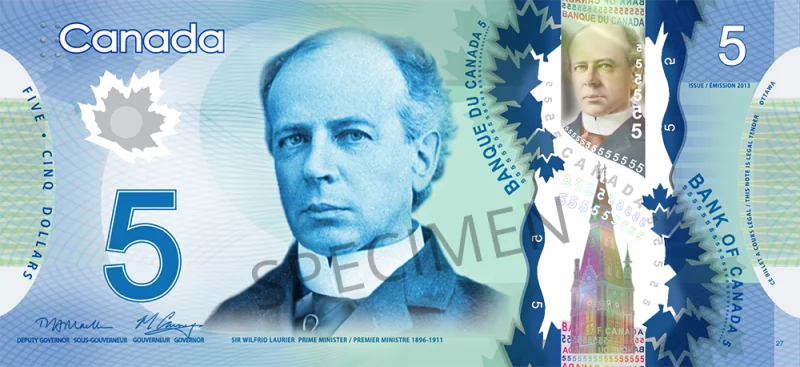
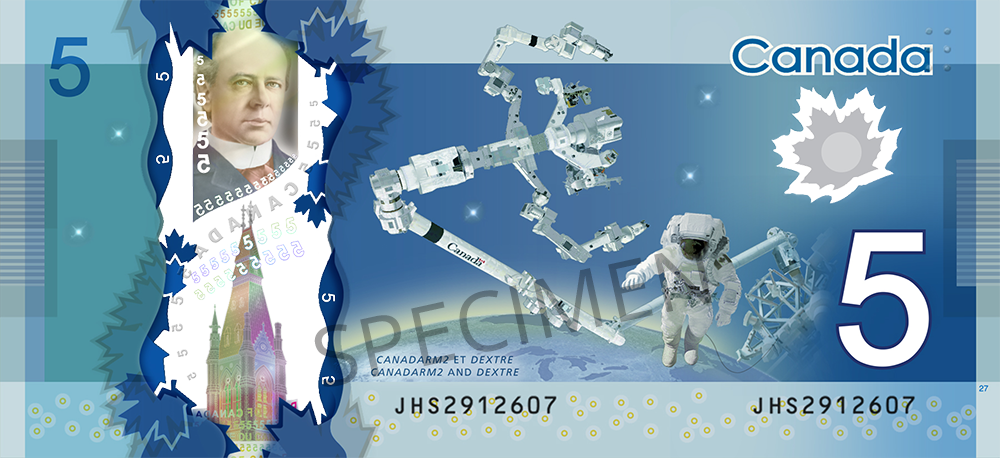
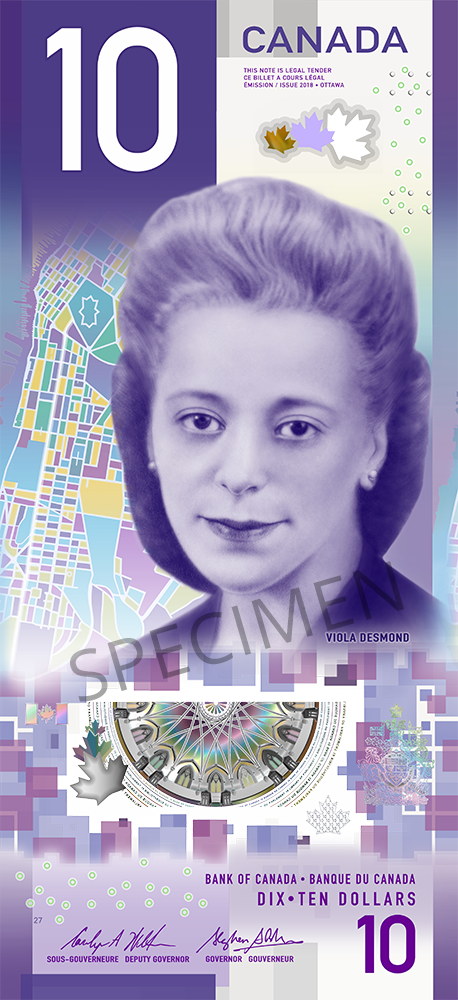
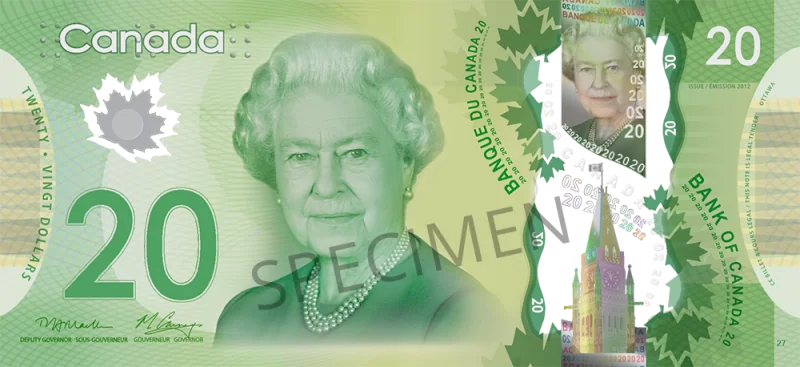
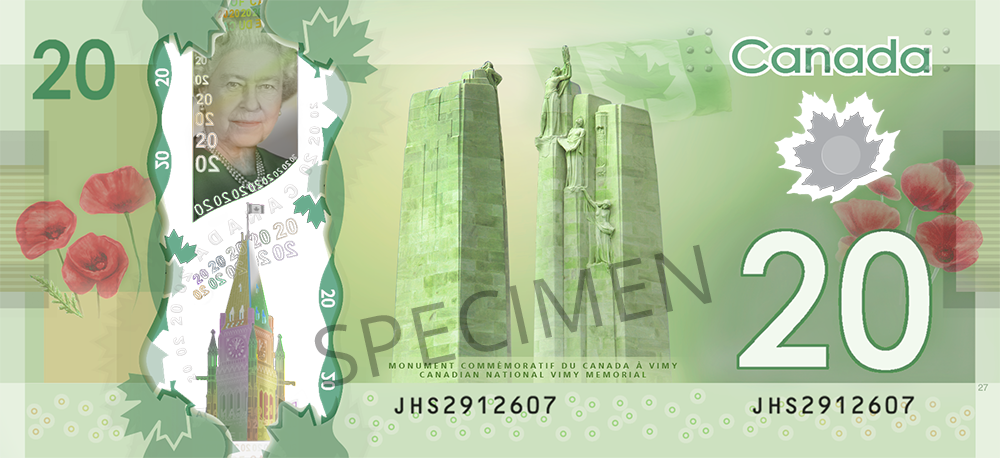
The introduction of polymer banknotes (2011-2013) illustrates Canada's capacity for technological innovation. Among the world's most secure, these notes inspire many other countries. This technological lead enhances the Canadian monetary system's modern image.
Mark Carney (2008-2013) manages the 2008 financial crisis brilliantly, making Canada one of the few developed economies to avoid a banking recession. This exceptional performance strengthens the Canadian dollar's international appeal as a regional safe haven.
Contemporary Challenges and Digital Adaptation
Tiff Macklem, governor since 2020, faces the challenges of the 21st century: the COVID-19 pandemic, the digital revolution and competition from cryptocurrencies. His management of the pandemic crisis, with zero interest rates and massive bond-buying programmes, maintains Canadian economic stability.
The Canadian digital dollar project, launched in 2020, positions Canada at the forefront of monetary innovation. This potential CBDC aims to maintain monetary sovereignty in the face of private cryptocurrencies and initiatives by other central banks.
The USMCA trade agreement (2020) and growing North American economic integration create new challenges for Canadian monetary autonomy. The CAD must navigate between continental convergence and national distinctiveness, the delicate balance that has defined its identity since 1858.
The energy transition and climate policy gradually transform the Canadian dollar's economic base. From a "petrodollar", the CAD evolves towards a "green currency", accompanying Canada's economic diversification into clean technologies and renewable resources.
International Economic Position
The CAD as a Reserve Currency
Today, the Canadian dollar ranks fifth among the world's reserve currencies, accounting for approximately 2.1% of global foreign exchange reserves. Modest but stable, this position reflects the relative size of Canada's economy and the quality of its monetary institutions.
The CAD's structural strengths include Canadian political stability, abundant natural resources and a strong banking system. These factors particularly attract emerging-market central banks seeking to diversify reserves beyond the traditional USD-EUR-JPY trio.
The foreign exchange market ranks the CAD as the sixth most-traded currency, accounting for around 5% of daily transactions. Remarkable for a medium-sized economy such as Canada's, this international liquidity demonstrates the Canadian dollar's successful integration into the global financial system.
2011 : Introduction of polymer banknotes
2015 : The CAD falls to USD 0.68 amid the oil price collapse
2020 : Exemplary management of the COVID-19 crisis
2024 : Stabilisation around USD 0.74
Future Challenges and Opportunities
The Canadian dollar's future will depend largely on its ability to accompany the transformation of Canada's economy. Gradual economic diversification, technological innovation and the energy transition create new opportunities as well as new risks for monetary stability.
Canadian demographics, with an ageing population offset by sustained immigration, influence the CAD's long-term prospects. This demographic dynamic, unique in North America, could give the Canadian dollar a lasting comparative advantage.
Growing North American financial integration raises questions about future monetary autonomy. Some economists envisage gradual convergence towards a continental monetary union, while others favour preserving a distinct Canadian monetary identity.
Conclusion: A Legacy of Pragmatism and Innovation
The Canadian dollar's history, from New France's card money to contemporary CBDC projects, illustrates a remarkable capacity for adaptation and innovation. Marked by bold choices—early adoption of a decimal system, experimentation with floating exchange rates and the invention of inflation targeting—this journey places Canada at the forefront of global monetary development.
Canadian pragmatism, a successful synthesis of British heritage and American realism, has gradually built a distinctive monetary system adapted to the country's geographical and economic constraints. This non-dogmatic approach continues to characterise contemporary management of the Canadian dollar.
Today, the CAD faces the challenges of the 21st century with strengths forged through more than 160 years of monetary experience. Its historical capacity for innovation and adaptation suggests continued successful development, confirming its status as a respected and influential developed-economy currency despite the relative size of Canada's economy.
This article draws on the editorial collection supplied in 2025. Figures and descriptions should be read in their original context. About the content