The banknotes in pictures
Colonial Origins and a Cultural Mosaic (1498-1962)
The Meeting of Worlds and the Plantation Economy
The monetary history of Trinidad and Tobago begins with the arrival of Christopher Columbus in 1498, who named Trinidad in honour of the Holy Trinity. Unlike other Caribbean islands, however, Trinidad remained economically marginal within the Spanish empire for almost three centuries, serving mainly as a logistical base for expeditions to the South American mainland.
This initial economic marginality explains the limited spread of traditional European monetary systems. The Indigenous peoples—Arawaks and Caribs—long retained their traditional systems of exchange based on barter and the use of valuable local goods (pearls, rare bird feathers and shells). This coexistence between European and Indigenous monetary systems characterised the Spanish period.
The transformation began with the Cédula de Población (1783), a Spanish royal decree encouraging Catholic immigration to develop the island. This policy attracted large numbers of French planters fleeing the revolutions in Haiti and Martinique, bringing capital, enslaved people and agricultural expertise. This French-speaking immigration radically transformed Trinidad's economy and society.
The British conquest of 1797, led by Sir Ralph Abercromby, occurred as Trinidad was experiencing its first significant economic expansion. This geopolitical transition brought greater monetary complexity, with the gradual introduction of sterling alongside Spanish pesos and the French currencies brought by immigrant planters.
Union with Tobago and Economic Expansion (1889-1962)
The administrative union of Trinidad and Tobago in 1889 created the modern political entity, but also revealed the economic disparities between the two islands. Larger and more populous Trinidad developed a diversified economy combining sugar, cocoa and an emerging oil industry. Smaller Tobago remained largely agricultural and dependent on Trinidad.
The discovery of oil in 1908 gradually revolutionised Trinidad's economy. The first fields, exploited by British and American companies, generated new revenue that diversified the economic base beyond traditional agriculture. This energy transformation had a lasting influence on subsequent monetary developments.
The immigration of Indian workers (1845-1917), intended to replace emancipated slaves on the plantations, added further complexity to the local cultural mosaic. This large-scale immigration—144 000 Indians over 70 years—brought new informal financial systems (rotating savings groups and community credit) that enriched the local monetary ecosystem.
The two world wars accelerated Trinidad's industrialisation. The American naval base at Chaguaramas (1941-1967), negotiated under the "destroyers-for-bases deal", injected substantial capital into the local economy and familiarised the population with the US dollar, laying the groundwork for future monetary choices.
1783 : Cédula de Población, French immigration
1797 : British conquest
1845 : Beginning of large-scale Indian immigration
1908 : Discovery of oil
1958 : Membership of the West Indies Federation
1962 : Independence
The Federal Experiment and Monetary Independence (1958-1964)
Trinidad in the Federation: Leadership and Disillusionment
Trinidad and Tobago's entry into the West Indies Federation in 1958 automatically placed the island in a position of regional economic leadership. With 25% of the federal population and 40% of its economy, Trinidad quickly became the main financial contributor to this experiment in Caribbean integration, generating growing tensions with the poorer islands.
Eric Williams, Trinidad's prime minister and a distinguished intellectual, developed an ambitious vision for the Federation. His economic expertise—he was the author of "Capitalism and Slavery" (1944)—influenced federal debates on monetary policy and economic development. His ambitions, however, soon encountered resistance from the other islands.
The federal West Indies dollar, introduced in 1958, initially symbolised this ambition for integration. However, economic disparities between members created recurring tensions over common monetary policy. Trinidad, with its emerging oil economy, had different needs from the purely agricultural islands.
Jamaica's departure in 1961 precipitated an existential crisis for the Federation. A pragmatic Eric Williams bluntly summed up the situation: "10 minus 1 equals 0". This political arithmetic revealed the impossibility of maintaining a Caribbean monetary union without the region's two largest economies.
The Creation of the Trinidad and Tobago Dollar (1964)
The Federation's final collapse in 1962 forced Trinidad and Tobago to develop its own monetary institutions quickly. William Demas, a Cambridge-trained Trinidadian economist, designed the technical framework for the future national currency, drawing on international best practices.
The Currency and Banking Act of 1964 formally established the Trinidad and Tobago dollar and created the Central Bank of Trinidad and Tobago. Initially led by Victor Bruce, this institution combined international technical expertise with an in-depth understanding of the local economy's distinctive features.
On 23 August 1964, the new Trinidad and Tobago dollar replaced the British West Indies dollar at a parity rate of 1:1. This technical transition proceeded without major difficulties thanks to meticulous preparation and public confidence in the emerging national institutions.
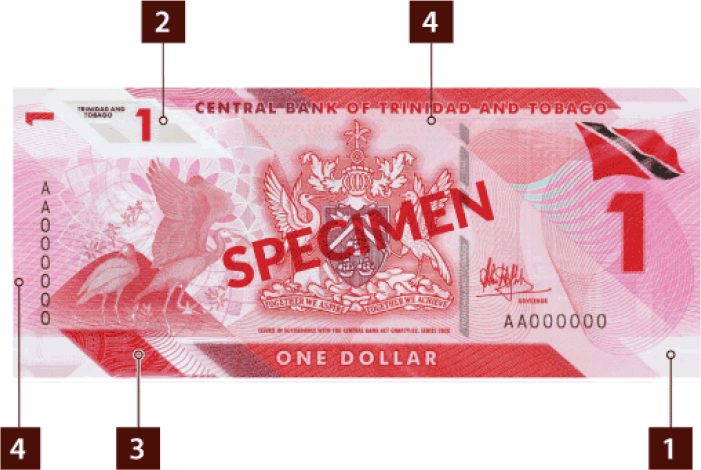
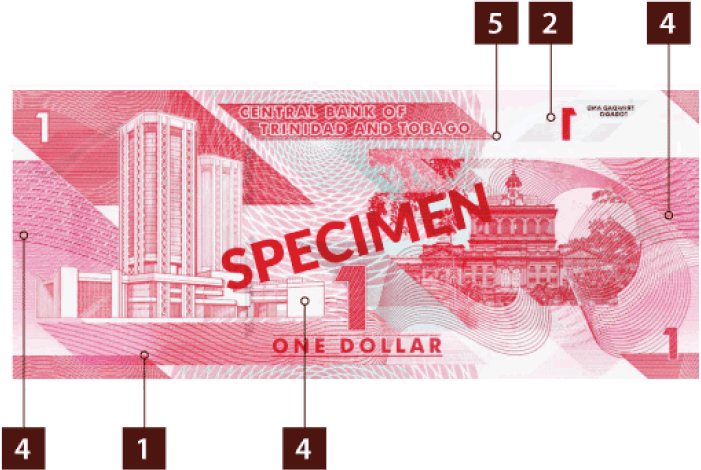
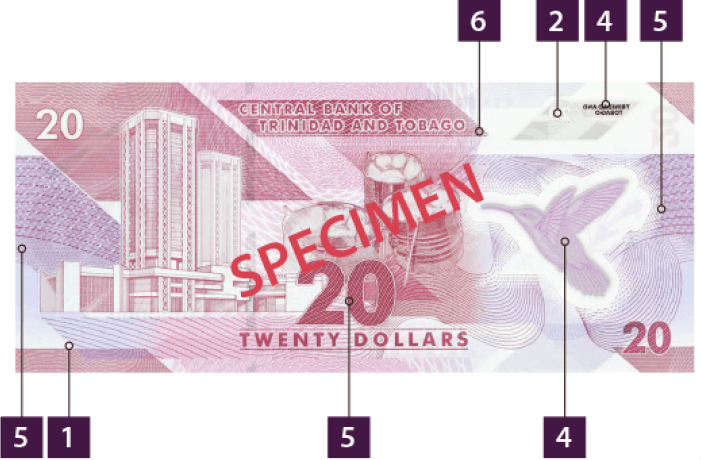
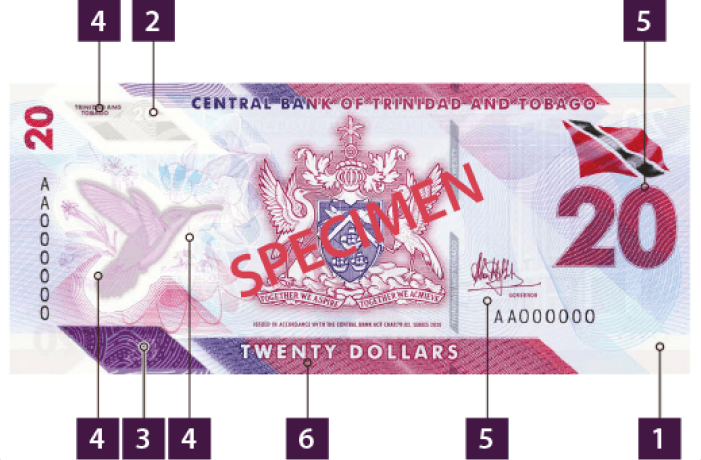
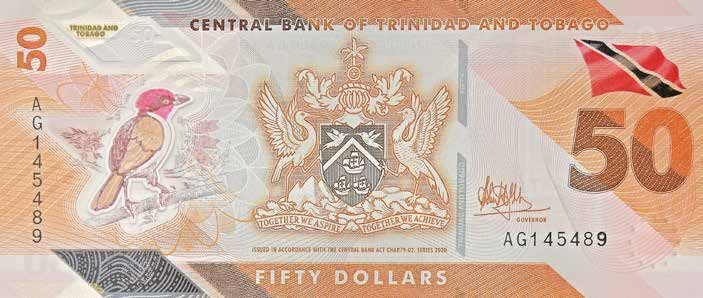
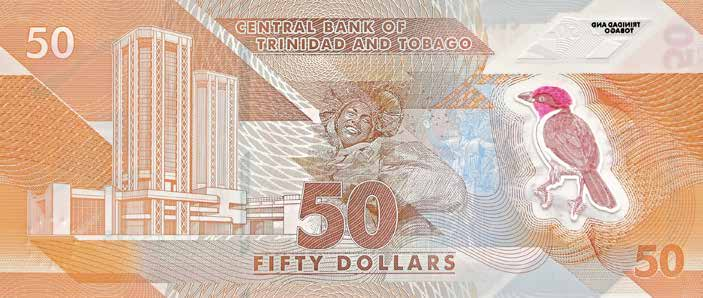
The first TTD banknotes, with designs celebrating the nation's cultural diversity, reflected a desire to assert its identity. The chosen symbols—hummingbird, steel pan, colonial architecture and ethnic diversity—projected the image of a modern nation proudly embracing its multiculturalism.
The Oil Golden Age and Economic Transformation (1970-1985)
The Oil Shocks and the Revenue Surge
The oil shocks of 1973 and 1979 transformed Trinidad and Tobago into one of the Caribbean's most prosperous nations. Oil revenues, which increased tenfold in a decade, financed an economic and social transformation on an unprecedented scale in the region. This exceptional windfall tested the emerging monetary institutions and required rapid adjustments.
Eric Williams, in power from 1962 to 1981, orchestrated this transformation with an ambitious vision of development. His strategy of industrialisation funded by oil revenues aimed to turn Trinidad into the "Singapore of the Caribbean". This ambition required sophisticated monetary policy to manage the massive influx of foreign currency.
The creation of the Point Lisas petrochemical complex illustrates this strategy of industrial diversification. This vast project, financed by oil revenues, attracted international investors and technical expertise from around the world. A stable TTD facilitated these massive investments and strengthened the Trinidadian economy's international credibility.
This period also saw the development of a generous welfare state: free education through university, universal healthcare, food subsidies and extensive public-sector employment. This popular redistribution, financed by oil rents, maintained social cohesion despite widening economic inequalities.
Institutional Innovation and the Management of Abundance
William Demas, who became governor of the central bank (1974-1982), developed an innovative monetary approach suited to the challenges of an oil economy. His prudent management of the influx of petrodollars avoided the pitfalls of excessive inflation while financing national economic development.
The establishment of oil stabilisation funds, forerunners of modern sovereign wealth funds, illustrates this institutional sophistication. Designed to smooth fluctuations in oil revenue, these mechanisms preserved monetary stability and financed long-term investment.
This period also saw the emergence of an active economic diplomacy. Trinidad developed close relations with neighbouring Venezuela, OPEC and the Gulf's producing countries. This integration into international oil networks strengthened the TTD's geostrategic position.
Financial innovation accompanied this prosperity. The development of the local banking sector, the creation of capital markets and the emergence of regional financial services transformed Port of Spain into a significant Caribbean financial centre, a potential rival to Kingston and Bridgetown.
| Indicator | 1970 | 1980 | Growth |
|---|---|---|---|
| GDP per capita (USD) | 800 | 6 000 | ×7,5 |
| Oil revenues (% of GDP) | 15% | 45% | ×3 |
| Foreign-exchange reserves (USD billions) | 0,1 | 2,8 | ×28 |
| Unemployment rate | 15% | 8% | -47% |
A closer look at the banknotes
The 1980s Crisis and Lessons in Volatility (1982-1995)
The Oil Price Collapse and Its Consequences
The fall in oil prices in 1982-1986 abruptly confronted Trinidad and Tobago with the realities of a rent-based economy. In four years, oil revenues collapsed by 70%, triggering a severe recession that tested the resilience of monetary institutions. This crisis revealed the structural vulnerability of an economy overly dependent on hydrocarbons.
George Chambers, who succeeded Eric Williams after his death in 1981, inherited this major crisis without possessing his predecessor's intellectual authority. His hesitant handling of the economic crisis generated political and social instability, complicating the implementation of necessary structural reforms.
The devaluation of the TTD from 2,40 to 4,25 per US dollar between 1985 and 1988 gradually restored competitiveness but generated considerable imported inflation. This painful experience made Trinidadian policymakers aware of the need for economic diversification beyond hydrocarbons.
The IMF structural adjustment programmes, reluctantly accepted in 1988, imposed drastic fiscal discipline and economic liberalisation. Although technically rational, these reforms generated major social tensions in a society accustomed to the generous welfare state of the prosperous years.
The Attempted Coup and Institutional Resilience (1990)
The attempted coup by Jamaat al Muslimeen in July 1990 was the ultimate test for Trinidad's institutions. This insurrection, led by Yasin Abu Bakr and motivated partly by economic difficulties, temporarily paralysed the state but ultimately revealed the strength of its democratic institutions.
Paradoxically, this crisis strengthened confidence in the monetary institutions. Protected by the army, the central bank maintained its essential operations and preserved the stability of the financial system. This institutional resilience impressed international observers and reinforced the TTD's credibility.
Post-crisis management under Patrick Manning (1991-1995) prioritised national reconciliation and economic recovery. This consensus-based approach, avoiding mass repression, preserved social cohesion and facilitated the subsequent economic upturn.
This traumatic experience, which the country overcame, paradoxically strengthened Trinidad's institutional maturity. The system's ability to survive an existential crisis demonstrated its robustness and positively influenced international perceptions of the TTD.
Modernisation and Economic Diversification (1995-2024)
The Panday Era and the Gas Revolution
The election of Basdeo Panday in 1995, the first prime minister of Indian descent, symbolised Trinidad's democratic maturation and coincided with the discovery of major offshore gas fields. This energy revolution transformed Trinidad into a global exporter of liquefied natural gas, diversifying energy revenues beyond conventional oil.
This period saw the development of Atlantic LNG, a groundbreaking gas complex that positioned Trinidad as a regional energy hub. These massive investments, partly financed through international borrowing, required sophisticated monetary management of substantial capital flows.
Ewart Williams, governor of the central bank (2002-2015), modernised the institution and developed recognised expertise in managing oil economies. His innovations—stronger stabilisation funds, macroprudential oversight and payment modernisation—inspired other producing countries.
This period also saw the emergence of an ambition to make Trinidad a regional financial centre. Modernisation of the regulatory framework, the attraction of international institutions and the development of sophisticated financial services gradually diversified the economy beyond hydrocarbons.
Contemporary Challenges and Structural Adaptation
Keith Rowley, prime minister since 2015, faces the challenges of a further fall in energy prices and an accelerated need for economic diversification. His "Vision 2030" strategy aims to transform Trinidad into a diversified developed economy, reducing its traditional dependence on hydrocarbons.
This period has seen promising new sectors emerge: financial services, digital technology, creative industries and modern agriculture. Supported by accommodative monetary policy, this diversification aims to lay the foundations for sustainable growth beyond oil.
Alvin Hilaire, the current central bank governor, balances monetary stability with support for diversification. His prudent management preserves international confidence while facilitating the necessary structural economic transition.
The COVID-19 pandemic accelerated certain transformations by revealing the importance of the digital economy and online services. Trinidad is rapidly developing its technological infrastructure and digital skills, creating new economic opportunities.
Current Position and Future Prospects
The TTD in the Regional Economy
Today, the Trinidad and Tobago dollar occupies a unique position as the most stable currency in the English-speaking Caribbean after the Eastern Caribbean dollar. With a relatively stable exchange rate of around 6,8 TTD/USD, this currency enjoys the confidence of regional and international investors.
The nation's energy wealth generates substantial financial flows that reach throughout the Caribbean region. Trinidadian investment in neighbouring islands, remittances and trade make the TTD an informal regional reference currency.
This privileged position comes with growing regional responsibilities. Trinidad often acts as a "lender of last resort" for struggling Caribbean economies, strengthening the TTD's geopolitical influence beyond national borders.
The expertise developed in managing oil economies also attracts international attention. Trinidad's central bank advises other producing countries and participates in global discussions on natural resource management.
Innovation and Adaptation to Future Challenges
The exploration of central bank digital currencies positions Trinidad at the forefront of Caribbean monetary innovation. Conducted in cooperation with regional institutions, this research aims to modernise the payments system and strengthen financial inclusion.
The development of green finance offers new opportunities for diversification. Trinidad is actively exploring green bonds, sustainable investments and financing for the energy transition, positioning the TTD as a reference currency for regional climate finance.
Caribbean economic integration is gradually deepening, creating new opportunities for the TTD. CARICOM trade agreements, regional payment facilities and shared infrastructure projects strengthen the international use of Trinidad and Tobago's currency.
The accelerated digital transformation of Trinidad's economy is creating new growth sectors less dependent on natural resources. This technological diversification could reduce the TTD's structural volatility linked to energy cycles.
Conclusion: Energy Wealth and a Vision for the Future
The history of the Trinidad and Tobago dollar, from its birth in 1964 to contemporary challenges, illustrates the opportunities and constraints facing a small nation rich in energy resources. Marked by alternating periods of prosperity and adjustment, this trajectory reveals the enduring challenges of monetary management in a rent-based economy.
The TTD's relative success rests on distinctive institutional strengths: recognised technical expertise, prudent resource management and the ability to adapt to economic cycles. Developed over decades, these strengths continue to support the currency despite the structural challenges of an energy economy.
Today, Trinidad and Tobago faces the crucial challenge of transitioning beyond oil in a context of global climate change. This necessary transformation tests its institutions' historical adaptability and could fundamentally redefine the nation's economic identity.
The TTD's future will depend largely on the success of this economic diversification and the country's ability to maintain its prosperity beyond hydrocarbons. Although uncertain, this transition rests on solid institutional foundations and recognised expertise that position this Caribbean currency favourably for the challenges of the 21st century.
This article draws on the editorial collection supplied in 2025. Figures and descriptions should be read in their original context. About the content