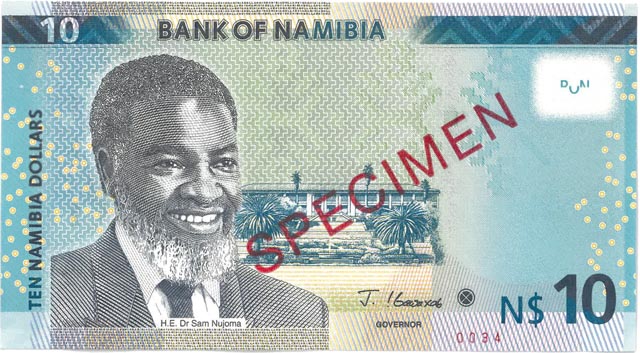
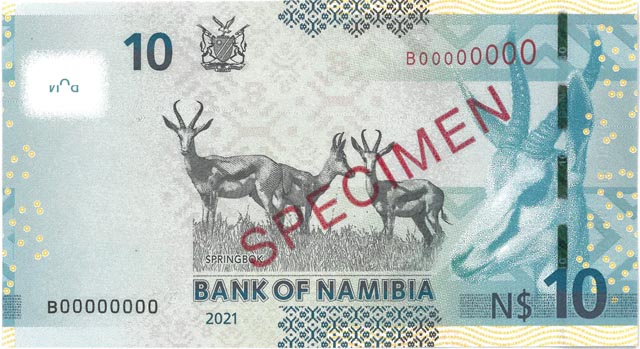
The banknotes in pictures
Precolonial Roots: Desert Civilisations (Prehistory-1884)
The First Peoples and Pastoral Economies
Contemporary Namibia's economic history is rooted in the ancient traditions of the San peoples (Bushmen), the first inhabitants of these arid lands, who developed sophisticated survival techniques over millennia, perfectly adapted to the desert's extreme constraints. These nomadic hunter-gatherers created complex exchange systems extending over thousands of kilometres and linking the Atlantic to the Indian Ocean.
The arrival of the Nama peoples (Khoikhoi) around the 10th century introduced pastoral livestock farming to the region, creating a dual economy combining nomadic pastoralism and seasonal hunting and gathering. This creative adaptation to climatic constraints developed techniques for sustainably managing water and grazing resources that still inspire rural development strategies today.
Bantu migrations, mainly of Ovambo and Herero peoples between the 14th and 16th centuries, introduced irrigated agriculture and settled livestock farming to the relatively wetter northern regions. This economic diversification created interethnic exchange networks that durably shaped Namibia's territorial organisation.
These precolonial societies developed sophisticated monetary systems based on cattle (wealth and social status), seashells and rare metals extracted by artisanal methods. Although transformed by colonisation, these economic traditions still profoundly influence contemporary rural economic practices.
First European Contacts and Atlantic Trade
The first European contacts, initiated by Portuguese navigator Bartolomeu Dias when he reached the Namibian coast in 1487, revealed the extreme hostility of this desert coastline, which long discouraged any attempt at systematic colonisation. This "Skeleton Coast" quickly became legendary among European sailors for its frequent shipwrecks and unforgiving environment.
This geographical marginality paradoxically preserved local societies' autonomy for almost four centuries, during which they developed at their own pace while selectively adopting certain European innovations (firearms, horses and metallurgical techniques) that gradually transformed regional balances.
The few European trading posts established on the coast developed limited but significant trade: elephant ivory, wild-animal skins and especially gum arabic in exchange for weapons, alcohol and manufactured goods. Although modest, these exchanges gradually introduced the European monetary economy into local trading networks.
This period also saw the first missionary activities, mainly conducted by the London Missionary Society from 1805, introducing writing, new agricultural techniques and the first elements of a modern economy. These innovations conceptually prepared future integration into the colonial economy.
1805 : First Christian missions
1884 : German colonisation
1915 : South African occupation
1990 : Independence
1993 : Creation of the Namibian dollar
German Colonisation and the Economy of Exploitation (1884-1915)
The Establishment of the Protectorate and Colonial Violence
The establishment of the German protectorate of South West Africa in 1884, during the "Scramble for Africa", abruptly transformed this marginal region into a laboratory of modern colonisation characterised by exceptional violence and systematic economic exploitation. This late but intensive colonisation revealed the most extreme methods of European imperialism in its final phase.
The German authorities' policy of land dispossession, progressively confiscating the best grazing land for redistribution to European settlers, destroyed traditional economic balances and triggered growing resistance that culminated in the Herero and Nama uprisings of 1904-1908.
General Lothar von Trotha's repression of these revolts constituted the 20th century's first genocide, with the systematic extermination of 80% of the Herero people (65 000 victims) and 50% of the Nama people (10 000 victims). This tragedy completely disrupted the traditional economy and freed immense territories for intensive colonial exploitation.
This period saw the establishment of a modern colonial economy based on extensive livestock farming, emerging mining (the first diamond discoveries at Lüderitz in 1908) and the construction of transport infrastructure (railways) connecting the interior to Atlantic ports. This forced modernisation laid the foundations of the contemporary economy.
The Emergence of the Modern Mining Economy
The discovery of exceptionally high-quality diamonds at Kolmanskop in 1908 revolutionised the protectorate's economy and attracted substantial capital that financed the development of southern Africa's first modern mining industry. This discovery transformed South West Africa from a marginal pastoral economy into a world-renowned producer of precious stones.
Monopolised by the Deutsche Diamanten Gesellschaft, diamond mining generated extraordinary profits that financed the expansion of colonial infrastructure and immigration by German settlers. This enclave economy created modern prosperity limited to mining areas while further marginalising Indigenous populations.
This period also saw modern commercial livestock farming develop through the introduction of European cattle breeds adapted to semi-arid conditions, the construction of water infrastructure (boreholes and reservoirs) and the establishment of trade networks with South Africa and Europe. This agricultural modernisation formed the colonial economy's other pillar.
The colonial monetary system first used the German mark, then developed local means of payment suited to the constraints of the enclave economy. These monetary innovations prepared future integration into the South African monetary union while creating the region's first experiences of modern monetary management.
South African Occupation and Forced Integration (1915-1990)
The Mandate and the Extension of Apartheid
The occupation of South West Africa by South African forces in 1915, formalised by the League of Nations mandate in 1920, forcibly integrated the territory into the South African economy and gradually extended apartheid to this de facto colony. Although generating modernisation, this economic integration institutionalised racial segregation and the systematic exploitation of Indigenous populations.
The South African administration developed an intensive extractive economy based on mining (diamonds, lead, zinc and copper), commercial livestock farming and industrial fishing, positioning the territory as a raw-material supplier for South African industry. This peripheral specialisation limited the development of an autonomous diversified economy.
The territory's monetary system gradually aligned with South Africa's through the adoption of the South African pound and then the rand in 1961. This monetary integration facilitated trade but deprived the territory of any autonomy in economic and monetary policy.
This period consolidated a dual economy characteristic of apartheid: a modern sector reserved for whites (mines, large farms and emerging industry) and a subsistence economy confined to the "homelands" for black populations. This institutionalised economic segregation durably structured social and territorial inequalities.
The Development of Modern Mining
Industrial exploitation of mineral resources expanded spectacularly under South African administration, with the discovery and development of uranium deposits (Rössing mine), copper (Tsumeb) and intensified diamond mining. This mining diversification transformed South West Africa into one of southern Africa's richest mining regions.
Developed after 1945 in the Cold War context, the uranium industry positioned the territory as a strategic supplier to Western nuclear programmes. This strategic resource generated considerable revenue that financed infrastructure modernisation while strengthening geopolitical dependence on the West.
This mining expansion attracted massive international investment (Anglo American, De Beers and Rio Tinto), developing sophisticated extraction technologies suited to extreme desert conditions. These technical innovations placed the region at the global forefront of mining in arid environments.
This mining prosperity also financed transport infrastructure development (the ports of Walvis Bay and Lüderitz, road networks and railways), efficiently connecting the interior to world markets. This logistical modernisation is one of the enduring legacies of the South African period.
The Liberation Struggle and the Nation's Emergence (1960-1990)
Resistance and the War of Independence
The formation of the South West Africa People's Organisation (SWAPO) in 1960 marked the beginning of a thirty-year liberation struggle that gradually transformed this forgotten colony into a global symbol of resistance to apartheid. Conducted mainly from Angola and Zambia, this war of independence developed an alternative economic vision based on social justice and wealth redistribution.
The guerrilla campaign waged by the People's Liberation Army of Namibia (PLAN) gradually disrupted the colonial economy, particularly in the northern border regions where mining and agriculture became increasingly difficult. This military pressure forced South Africa into growing security expenditure that undermined the occupation's profitability.
This period also saw a complex war economy develop: SWAPO developed alternative funding sources (international support, taxation of migrant workers and cross-border trade), while South Africa militarised the local economy to support the war effort. This militarisation profoundly transformed regional economic structures.
South Africa's growing international isolation, manifested in economic sanctions and disinvestment, gradually affected the Namibian economy integrated into its system. This external economic pressure contributed significantly to making the occupation financially untenable.
Negotiations and Economic Transition
Peace negotiations, intensified after 1985 as the Cold War ended, included discussions from the outset about the territory's economic future and the arrangements for transition to independence. These negotiations revealed the complexity of transforming an extractive colonial economy into a balanced national economy.
SWAPO gradually developed its post-independence economic vision, influenced by African socialist models but tempered by the need to preserve foreign investment and technical expertise. This pragmatic synthesis of social justice and economic realism characterised the future independent state's economic approach.
This period also saw negotiations over the transfer of economic assets, preservation of existing property rights and compensation mechanisms for apartheid's victims. These economic negotiations largely determined the political transition's success and post-independence stability.
The economic expertise SWAPO developed in exile, particularly through staff training at Western universities and international organisations, prepared the skills needed to manage a modern economy autonomously. This accumulation of human capital was a crucial asset for independence.
| Sector | 1980 | 1990 | Racial Control |
|---|---|---|---|
| Mining | 45% GDP | 35% GDP | 100% White/Foreign |
| Commercial agriculture | 20% GDP | 15% GDP | 95% White |
| Services | 25% GDP | 35% GDP | 80% White |
| Subsistence | 10% GDP | 15% GDP | 100% Black |
Independence and Currency Creation (1990-1993)
The Birth of the Rainbow Nation
Namibia's independence on 21 March 1990, under President Sam Nujoma, marked the culmination of Africa's last decolonisation and immediately created the unique challenge of building a modern national economy from a particularly disruptive colonial legacy. This late birth paradoxically offered the advantage of learning from other African countries' experiences and avoiding certain economic policy mistakes.
Namibia's new Constitution enshrined the market economy while guaranteeing social justice and protection of existing property rights. This balanced synthesis of economic liberalism and social concerns reflected the political maturity acquired during the long liberation struggle and the desire for national reconciliation.
This initial period benefited from a favourable international context: the end of the Cold War, massive international support and high commodity prices that facilitated the economic transition. These positive circumstances helped avoid the economic crises that had characterised other African independences.
The initial economic strategy prioritised continuity and stability to reassure foreign investors and preserve employment, while gradually developing redistribution and social-development policies. This gradualist approach avoided economic shocks while initiating necessary structural transformations.
The Strategic Monetary Decision
The decision to create a distinct national currency while maintaining parity with the South African rand revealed the strategic sophistication of Namibian leaders in reconciling national symbolism with economic pragmatism. This unique monetary innovation offered an original model of monetary sovereignty adapted to the constraints of small open economies.
This monetary strategy rested on the desire to assert the new national identity while preserving the economic benefits of regional integration. Maintaining parity with the rand facilitated trade with South Africa (the main trading partner) while allowing the development of autonomous monetary policy.
The creation of the Bank of Namibia in 1990, followed by the issue of the first Namibian banknotes in September 1993, were crucial stages in building the modern state. Led by staff trained at leading international universities, this institution immediately adopted the highest governance standards.
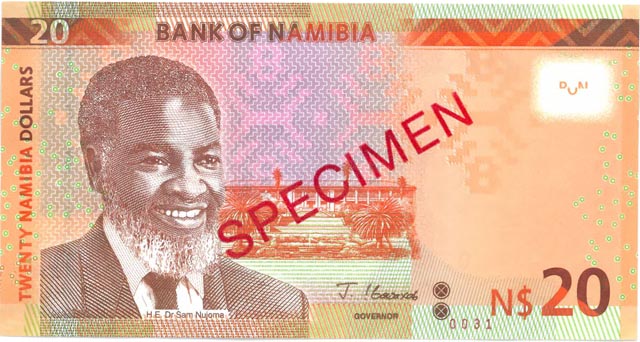
The first Namibian banknotes, with sophisticated designs celebrating the country's cultural diversity and unique landscapes, projected the image of a modern nation proud of its heritage. This carefully chosen imagery contributed to building national identity and public adoption of the new currency.
A closer look at the banknotes
Democratic Consolidation and Prosperity (1993-2010)
Economic and Monetary Stabilisation
The first decades of independence saw the gradual consolidation of a stable and prosperous economy that quickly surpassed colonial-period performance. Based on sustainable use of natural resources and the development of new sectors, this economic success positioned Namibia among African development's success stories.
Characterised by prudence and transparency, the Bank of Namibia's monetary policy successfully maintained parity with the rand while gradually developing decision-making autonomy. This orthodox management preserved investor confidence and facilitated integration into the global economy.
This period saw significant economic diversification: manufacturing development (processing primary products), expansion of financial services and the emergence of a high-end tourism sector showcasing unique desert landscapes. This diversification reduced historical dependence on mineral exports.
Namibia's exceptional political stability—regular democratic transitions, absence of internal conflicts and transparent governance—was a major asset in attracting international investment and maintaining the national currency's credibility. This reputation for stability gradually became a regional competitive advantage.
The Emergence of an Ethical Diamond Economy
Namibia is revolutionising the global diamond industry by developing ethical mining and traceability standards that position "Namibian diamonds" as benchmarks for quality and social responsibility. This innovation transforms a traditionally opaque sector into a model of transparency and sustainable development.
This ethical approach rests on balanced partnerships with De Beers (the creation of Namdeb Diamond Corporation as a 50/50 joint venture), guaranteeing substantial state revenue while preserving international technical expertise. This mutually beneficial cooperation avoids the conflicts characterising mining in other African countries.
Namibia's diamond industry is also developing marine mining, unique in the world, extracting diamonds from the Atlantic seabed using revolutionary technologies. This technical innovation positions Namibia at the global forefront of offshore extraction and generates considerable revenue.
This excellence in diamonds facilitates the development of other mining sectors (uranium, zinc and copper) under the same social and environmental responsibility standards. This integrated approach turns Namibia into a global model for sustainable mining.
The Modern Economy: Innovation and Sustainability (2010-2024)
Strategic Economic Diversification
The "Vision 2030" development strategy is gradually transforming Namibia from a traditional extractive economy into a diversified, innovative economy that draws on all the country's natural and human assets. This transition relies on excellent governance and institutional stability to attract investment in new sectors.
Manufacturing is experiencing remarkable expansion through processing industries (meat processing, tanning and fish processing), vehicle assembly (in partnership with South African industry) and renewable energy production, positioning Namibia as a regional industrial hub. This industrialisation generates skilled jobs and diversifies national revenue sources.
Tourism is emerging as a strategic sector through exceptional use of desert landscapes, preserved wildlife and diverse cultural heritage. The development of high-end ecotourism generates substantial revenues while financing environmental conservation and rural community development.
This diversification brings massive investment in technical and higher education, creating the skills needed for a modern economy. The University of Namibia and technical institutes train a skilled workforce that reduces dependence on foreign expertise and develops local innovation.
The financial sector is also undergoing spectacular modernisation through competitive local banks, capital-market development and innovation in digital financial services. This financial sophistication facilitates economic intermediation and supports local entrepreneurship.
Environmental Innovation and the Green Economy
Namibia is developing a pioneering green-economy approach that turns desert constraints into competitive advantages for renewable energy, sustainable water management and climate-adaptation technologies. This environmental innovation attracts international investment and positions the country as a global laboratory for sustainable development in arid environments.
The development of solar energy, aided by the Namib Desert's exceptional sunshine (more than 300 days per year), is turning Namibia into a potential exporter of green energy to South Africa and Europe. These large-scale projects generate new revenue and reduce dependence on imported fossil fuels.
Unique in the world, the conservation industry turns wildlife preservation into a profitable economic activity through tourism, responsible hunting and the sale of related products. This innovative approach reconciles conservation and economic development while generating significant rural employment.
Innovative water-resource management, crucial in a semi-arid country, develops desalination, recycling and conservation technologies exported to other arid regions. This water expertise is a growing competitive advantage in a world facing water stress.
The Namibian Dollar in the Contemporary Economy
Monetary Performance and Macroeconomic Stability
Today's Namibian dollar reflects a prosperous, well-managed economy maintaining exemplary macroeconomic standards for Africa: controlled inflation, balanced public finances, sustainable debt and a generally positive trade balance. This macroeconomic performance supports the currency's credibility and facilitates global economic integration.
Parity with the South African rand, maintained since 1993, demonstrates the Bank of Namibia's institutional strength and the consistency of economic policies. Rare in Africa, this exceptional monetary stability is a major competitive advantage for attracting investment and developing trade.
This stability rests on solid economic fundamentals: a diversified economy, abundant natural resources, stable democratic institutions and high-quality human capital. These structural strengths inspire confidence in the durability of Namibia's monetary performance.
Contemporary challenges include managing social inequality inherited from apartheid, creating jobs for a growing young population and adapting to fluctuations in world commodity prices. These challenges require sophisticated economic policies to preserve stability while promoting social inclusion.
Regional Integration and Monetary Cooperation
Namibia plays a growing role in southern African economic integration through active participation in the Southern African Customs Union (SACU) and the Southern African Development Community (SADC). This regional integration facilitates trade and strengthens the Namibian dollar's strategic position in the regional economy.
Monetary cooperation with South Africa, formalised by the Common Monetary Area (CMA) agreement, facilitates trade while preserving Namibia's monetary autonomy. This mutually beneficial cooperation avoids transaction costs while allowing monetary policies tailored to national needs to develop.
This privileged regional position makes Namibia a gateway between southern Africa and world markets, particularly for maritime access through the ports of Walvis Bay and Lüderitz. This logistical role generates transit revenues and strengthens the country's regional economic importance.
The expertise acquired in monetary management and economic governance also positions Namibia as a model for other African countries. This growing influence strengthens Namibian soft power and facilitates regional technical cooperation.
| Indicator | 2000 | 2010 | 2024 | Change |
|---|---|---|---|---|
| GDP per capita (USD) | 2 400 | 5 200 | 5 800 | ×2,42 |
| NAD/ZAR parity | 1:1 | 1:1 | 1:1 | Maintained |
| Average inflation | 9,3% | 4,5% | 5,8% | -38% |
| Public debt/GDP | 25% | 27% | 69% | +176% |
Contemporary Challenges and Innovation
The Post-Apartheid Economy and Social Justice
Thirty-four years after independence, Namibia continues to manage the complex legacy of economic apartheid, which created some of the world's most extreme inequalities. This persistent social divide is the principal contemporary challenge to political stability and national cohesion, requiring sophisticated redistributive policies.
The land reform programme, pursued gradually since independence, redistributes commercial land to disadvantaged communities while preserving agricultural productivity. This balanced approach avoids catastrophic mistakes seen in other countries while advancing social justice.
Rural development and economic inclusion policies develop the community economy, traditional crafts and rural ecotourism, creating income in marginalised areas. These initiatives gradually reduce inequalities while preserving cultural diversity.
Massive investment in education and public health improves opportunities for new generations and gradually builds a more equitable society. Although costly, this long-term strategy is the most rewarding investment in the country's future.
Technological Innovation and Digital Transformation
Namibia is developing an ambitious digital transformation strategy that uses modern technologies to overcome geographical and demographic constraints. This innovative approach turns isolation into an advantage for testing advanced technological solutions suited to African contexts.
The development of telecommunications infrastructure, particularly submarine cables and 5G networks, efficiently connects this continental country to world markets. This modern connectivity facilitates exportable digital services and attracts technological investment.
Innovation in digital financial services, mobile payments and blockchain technologies modernises the financial system and facilitates rural financial inclusion. Adapted to local needs, these innovations are exported to other African countries facing the same challenges.
This digital transformation brings the development of local technical skills through international university partnerships and specialised training programmes. This accumulation of technological human capital prepares Namibia to participate fully in the global digital economy.
Future Prospects: Vision 2030 and Beyond
The Transition to a Knowledge Economy
The "Vision 2030" strategy is gradually transforming Namibia from a natural-resource-based economy into a knowledge economy valuing innovation, education and sophisticated services. This ambitious transition aims to create lasting prosperity independent of commodity fluctuations.
The strategy prioritises higher education and scientific research, particularly in fields where Namibia has comparative advantages: arid-land sciences, astronomy (exceptionally clear skies), geology and conservation. This scientific specialisation attracts international investment and develops exportable expertise.
Supported by business incubators and local investment funds, entrepreneurial innovation is developing a start-up economy that exploits opportunities created by digital transformation. This entrepreneurial momentum diversifies the economy and creates skilled jobs for educated young people.
This transition relies on institutional stability and quality governance to attract investment in high-technology sectors. This reputation for institutional excellence is the principal competitive advantage in achieving the ambitious transformation.
African Leadership and International Influence
Namibia aspires to play a leadership role in Africa through exemplary democratic governance, excellent economic management and innovative sustainable-development solutions. This ambition rests on the credibility acquired through thirty-four years of stability and prosperity.
This regional influence facilitates close economic partnerships with other African countries and positions Namibia as a hub for international investment in southern Africa. This intermediary role generates service revenues and strengthens regional economic importance.
Namibian expertise in national reconciliation, democratic governance and sustainable development is exported to other African countries through technical cooperation and training programmes. This economic diplomacy strengthens Namibian soft power and creates commercial opportunities.
This international ambition brings stronger diplomatic and commercial capabilities to exploit fully the opportunities created by African integration (the African Continental Free Trade Area) and partnerships with emerging economies.
Conclusion: The Dollar of a Desert Rebirth
The history of the Namibian dollar, from its creation in 1993 to its contemporary position, remarkably illustrates the trajectory of a nation that turned the most extreme constraints—colonial genocide, apartheid, a desert environment and geographical isolation—into foundations of exemplary modern prosperity. This currency, a symbol of Africa's last liberation, accompanies one of the most inspiring successes in African post-colonial development.
The NAD's journey reveals the crucial importance of institutional quality, political stability and long-term strategic vision in building a prosperous modern economy. This experience demonstrates that small size can be an asset when accompanied by excellence in governance and innovative development strategies.
Namibia's creative synthesis of an asserted national identity and pragmatic regional integration, symbolised by its unique monetary system of parity with the rand, offers an original model for other small economies facing sovereignty challenges in a globalised world.
Namibia's success is rooted in its people's exceptional ability to turn historically inherited ethnic and cultural diversity into collective wealth, environmental constraints into competitive advantages and past trauma into motivation to build a just and prosperous society.
The Namibian dollar, the currency of a long-forgotten land that became a model of sustainable development, will continue to accompany this extraordinary nation in demonstrating that Africa can reconcile tradition and modernity, conservation and prosperity, social justice and economic efficiency. This lesson of hope from the world's oldest desert illuminates possible paths towards an African future worthy of its peoples' aspirations.
This article draws on the editorial collection supplied in 2025. Figures and descriptions should be read in their original context. About the content