The banknotes in pictures
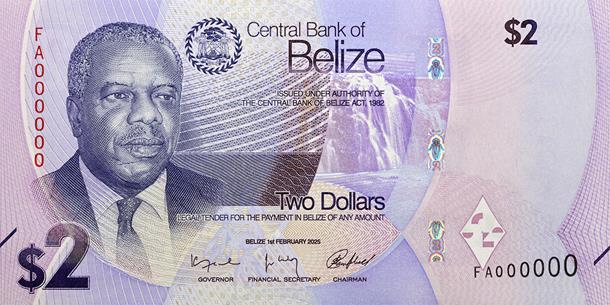
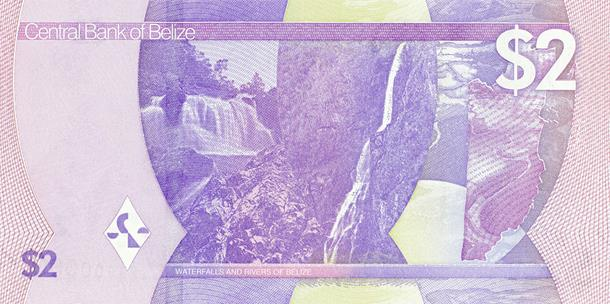
Maya Heritage and European Colonisation (300-1862)
Maya Civilisation and Its Exchange Systems
Belize's monetary history begins with the brilliant Classic Maya civilisation (300-900 AD), which developed sophisticated city-states such as Caracol, Lamanai and Xunantunich. This pre-Columbian civilisation created complex exchange systems based on bartering valuable goods: jade, obsidian, quetzal feathers and, above all, cacao, which served as a form of quasi-money throughout the Maya world.
Cacao beans, used as a unit of account and means of payment, remarkably foreshadowed later monetary systems. This "plant currency" circulated widely in Mesoamerica, revealing the economic sophistication of pre-Columbian societies long before Europeans arrived with their own monetary concepts.
The Classic Maya collapse (9th century) did not completely eliminate these populations, but fragmented their political and economic organisation. The surviving Maya, organised into small communities, partly preserved their trading traditions and exchange systems, which later coexisted with European contributions.
This Maya cultural continuity had a lasting influence on the region's economic development. Even today, 11% of Belize's population is Maya, preserving agricultural and craft traditions that represent a unique tourism and cultural asset in Central America.
The First European Settlements and the Forestry Economy
The first permanent European settlements in Belize arose from logging rather than systematic territorial conquest. As early as 1638, British loggers established camps along the Belize River to harvest logwood, valued as a dye for European textiles.
This pioneering forestry economy developed monetary systems suited to frontier conditions. Payments were often made in kind — food rations, tools and rum — creating a sophisticated but unstable barter economy. This situation persisted for two centuries in the absence of stable political authority.
Recurring conflicts with Spain (1638-1798) delayed the development of permanent monetary institutions. The Battle of St. George's Caye (1798), a decisive victory for British settlers, finally established the political stability needed for more sophisticated economic structures to emerge.
The gradual arrival of enslaved Africans for forestry work further complicated the local economy. This workforce, paid through mixed systems combining minimal wages and rations, developed parallel exchange networks that enriched the emerging economic diversity.
Formal British Colonial Rule (1862-1964)
The official creation of the colony of British Honduras in 1862 marked its entry into administrative and monetary modernity. This late formalisation — two centuries after the first settlements — revealed the territory's growing economic importance to the British Empire.
The introduction of the traditional British monetary system (pound-shilling-penny) gradually replaced local barter systems, although it coexisted with informal practices for a long time. This gradual transition avoided sudden disruptions while modernising the colonial economy.
The development of the mahogany industry (1850-1950) diversified the forestry economy and attracted British capital and expertise. This expansion generated the first genuine cash wages and stimulated the development of local retail trade using standard British currencies.
Immigration by workers from Jamaica, Barbados and other English-speaking Caribbean territories strengthened ties with the British Caribbean economy. These populations brought their familiarity with modern colonial monetary systems and accelerated the monetisation of the local economy.
1638 : First British settlements
1798 : Battle of St. George's Caye
1862 : Official creation of British Honduras
1950s : Independence movement
1964 : Internal self-government
1981 : Full independence
The Independence Movement and Monetary Transition (1950-1981)
The Nationalist Awakening and George Price
The Belizean independence movement emerged after the Second World War under the leadership of George Cadle Price, an iconic figure who dominated national politics for four decades (1956-1996). A Mestizo lawyer educated in Guatemala, Price developed an original nationalist vision combining Central American identity with Caribbean heritage.
This nationalist awakening was accompanied by early debates about the future national currency. Influenced by the Mexican and Guatemalan experiences, Price initially favoured adopting the decimal system and the term "dollar" rather than retaining the traditional British system.
The People's United Party (PUP), founded by Price in 1950, developed an economic programme that prioritised monetary independence as a symbol of national sovereignty. This approach, unusual in the British Caribbean at the time, revealed the Central American influence on Belizean political thought.
The PUP's first electoral victories (1954, 1957, 1961) gradually legitimised these monetary aspirations. Internal self-government, obtained in 1964, finally made it possible to prepare concretely for the transition to an independent national monetary system.
Geopolitical Challenges and the Guatemalan Question
Guatemala's territorial claims over the whole of Belize considerably complicated the independence process and influenced monetary choices. This existential threat required the maintenance of privileged ties with Britain while asserting a distinct national identity.
This unique geopolitical situation directed economic choices towards stability and international credibility. Pegging the currency to the US dollar, rather than to the British system or a Central American currency, reflected this complex strategy of geopolitical balance.
The British military presence, maintained until 1994, brought substantial capital injections that stimulated the local economy and facilitated the monetary transition. This external protection allowed early monetary independence without the usual risks faced by small, vulnerable economies.
Complex international negotiations over Belize's status made its leaders aware of the importance of monetary credibility as an element of international recognition. This experience had a lasting influence on Belize's approach to monetary policy.
The Creation of the Belize Dollar (1974)
On 1 January 1974, Belize officially launched its national dollar, replacing the British West Indies dollar in a carefully prepared technical operation. This early birth — seven years before political independence — demonstrated the priority given to monetary emancipation.
The immediate establishment of the peg at 2 BZD = 1 USD revealed a geopolitical orientation favouring the United States over Britain. This strategic choice, unusual for a British colony, anticipated regional geopolitical developments and facilitated continental economic integration.
The simultaneous creation of the Central Bank of Belize, led by Kyrill Reneau and then Dwight Ysaguirre, established a modern monetary institution with sophisticated technical expertise. This small but efficient central bank quickly developed a reputation for competence, reinforcing the BZD's credibility.
The first Belizean banknotes, with designs celebrating national cultural diversity, reflected this desire to assert a multicultural identity. The chosen symbols — the toucan, barrier reef, Maya monuments and ethnic diversity — projected the image of a nation proudly embracing its complexity.
Independence and Consolidation (1981-2000)
Independence amid Regional Instability
Belizean independence on 21 September 1981 came against a regional backdrop troubled by Central American civil wars. This paradoxical situation — the peaceful birth of a stable democracy at the heart of a region at war — profoundly influenced national economic and monetary choices.
George Price, prime minister of independent Belize, maintained a policy of active neutrality that preserved monetary stability despite regional turbulence. This balanced diplomacy attracted refugees and capital fleeing neighbouring conflicts, paradoxically stimulating the Belizean economy.
The peg to the US dollar facilitated the integration of regional migration and financial flows. Salvadorans, Guatemalans and Hondurans found in Belize a stable economy using a familiar currency, making their economic integration easier.
This period saw the Belizean economy diversify beyond traditional logging. Export agriculture (sugar, citrus fruit and bananas), aquaculture and the first tourism developments created a more resilient economic base supporting monetary stability.
The Emergence of the Service Economy
The 1980s-1990s saw the birth of Belize's tourism industry, making intelligent use of exceptional natural assets: the barrier reef (the world's second largest), preserved tropical forests and authentic Maya heritage. This revolutionary diversification gradually transformed the national economy.
The development of high-end ecotourism attracted affluent international visitors paying in US dollars. These hard-currency revenues strengthened foreign exchange reserves and made it easier to maintain the currency peg without major strain.
Said Musa, prime minister (1998-2008), accelerated this transformation towards a service economy by developing offshore financial services. This diversification, inspired by Caribbean success stories, aimed to reduce dependence on traditional primary sectors.
The introduction of the Internet and modern telecommunications facilitated the development of these new sectors while maintaining competitive operating costs. This technological modernisation positioned Belize as an attractive destination for service outsourcing.
| Sector | 1981 | 2000 | Change |
|---|---|---|---|
| Agriculture/Forestry | 65% | 35% | -30 points |
| Tourism | 2% | 25% | +23 points |
| Financial services | 1% | 8% | +7 points |
| Other services | 32% | 32% | Stable |
Contemporary Challenges and Innovations (2000-2024)
The Blue Economy and Marine Conservation
Since 2000, Belize has developed world-class expertise in the "blue economy", combining marine conservation with sustainable economic development. This innovative approach uses the Mesoamerican Barrier Reef as a tourism attraction while preserving its exceptional biodiversity.
This strategy generates substantial tourism revenue — 40% of GDP — while attracting international financing and conservation programmes. The expertise developed in managing marine protected areas inspires other coastal nations and strengthens Belize's international reputation.
Dean Barrow, prime minister (2008-2020), formalised this approach by creating Central America's largest marine reserve (30% of territorial waters). This visionary policy attracted green investors and international organisations, diversifying sources of foreign currency.
Joy Grant, central bank governor (2011-present), incorporates environmental considerations into monetary policy. This pioneering approach, combining financial stability with ecological sustainability, inspires other small island nations.
Economic Diversification and New Challenges
Johnny Briceño, prime minister since 2020, faces post-COVID challenges requiring rapid adaptation of an economy traditionally dependent on international tourism. His strategy prioritises the digital economy, modern agriculture and renewable energy.
The development of the digital economy benefits from modern infrastructure and an educated, English-speaking population. Remote working services, IT outsourcing and e-commerce are emerging as promising sectors that diversify sources of foreign currency.
Modern agriculture, using precision farming techniques and organic crops, aims to reduce food imports while developing niche exports. This strategy of food self-sufficiency strengthens national economic resilience.
Offshore oil exploration, although controversial, could transform the Belizean economy if commercial deposits are discovered. This prospect generates debate about the balance between economic development and environmental preservation.
Geostrategic Position and International Relations
The Bridge between the Caribbean and Central America
Belize's unique geographical position, as the only English-speaking nation in Central America and a member of CARICOM, makes it a natural bridge between two economically distinct regions. This geopolitical characteristic directly influences monetary management and national economic choices.
Simultaneous membership of CARICOM (the Caribbean Community) and SICA (the Central American Integration System) offers unique trade opportunities but complicates monetary policy. The BZD must navigate between two economic areas with different dynamics.
This privileged position attracts multinational companies seeking easier access to both regional markets. Modern financial infrastructure and monetary stability make the country even more attractive to foreign investment.
Relations with the United States, the main economic partner and source of tourists, directly influence monetary policy. The US dollar peg facilitates these exchanges but creates structural dependence on the US economy.
Climate Diplomacy and Its Economic Impact
Belize pursues active climate diplomacy, representing small island states in international negotiations. This diplomatic expertise attracts green financing and technical cooperation programmes, diversifying national income sources.
Early commitment to the Sustainable Development Goals (SDGs) positions Belize as a model of balanced development. This reputation facilitates access to concessional financing and reinforces the BZD's international credibility.
Partnerships with the European Union, the World Bank and various environmental foundations generate significant financial flows that support the balance of payments. This diversification of funding sources reduces traditional dependence on regional partners.
This expertise in sustainable development also attracts international ESG (environmental, social and governance) investors seeking responsible investment opportunities in stable emerging economies.
Monetary Innovation and Future Prospects
Exploring Digital Finance
Belize is cautiously exploring digital monetary innovation by developing electronic payment pilot projects and studying the feasibility of a central bank digital currency (CBDC). This research aims to modernise the payment system while preserving monetary stability.
This financial modernisation builds on the technological infrastructure developed for tourism and offshore services. Expertise acquired in financial technologies facilitates adaptation to global developments in money and payments.
Partnerships with international financial institutions specialising in monetary innovation provide access to best practices without the risks of experimenting in isolation. This collaborative approach demonstrates Belizean institutional maturity.
Financial inclusion, a national priority in a country where 40% of the population remains underbanked, could benefit from these technological innovations. Mobile payment solutions and digital financial services promise to improve access to banking services in rural areas.
Future Challenges and Opportunities
The future of the BZD depends largely on Belize's ability to maintain the delicate balance between economic development and environmental preservation. If successful, this synthesis could make the country a global model of sustainable development.
Climate change represents both a major challenge and a unique opportunity. As a global laboratory for climate adaptation, Belize could attract international financing and expertise, diversifying its economy beyond traditional sectors.
Regional economic integration is gradually deepening, creating new opportunities for the BZD. Facilitating payments within the Caribbean and Central America could strengthen international use of the Belizean currency.
The accelerating digital transformation of the global economy offers unprecedented opportunities for a small, educated and technologically equipped nation. Belize could become a digital services hub for Caribbean and Central American markets.
Conclusion: A Nation Bridging Regions at the Heart of Global Change
The history of the Belize dollar, from its creation in 1974 to contemporary challenges, illustrates the ability of a small multicultural nation to create and maintain a stable currency while navigating complex geopolitical influences. This unique trajectory demonstrates the originality of the Belizean experience among Caribbean and Central American nations.
The success of the BZD rests on distinctive qualities forged by geography and history: a bridging position between two regions, harmonious cultural diversity, stable institutions and early commitment to sustainable development. These strengths, patiently cultivated since independence, continue to support the currency despite the challenges facing small open economies.
The preservation of the US dollar peg for fifty years, combined with successful economic diversification, reveals a remarkable capacity to adapt to global transformations. This stability, rare in the region, is the main strength of the modern Belizean economy.
Today, Belize faces the challenges of the 21st century with the confidence afforded by stable monetary experience and an international reputation for environmental responsibility. Its unique position as a global laboratory for sustainable development, combined with institutional stability, places it favourably to maintain its currency's prosperity in a world transitioning towards sustainability, confirming that innovation and tradition can coexist harmoniously in building a modern monetary system.
This article draws on the editorial collection supplied in 2025. Figures and descriptions should be read in their original context. About the content