The banknotes in pictures
Colonial Origins and the Opium Wars (1841-1895)
Hong Kong, a Product of the Opium Wars
The story of the Hong Kong dollar begins amid the turmoil of the Opium Wars. The Treaty of Nanking (1842), which concludes the First Opium War, cedes Hong Kong Island to Britain "in perpetuity". Initially considered a minor acquisition by London, it lays the foundations of a commercial empire that will revolutionise monetary exchanges across Asia.
Sir Henry Pottinger, Hong Kong's first governor, immediately faces a complex monetary challenge. The local economy mainly uses Spanish and Mexican silver coins, while trade with China is conducted in Chinese silver taels. This monetary diversity, typical of Asian trading ports, requires unprecedented pragmatic solutions.
The opium economy generates substantial but destabilising monetary flows. The enormous profits from illegal trade attract speculators and adventurers, creating a casino economy in which fortunes are rapidly made and lost. This volatility has a lasting influence on Hong Kong's financial culture and helps explain its later attraction to speculative activities.
Jardine Matheson and Swire, major British trading houses, develop sophisticated credit systems to finance regional trade. Their "chops" (private vouchers) circulate as quasi-money, foreshadowing the future private issue of banknotes by Hong Kong banks. This pragmatic innovation reveals Hong Kong's enduring adaptability.
The Emergence of Banking and the Currency Question
The creation of the Oriental Bank Corporation (1851) marks Hong Kong's entry into modern finance. The first European bank to establish a lasting presence in the colony, it develops a complex exchange system handling Mexican dollars, Chinese taels, Indian rupees and pounds sterling simultaneously. This cross-cultural expertise becomes a Hong Kong hallmark.
Sir John Bowring, governor from 1854 to 1859, attempts the first monetary standardisation. His plan to adopt the Indian rupee fails in the face of resistance from Chinese merchants attached to their traditional systems. This failure reveals the complexity of monetary governance in a multicultural society and foreshadows the compromises that will be needed in the future.
The founding of the Hongkong and Shanghai Banking Corporation (HSBC) in 1865 revolutionises Asian finance. Its Scottish founder, Thomas Sutherland, conceives an institution suited to regional conditions: shared European and Asian capital, local expertise and a pan-Asian network. This institutional innovation has a lasting influence on Hong Kong's monetary development.
The opening of the Suez Canal (1869) transforms Hong Kong from a regional entrepôt into a global trading hub. This logistical revolution multiplies trade and monetary flows, consolidating Hong Kong's position as an emerging Asian financial centre. Monetary diversity increases further with the influx of European and American currencies.
1845 : Oriental Bank Corporation establishes a presence
1865 : Founding of HSBC
1863 : First attempt to issue Hong Kong dollars
1872 : Official legal recognition of the Hong Kong dollar
1895 : Standardisation of the colonial monetary system
Birth and Consolidation of the Hong Kong Dollar (1863-1941)
The Revolution of 1863: Creation of the Hong Kong Dollar
The year 1863 marks a decisive turning point with HSBC's first official issue of Hong Kong dollars. Initially experimental, this innovation responds to a chronic shortage of small change and the growing needs of local trade. The choice of "dollar" over "pound" reflects Hong Kong's pan-Asian orientation rather than a strictly British allegiance.
These first banknotes immediately reveal their distinctive features: English and Chinese text, references to local measures and designs adapted to Asian cultural sensibilities. Revolutionary for the colonial era, this inclusive approach reflects the necessary adaptation to Hong Kong's multicultural realities.
The Currency Ordinance of 1872 officially recognises the Hong Kong dollar and establishes its convertibility into sterling at a rate of 1 pound = 4.2 dollars. Maintained until 1935, this parity firmly anchors the new dollar in the imperial monetary system while preserving its regional character.
The major innovation lies in multiple private issuers: HSBC, followed by the Chartered Bank of India, Australia and China (1911) and the Mercantile Bank of India (1912), obtain note-issuing rights. This unique system, maintained to this day, creates beneficial competition between issuers and ensures the monetary system's resilience.
The Colonial Golden Age and Financial Expansion (1880-1941)
The period 1880-1941 establishes Hong Kong as an indispensable financial centre in East Asia. Expanding trade with China, growth into Southeast Asia and continuous financial innovation transform the Hong Kong dollar into a regional reference currency.
The Xinhai Revolution (1911) and the collapse of the Chinese Empire generate massive capital flows into Hong Kong. Chinese elites fleeing political instability bring their fortunes and commercial expertise. This skilled immigration strengthens the sophistication of Hong Kong's financial system and diversifies its cultural foundations.
The interwar years see Hong Kong innovate constantly: the creation of Asia's first foreign exchange market, the development of marine insurance and the emergence of international finance. Supported by the Hong Kong dollar's stability, these innovations attract global financial institutions and consolidate its position as a regional hub.
The crisis of 1929 tests the resilience of Hong Kong's monetary system. Unlike industrial economies, Hong Kong withstands it relatively well thanks to diversified activities and strong banking institutions. This performance strengthens international confidence in the Hong Kong dollar.
Trials and Revivals (1941-1983)
Japanese Occupation and Monetary Catastrophe
The Japanese invasion of 25 December 1941 triggers the most serious monetary crisis in Hong Kong's history. The Japanese military administration imposes the military yen, confiscates bank reserves and systematically destroys the financial infrastructure. In four years, Hong Kong's economy is set back by several decades.
Bank of Taiwan notes, issued under Japanese control, abruptly replace the Hong Kong dollar. This forced substitution is accompanied by catastrophic inflation—prices increase 100-fold—destroying local savings and paralysing trade. Barter once again dominates the economy.
Hong Kong's population, reduced from 1.6 million to 600 000 by famine and emigration, develops remarkable strategies for monetary survival. Black markets, sophisticated barter and informal credit systems sustain a parallel economy despite Japanese repression.
This traumatic experience leaves a lasting mark on Hong Kong's monetary culture. Distrust of political authority, the importance attached to private reserves and a preference for tangible assets still characterise local financial behaviour today.
Revival and Financial Innovation (1945-1983)
Hong Kong's liberation in August 1945 triggers a spectacular economic revival. The immediate restoration of the Hong Kong dollar, the influx of skilled Chinese refugees and the resumption of international trade rapidly transform the devastated colony into a dynamic economy.
The exodus following the Chinese Communist Revolution (1949) brings capital and entrepreneurial expertise. Financiers from Shanghai, industrialists from Canton and merchants from across China rebuild a sophisticated economic ecosystem in Hong Kong. This skilled immigration diversifies and modernises the economy.
The 1960s-1970s see Hong Kong revolutionise Asian finance. Constant innovation—Asia's first derivatives markets, the development of insurance and the creation of investment funds—attracts international capital and consolidates its position as a regional financial centre.
The emergence of an Asian Eurodollar market, alongside London's, transforms Hong Kong into a financial bridge between East and West. Facilitated by the Hong Kong dollar's stability and local expertise, this unique specialisation generates exceptional growth and attracts global multinationals.
| Period | GDP per Capita (USD) | Financial Innovation | Regional Position |
|---|---|---|---|
| 1950s | 200 → 400 | Banking reconstruction | Regional entrepôt |
| 1960s | 400 → 800 | Industrialisation | Manufacturing hub |
| 1970s | 800 → 3 000 | Financial services | Emerging financial centre |
| 1980s | 3 000 → 12 000 | Linked Exchange Rate | Rival to Singapore |
The Linked Exchange Rate System Revolution (1983)
The Confidence Crisis and Monetary Innovation
The year 1983 marks a decisive turning point in the Hong Kong dollar's history. Sino-British negotiations over Hong Kong's future generate a major confidence crisis: the HKD plunges 40% in a few months, inflation surges and capital flight accelerates. This existential crisis requires a revolutionary monetary response.
Sir John Bremridge, Financial Secretary, and David Nendick, the banking supervisor, devise a bold solution: the Linked Exchange Rate System (LERS). Establishing a fixed parity of 7.80 HKD = 1 USD, this innovation radically transforms the nature of the Hong Kong dollar while preserving its institutional character.
The announcement on 17 October 1983 immediately brings dramatic stabilisation. Within days, speculative attacks cease, capital flows back into Hong Kong and confidence returns. This performance validates the conceptual innovation and establishes the new system's credibility.
The Currency Board System accompanying this reform revolutionises monetary governance. Inspired by pre-war colonial systems but adapted to contemporary realities, this mechanism guarantees automatic convertibility and limits discretionary intervention. Paradoxically, this self-imposed constraint strengthens monetary credibility.
The Mechanisms and Evolution of LERS
LERS establishes sophisticated automatic mechanisms to manage Hong Kong's money supply. When USD enters Hong Kong, the monetary base automatically expands; when it leaves, the base contracts. This mechanisation of monetary policy eliminates the risk of arbitrary political intervention.
Joseph Yam, the Hong Kong Monetary Authority's first Chief Executive (1993), gradually refines the system. The introduction of "Convertibility Undertakings" (1998), the widening of the trading band (2005) and successive technical reforms demonstrate LERS's ability to adapt to economic change.
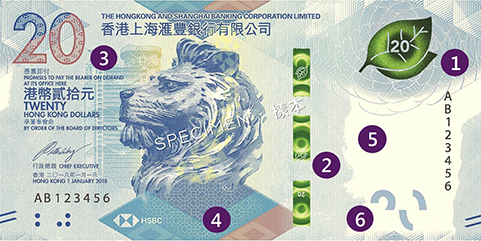
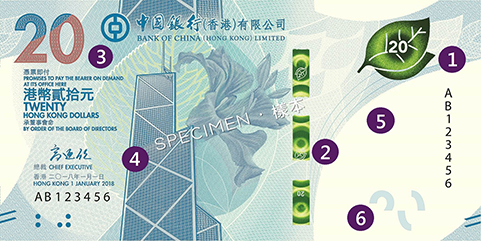
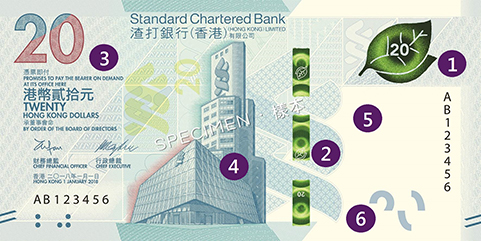
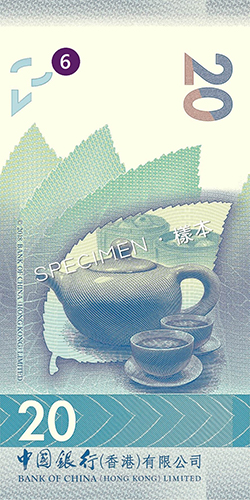
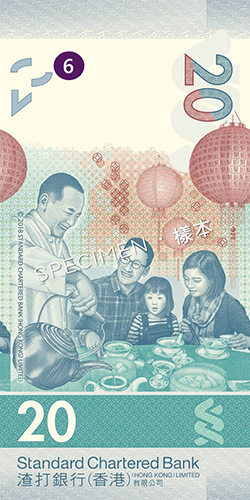
The three note-issuing banks—HSBC, Standard Chartered and Bank of China (since 1994)—adapt seamlessly to this new framework. Their competition, now focused on service quality rather than monetary policy, stimulates financial innovation and maintains the banking system's efficiency.
This period also sees Hong Kong emerge as a truly global financial centre. Capital inflows attracted by monetary stability, constant innovation in financial products and its role as a bridge to China transform Hong Kong into a credible rival to London and New York.
A closer look at the banknotes
The Transition: "One Country, Two Systems" (1984-1997)
Negotiating the Transition and Its Monetary Implications
The signing of the Sino-British Joint Declaration (1984) formalises the principle of "One country, two systems" and guarantees the preservation of Hong Kong's monetary system until at least 2047. Secured after complex negotiations, this assurance stabilises expectations and enables long-term economic planning.
Deng Xiaoping, the architect of Chinese reform, fully understands Hong Kong's strategic importance for China's modernisation. His explicit guarantee that Hong Kong's capitalist system, including its monetary system, will be maintained reassures international investors and facilitates the transition.
During this period, Hong Kong gradually becomes China's financial gateway. The first Chinese companies go public, Hong Kong banks finance reforms on the mainland, and the Hong Kong dollar gradually becomes a quasi-Chinese currency for international transactions.
Financial innovation accelerates during this transition period. The creation of the first joint Chinese-Hong Kong financial products, the development of the bond market and Hong Kong's emergence as an Asian wealth-management centre prepare the economy for the post-handover era.
The "One Country, Two Systems" Era (1997-2024)
The Handover and Monetary Continuity
On 1 July 1997, Hong Kong becomes Chinese territory once again in a historic ceremony marked by emotion and uncertainty. Paradoxically, this political transition is accompanied by remarkable monetary continuity: LERS is maintained, the note-issuing banks retain their prerogatives and the HKMA preserves its operational autonomy.
Tung Chee-hwa, the first Chief Executive, and Donald Tsang, Financial Secretary, manage this transition with exemplary caution. Their policy of continuity, supported by Beijing, maintains international confidence and preserves Hong Kong's financial-centre status. This stability contrasts with the fears expressed before 1997.
The Asian crisis of 1997-1998, occurring a few months after the handover, is the first major test of the new regime. The massive speculative attack on the HKD, orchestrated by international hedge funds, mobilises all the resources of Hong Kong's monetary system.
The historic intervention of August 1998, using fiscal reserves to support both the stock market and the currency, temporarily breaks with orthodox rules but preserves the system. Quietly supported by Beijing, this bold action demonstrates the shared determination to maintain Hong Kong's monetary stability.
Financial Integration with Mainland China
China's accession to the WTO (2001) accelerates financial integration between China and Hong Kong. CEPA agreements, qualified investment programmes and the gradual liberalisation of China's capital account transform Hong Kong into China's main financial interface with the world.
The innovation of "H-shares" (Chinese companies listed in Hong Kong) revolutionises Asian financial markets. Facilitated by the Hong Kong dollar's stability and local regulatory expertise, this development attracts hundreds of billions in international investment into Chinese companies.
Norman Chan, HKMA Chief Executive since 2009, skilfully navigates between monetary autonomy and mainland integration. His initiatives—the offshore renminbi market, stock market connect programmes and fintech innovation—strengthen the complementary relationship between China and Hong Kong while preserving the local monetary system's distinctive character.
This period also sees the first contemporary geopolitical challenges emerge. Sino-American trade tensions, national security issues and changes in the international regulatory framework create a more complex environment for managing the Hong Kong dollar.
Contemporary Challenges and Prospects (2019-2024)
Social Turbulence and Monetary Resilience
The protests of 2019 and their political consequences create the most serious confidence crisis since the handover. Paradoxically, Hong Kong's monetary system proves remarkably resilient: LERS holds, bank deposits remain stable and capital flows, although volatile, do not undermine the fundamentals.
Eddie Yue, the new HKMA Chief Executive since 2019, manages this crisis with Hong Kong's traditional technical expertise. His measured communication, targeted regulatory innovations and closer cooperation with mainland authorities maintain the financial system's operational stability.
The COVID-19 pandemic once again tests the Hong Kong dollar's resilience. Economic support measures, rapid adaptation to public health constraints and accelerated digital innovation demonstrate the financial system's ability to adapt to contemporary crises.
Emerging challenges—international sanctions, regulatory change and competition from Singapore and Shanghai—require continuous adaptation. Hong Kong's historical capacity for innovation suggests successful adaptation, albeit in a more constrained geopolitical environment.
Innovation and Adaptation to 21st-Century Challenges
Hong Kong actively develops its fintech ecosystem to maintain competitiveness. Digital payment initiatives, cryptocurrency regulation and exploration of central bank digital currencies position Hong Kong at the forefront of regional financial innovation.
Integration into China's Greater Bay Area offers new opportunities for expansion. Financial connectivity projects, monetary cooperation initiatives and the development of new financial products strengthen regional complementarities while preserving Hong Kong's distinctive character.
The green finance strategy gradually transforms Hong Kong into an Asian centre for climate financing. Supported by the Hong Kong dollar's stability and regulatory expertise, this specialisation attracts new international capital flows focused on sustainability.
The prospects for LERS's evolution are the subject of growing technical debate. Although the system remains stable and effective, some economists question its suitability for future challenges. This necessary but delicate discussion illustrates the maturity of Hong Kong's monetary debate.
Conclusion: The Art of Monetary Balance
The history of the Hong Kong dollar, from its creation in 1863 to contemporary challenges, vividly illustrates the art of monetary balance in a complex geopolitical environment. Marked by constant innovation and successful adaptation, this exceptional journey demonstrates the remarkable resilience of a sophisticated monetary system.
The HKD's enduring success rests on unique characteristics: a competitive private note-issuing system, an automatic Currency Board and pragmatic governance adapted to multicultural realities. Forged through historical experience, these features continue to distinguish Hong Kong in the international monetary landscape.
Today, the Hong Kong dollar navigates opportunities and challenges in a rapidly changing world. Its historical ability to adapt, its role as a bridge between different economic systems and its status as a stable currency in a dynamic region place it in a strong position to maintain its international relevance, confirming that institutional innovation can transcend geopolitical constraints.
This article draws on the editorial collection supplied in 2025. Figures and descriptions should be read in their original context. About the content