The banknotes in pictures
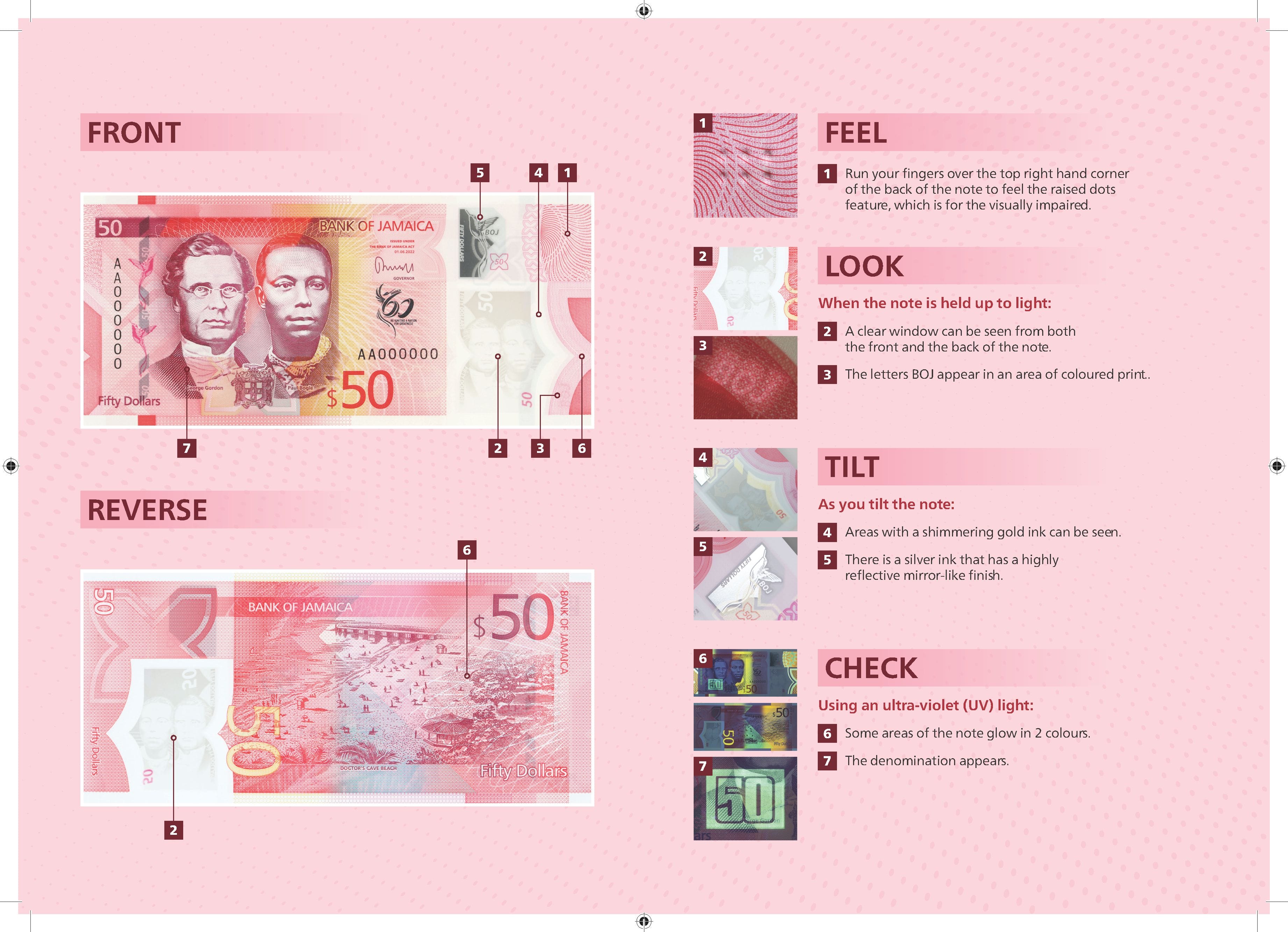
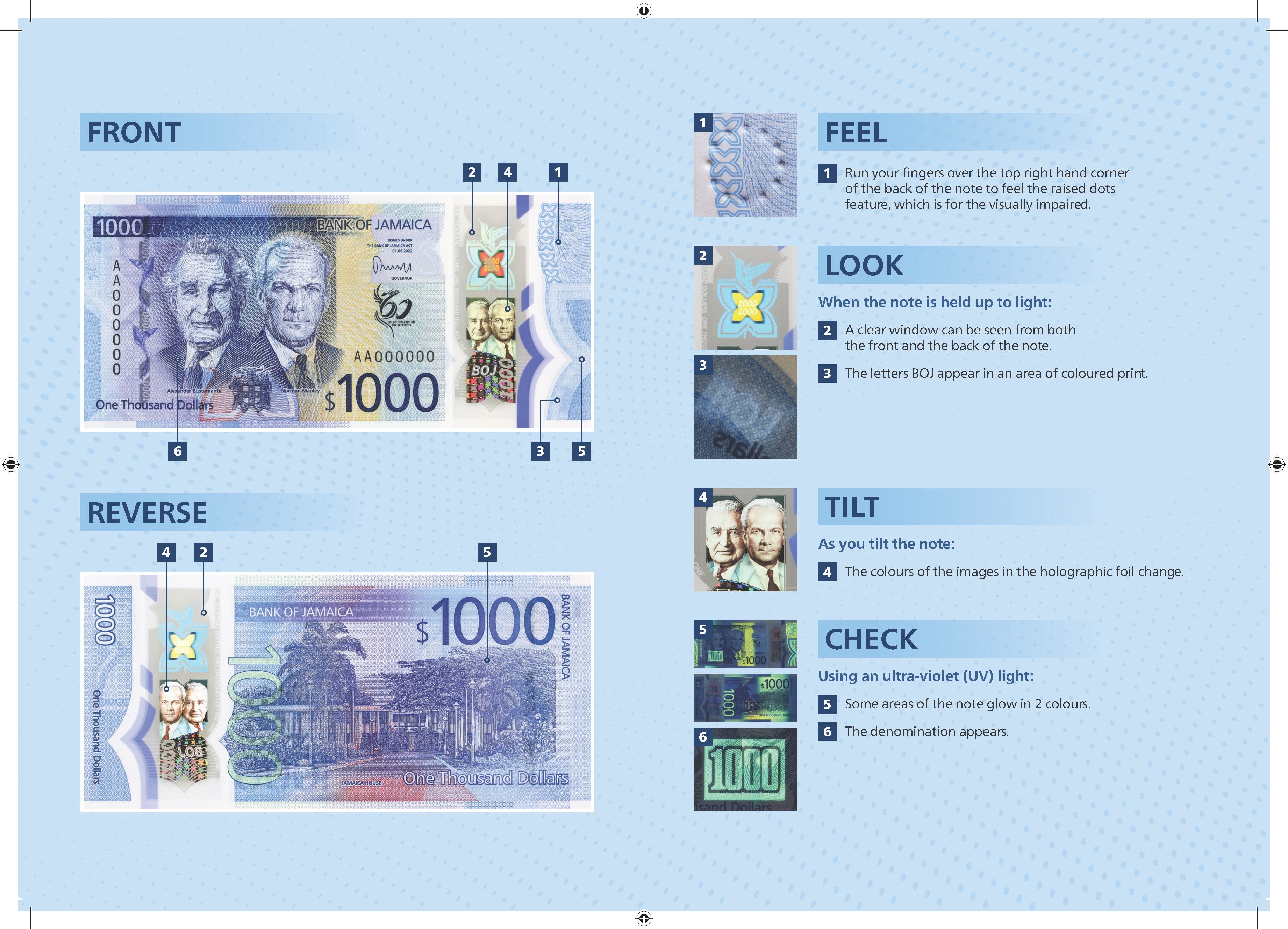
Colonial Legacy and Resistance (1494-1962)
The Spanish Conquest and the Plantation Economy
Jamaica's monetary history begins with the arrival of Christopher Columbus in 1494, who named the island "Santiago" before the Taíno name "Xamayca" (land of wood and water) eventually prevailed. The Spanish quickly established a colonial economy based on gold extraction and then livestock farming, introducing the first European currencies to an island previously organised around traditional Amerindian exchange systems.
This Spanish period (1494-1655) remained economically marginal within the colonial empire, with Jamaica serving mainly as a logistical base for expeditions to the American mainland. Spanish pesos circulated sporadically, but the economy remained largely based on barter and exchanges in kind. This initially limited monetisation contrasted with later development under British rule.
The British conquest in 1655, led by Admiral William Penn and General Robert Venables, radically transformed Jamaica's economy. Port Royal quickly became the centre of British Caribbean trade, attracting merchants, pirates and adventurers. This economic transformation brought greater monetary complexity, with the introduction of the pound sterling alongside Spanish coins that remained widely used.
The sugar plantation economy, developed on a massive scale from 1670, generated considerable wealth but relied on mass slavery. This accumulation of capital, financed by the slave trade, paradoxically laid the foundations for Jamaica's future prosperity while sowing the seeds of the social inequalities that still mark the island's economy today.
The Colonial Golden Age and Its Contradictions (1700-1838)
The 18th century marked the height of Jamaican colonial prosperity. The island became the world's largest sugar producer, generating extraordinary profits that financed London's development and enriched the British aristocracy. This colossal wealth stood in dramatic contrast to the appalling conditions of plantation slavery.
This period saw the development of a complex monetary system adapted to colonial realities. Pounds sterling, Spanish coins, US dollars and various local currencies circulated simultaneously. Planters also developed sophisticated credit systems to finance their operations, creating a de facto parallel monetary economy based on promises of future harvests.
Port Royal, and then Kingston after the earthquake of 1692, became important regional financial centres. Colonial banks, marine insurance companies and international merchants developed financial expertise that partly survived subsequent economic transformations.
Recurring slave revolts — notably Tacky's Revolt (1760) and the Baptist War (1831-1832) — revealed the deep social tensions generated by this unequal prosperity. Although suppressed, these uprisings gradually raised British public awareness of the colonial system's moral contradictions and prepared the way for the abolition of slavery.
1655 : British conquest
1692 : Earthquake destroys Port Royal
1760 : Tacky's Revolt
1838 : Abolition of slavery
1865 : Morant Bay rebellion and Crown Colony rule
Emancipation and Social Transformation (1838-1944)
After Slavery: The Economic Crisis
The abolition of slavery in 1838 precipitated a major economic crisis that permanently transformed Jamaican society. The collapse of the plantation economy, faced with competition from European beet sugar and labour shortages, generated a prolonged recession affecting every sector of the colonial economy.
This crisis revealed the narrowness of the colonial economic base and the vulnerability of an economy dependent on a single export. Formerly enslaved people, now free but without resources, developed a subsistence peasant economy alongside the declining plantation economy. This economic duality still characterises Jamaica's socioeconomic structure today.
The introduction of Indian indentured workers (1845-1917) sought to alleviate the labour crisis but also transformed the island's ethnic and cultural composition. This immigration, financed through complex credit mechanisms, diversified cultural influences while maintaining the unequal economic structures inherited from slavery.
The Morant Bay rebellion (1865), led by Paul Bogle and George William Gordon, catalysed political transformation. This brutally suppressed uprising led to the establishment of Crown Colony rule, which centralised colonial administration but limited local autonomy, creating lasting tensions between democratic aspirations and imperial control.
Cultural Renaissance and Nationalist Awakening (1900-1944)
The early 20th century saw the birth of the first Jamaican nationalist movements, catalysed by the influence of Marcus Garvey and his pan-African movement. This cultural renaissance was accompanied by an economic awakening that challenged traditional colonial structures and prepared future demands for monetary independence.
Marcus Garvey, an iconic figure born in St. Ann's Bay, developed a revolutionary economic vision advocating economic self-determination for people of African descent. His "Back to Africa" movement, although unsuccessful in practice, had a lasting influence on Jamaican economic consciousness and inspired future policies of monetary autonomy.
This period also saw the emergence of the first homegrown Jamaican financial institutions. Mutual credit societies, cooperative banks and community savings systems developed local financial expertise that gradually complemented traditional colonial institutions.
The two world wars accelerated these transformations by revealing Jamaica's strategic importance and stimulating the local economy. Bauxite production, following its discovery in 1942, finally diversified the economy beyond traditional sugar and generated new revenues that partly financed subsequent political emancipation.
The West Indies Federation and Its Dissolution (1958-1962)
The Federal Experiment and Its Promises
Jamaica's entry into the West Indies Federation in 1958 represented the first serious attempt at Caribbean monetary integration. Norman Manley, Jamaica's prime minister and an ardent federalist, supported this ambitious experiment to create a unified Caribbean state capable of competing with the major regional powers.
The federal West Indies dollar, introduced simultaneously in the ten member territories, symbolised this ambition for unity. This common currency, managed by a sophisticated federal monetary authority, aimed to facilitate economic integration and strengthen the collective bargaining position against the former colonial powers.
However, tensions quickly emerged between Jamaican objectives and those of the other islands, revealing the limits of this imposed integration. Jamaica, representing more than half the federation's population and economy, developed hegemonic expectations that worried the smaller islands, creating political imbalances that weakened the common monetary framework.
Debates over federal monetary policy revealed these structural differences. Jamaica, with its more developed economy and industrial ambitions, favoured expansionary monetary policy, while the smaller, economically more fragile islands preferred caution. These technical tensions reflected incompatible political visions.
The 1961 Referendum and Its Consequences
Jamaica's referendum of 19 September 1961 marked a decisive turning point not only for Jamaica but for the entire Caribbean integration project. The "no" vote's victory (54.1% against 45.9%) on participation in the federation revealed the limits of Caribbean nationalism when confronted with specific national interests.
This Jamaican decision precipitated the Federation's collapse in 1962, with Trinidad's Eric Williams bluntly summing up the situation: "10 minus 1 equals 0" (10 minus 1 equals 0). This political arithmetic revealed Jamaica's disproportionate importance to the federal project and the impossibility of maintaining the union without it.
The monetary consequences of this decision were immediate: the federal dollar instantly lost its credibility and economic base. This monetary crisis revealed the fragility of politically contested monetary arrangements and had a lasting influence on Jamaica's approach to regional integration.
This traumatic experience strengthened Jamaican nationalist sentiment and psychologically prepared the population for full independence. The federation's failure, perceived as validation of Jamaican exceptionalism, fuelled ambitions for a specifically Jamaican path of development, including in monetary matters.
Independence and the Birth of the JMD (1962-1969)
Political Independence and Its Economic Challenges
Jamaican independence on 6 August 1962 initially involved retaining the British West Indies dollar as a transitional currency. This pragmatic solution revealed the technical and economic challenges of creating a national currency for an economy still largely dependent on traditional exports and essential imports.
Alexander Bustamante, the first prime minister of independent Jamaica, inherited a fragile economy characterised by mass unemployment, deep social inequalities and structural dependence on British markets. This complex situation required a cautious approach to monetary policy, postponing the creation of a specifically Jamaican currency.
The creation of the Bank of Jamaica in 1961, an institution preparing for monetary independence, nevertheless revealed the determination of Jamaican elites to control their economic destiny. Initially led by G. Arthur Brown and then Headley Brown, the institution gradually developed the technical expertise required for independent monetary management.
The first years of independence saw growing debate over the desirability and methods of creating a national currency. These discussions, pitting advocates of monetary prudence against supporters of symbolic affirmation, reflected broader tensions between economic pragmatism and cultural nationalism.
The Creation of the Jamaican Dollar (1969)
8 September 1969 officially marked the birth of the Jamaican dollar under Hugh Shearer, prime minister since 1967. This carefully considered decision came amid relative economic consolidation and growing confidence in national institutions.
The new Jamaican dollar replaced the British West Indies dollar at 1:1 parity, facilitating the psychological and practical transition. This initial parity, although technically arbitrary, symbolised economic continuity while asserting newly acquired monetary sovereignty.
The first Jamaican banknotes, with sophisticated designs celebrating national history and culture, reflected this desire to assert identity. The chosen symbols — national heroes, iconic landscapes and local wildlife — projected an image of national pride and distinctive cultural character.
This birth was accompanied by significant institutional innovations. The Bank of Jamaica acquired its full powers as a modern central bank, developing monetary policy instruments adapted to the specific features of the Jamaican economy. This growth in technical competence facilitated the management of the first challenges of monetary independence.
The Michael Manley Era and the Economic Revolution (1972-1980)
Democratic Socialism and Its Ambitions
Michael Manley's election in 1972 triggered an economic and social revolution of unprecedented ambition in the post-colonial Caribbean. His programme of "democratic socialism" aimed to radically transform the economic structures inherited from colonisation, with major implications for monetary policy and the management of the Jamaican dollar.
This transformation drew inspiration from the Non-Aligned Movement and socialist experiments in the developing world. Manley developed revolutionary rhetoric advocating "economic decolonisation" and the reclaiming of national resources by the Jamaican people. This radical vision directly influenced monetary and economic policy choices.
The nationalisation of the bauxite industries (1974), a sector accounting for 60% of export earnings, illustrated this interventionist approach. This bold decision, directly confronting US and Canadian multinationals, generated major geopolitical tensions but asserted Jamaican economic sovereignty over its natural resources.
These structural reforms were accompanied by expansionary monetary policy intended to finance ambitious social programmes: free education, universal healthcare, social housing and the creation of public-sector jobs. This pioneering Keynesian approach stimulated domestic demand but generated growing inflationary pressures.
The Crisis of the 1970s and Monetary Collapse
The oil shocks of 1973 and 1979 hit Jamaica's economy particularly hard, given its dependence on energy imports and commodity exports. This structural vulnerability, aggravated by geopolitical tensions linked to socialist reforms, precipitated a monetary and economic crisis of unprecedented scale.
US hostility to Manley's reforms translated into considerable economic pressure: suspension of aid, investment boycotts and destabilisation campaigns. These external pressures, combined with domestic economic difficulties, generated massive capital flight that destabilised the Jamaican dollar.
Inflation reached dramatic levels — up to 25% annually — eroding ordinary people's purchasing power and undermining the credibility of government policies. This inflationary spiral revealed the limits of expansionary monetary policy in a small open economy vulnerable to external shocks.
Endemic political violence, fuelled by social tensions and foreign interventions, paralysed the economy and accelerated mass emigration to North America. This exodus, particularly affecting the middle classes, permanently weakened the productive foundations of the Jamaican economy.
| Indicator | 1972 | 1980 | Change |
|---|---|---|---|
| Annual inflation | 5% | 25% | ×5 |
| Unemployment rate | 15% | 31% | Doubled |
| Public debt (% GDP) | 35% | 85% | ×2,5 |
| JMD/USD | 1,0 | 1,8 | -45% |
The Neoliberal Era and Structural Adjustment (1980-2010)
Edward Seaga's Change of Course and Shock Therapy
Edward Seaga's election in 1980 marked a radical economic turn towards neoliberal policies and alignment with Washington. This transformation, strongly supported by the Reagan administration, aimed to restore international confidence and stabilise Jamaica's economy through monetary orthodoxy and market opening.
The IMF and World Bank structural adjustment programmes, accepted from 1981, imposed draconian monetary discipline: controlled devaluation, reduction of public deficits, trade liberalisation and privatisation. This shock therapy aimed to correct the macroeconomic imbalances inherited from the previous decade.
The gradual devaluation of the Jamaican dollar, from 1.8 JMD/USD in 1980 to 5.5 in 1990, restored export competitiveness but generated considerable imported inflation. This technically rational policy imposed substantial sacrifices on ordinary people, whose purchasing power collapsed.
These reforms were accompanied by modernisation of Jamaica's financial sector. Banking liberalisation, openness to foreign investment and the development of capital markets transformed Kingston into an emerging regional financial centre, creating new economic opportunities.
Chronic Instability and Recurring Crises (1990-2010)
Despite structural reforms, Jamaica's economy remained characterised by chronic instability and recurring crises. Political alternation between the JLP (conservatives) and the PNP (social democrats) generated changes in economic policy that weakened investor confidence and complicated long-term planning.
The financial crisis of 1994-1997, triggered by the collapse of several local financial institutions, revealed the weaknesses of the liberalised banking system. This crisis, costing 40% of GDP in bank bailouts, illustrated the risks of rushed financial liberalisation in an institutional environment that was still immature.
The criminal economy, fuelled by transnational drug trafficking, paradoxically generated considerable financial flows but destabilised the legal economy. This "shadow economy", estimated at 25% of GDP, complicated monetary management and distorted official economic statistics.
Continuing mass emigration — 20% of the working-age population lives abroad — generated remittances representing 15% of GDP. These flows, vital to many families, created a paradoxical external dependence that influenced monetary policy decisions.
Stabilisation Attempts and Contemporary Challenges (2010-2024)
Stabilisation Programmes and Their Limits
The post-2010 period saw a succession of attempts at economic and monetary stabilisation, supported by ambitious international programmes. The governments of Bruce Golding (2007-2011), then Portia Simpson-Miller (2012-2016), and finally Andrew Holness (2016-present) developed different strategies that nevertheless converged on the search for macroeconomic stability.
The IMF's Extended Fund Facility (2013-2017), amounting to USD 932 million, imposed new structural reforms: a drastic reduction in the public deficit, tax reform, administrative modernisation and improvements to the business climate. These measures aimed to break the cycle of chronic instability.
These efforts partly bore fruit: inflation fell significantly (from 8% to 3% annually), public finances recovered and international confidence gradually returned. However, economic growth remained anaemic (1.5% annually), limiting the benefits of stabilisation for ordinary people.
Richard Byles, governor of the Bank of Jamaica since 2017, pursues orthodox monetary policy aimed at stabilising the exchange rate and reducing inflation. This conservative approach, although criticised for its impact on employment, helps restore the central bank's institutional credibility.
Monetary Innovation and Financial Modernisation
The last decade has seen Jamaica gradually modernise its financial system and explore new approaches to monetary policy. The introduction of digital payments, modernisation of banking infrastructure and adoption of fintech technologies are gradually transforming the use of the Jamaican dollar.
The Jamaican digital currency project, launched in collaboration with the central bank, positions the country at the forefront of Caribbean monetary innovation. Inspired by Eastern Caribbean experiences, this initiative aims to improve financial inclusion and reduce transaction costs in an economy that remains largely informal.
The Jamaican diaspora, estimated at 3 million people, is developing new financial links with its home island. Remittance technologies, diaspora investments and commercial partnerships create innovative financial flows that support the local economy while strengthening cultural ties.
Jamaica's creative industry — music, cinema, fashion and gastronomy — is emerging as a significant economic sector generating foreign currency and strengthening national soft power. This "orange economy" diversifies income sources and reduces traditional dependence on commodities.
Cultural Resilience and Monetary Identity
Jamaican Soft Power and Its Economic Impact
Jamaica develops exceptional cultural soft power disproportionate to its economic size. From Bob Marley to Usain Bolt, from Marcus Garvey to the Rastafari movement, the island generates a global cultural influence that transcends its economic difficulties and indirectly strengthens international recognition of the Jamaican dollar.
This cultural influence translates into economic activity through tourism (25% of GDP), cultural exports and the attraction of diaspora investment. "Brand Jamaica" partly offsets structural economic weaknesses and creates international demand for Jamaican products and services.
The Rastafari movement, born in Kingston's ghettos in the 1930s, has had a lasting influence on Jamaica's alternative economic vision. Its criticism of the "Babylon system" (Western capitalism) and its values of voluntary simplicity inspire alternative economic approaches that favour sustainability over quantitative growth.
This cultural distinctiveness also influences monetary imagery. Jamaican banknotes consistently celebrate figures of resistance and creativity rather than symbols of colonial power, asserting an alternative vision of national history and values.
Sport and Economic Diplomacy
Jamaican sporting success, particularly in athletics, generates considerable economic and diplomatic impact. Usain Bolt, now a global icon, symbolises Jamaican excellence and attracts international attention to this small Caribbean island of fewer than 3 million inhabitants.
These sporting successes translate economically into sponsorship contracts, investment in sports infrastructure and the development of sports tourism. The sports economy represents around 2% of GDP and directly employs more than 15,000 people.
Sports diplomacy also facilitates international economic relations. Jamaica's Olympic successes open diplomatic and commercial doors, particularly in Asia, where Jamaican athletics is very popular.
Contemporary Challenges and Prospects
The JMD and the Challenges of the 21st Century
Today, the Jamaican dollar navigates between a legacy of instability and aspirations to stabilisation. With an exchange rate around 155 JMD/USD (2024), the Jamaican currency has lost 99% of its initial value against the US dollar, illustrating the structural challenges facing a developing economy in a globalised world.
However, this nominal weakness conceals remarkable cultural and social resilience. Jamaican society adapts creatively to economic constraints, developing informal strategies for survival and innovation that reveal exceptional social vitality.
Contemporary challenges include combating organised crime (with a homicide rate among the world's highest), modernising education and infrastructure, and transitioning towards a post-carbon economy. These transformations require appropriate monetary and fiscal policies.
Caribbean regional integration offers new opportunities for stabilisation. CARICOM, the Caribbean common market, facilitates regional trade and could eventually allow greater monetary coordination, reducing JMD volatility.
Innovation and Creative Adaptation
The emergence of the digital economy offers new hopes for development. Mobile payment services, local e-commerce and crowdfunding platforms are gradually transforming access to financial services among a historically underbanked population.
Organic agriculture, sustainable tourism and renewable energy are emerging as promising sectors, diversifying the economy beyond traditional mass tourism and mining. These less volatile sectors promise gradual stabilisation of the Jamaican dollar.
The Jamaican diaspora is developing new models of diaspora investment: financing local start-ups, technology partnerships and expertise transfers. These reverse flows partly offset the traditional brain drain.
Jamaican social innovation also inspires other developing countries. Models of community resilience, the creative economy and cultural adaptation developed in Jamaica find applications in other post-colonial contexts.
Conclusion: Between Turbulence and Creativity
The history of the Jamaican dollar, from its birth in 1969 to contemporary challenges, illustrates the complexities of monetary management in a small post-colonial economy. This turbulent trajectory, marked by chronic instability but also exceptional cultural creativity, reveals the enduring tensions between national aspirations and global economic constraints.
Jamaica's worldwide cultural success — reggae, Rastafari and athletics — demonstrates that international influence does not depend solely on economic strength. This distinctive Jamaican ability to turn difficulties into creativity inspires other nations seeking their way in a world dominated by major economic powers.
Today, the Jamaican dollar carries all the ambiguity of this unique nation: a technically weak but symbolically strong currency, a fragile economy with a radiant culture, an unequal but exceptionally creative society. Far from being a handicap, this complexity may hold the key to Jamaica's adaptation to future challenges.
The future of the JMD will depend on Jamaica's ability to turn its cultural strengths into sustainable economic development while preserving the authenticity that gives it international strength. This synthesis of economic modernity and cultural distinctiveness is the central challenge for the currency of a rebellious nation that has chosen to remain true to itself through every upheaval.
This article draws on the editorial collection supplied in 2025. Figures and descriptions should be read in their original context. About the content