The banknotes in pictures
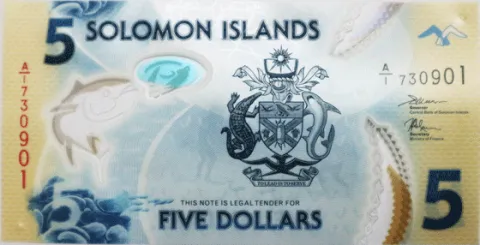
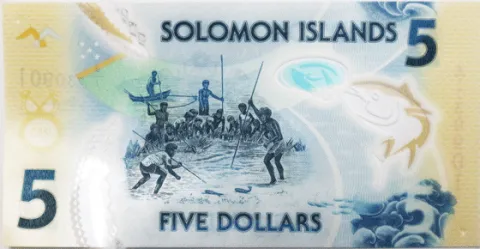
The Archipelago of Oceanian Civilisations (1568-1893)
The First Peoples and Customary Economies
The Solomon Islands' economic history began more than 30 000 years ago with the arrival of the first Austronesian and Melanesian peoples, who developed sophisticated economic systems perfectly suited to the island environment. These traditional societies created complex exchange networks linking the islands to one another and to the neighbouring archipelagos of Papua New Guinea and Vanuatu.
The traditional monetary system rested on several remarkable customary "currencies": the red shells (kakamora shell money) of Malaita, dolphin teeth from Guadalcanal and engraved mother-of-pearl discs used for ceremonies and inter-island exchange. Surprisingly sophisticated, these local monetary systems facilitated trade across hundreds of kilometres of ocean.
The traditional economy relied on tropical agriculture (taro, yams and sago), lagoon and offshore fishing, and sustainable use of forest resources. This subsistence economy nevertheless generated surpluses enabling regular exchanges and the accumulation of wealth in the form of ceremonial objects and social prestige.
Melanesian social structures, based on the "big men" system and hereditary chiefdoms, created complex hierarchies regulating production, exchange and the redistribution of wealth. Still influential today, these systems profoundly shape local approaches to the modern monetary economy.
European "Discovery" and First Contacts
Álvaro de Mendaña officially discovered the archipelago on 7 February 1568 during his first expedition from Peru. He named the islands "Islas Salomón" after King Solomon's legendary gold mines, hoping to find wealth that would finance Spanish expansion in the Pacific. This biblical name reflected the colonial ambitions and Western imagination of the time.
Extreme geographical isolation and hostility from local populations initially discouraged systematic European colonisation. Unlike other Pacific archipelagos, the Solomon Islands remained largely autonomous for almost three centuries, preserving their traditional economic and social systems.
This period nevertheless saw sporadic contacts with European explorers, whalers and merchants. Often violent, these interactions gradually introduced metal tools, firearms and new techniques that slowly transformed local economic balances.
Attempts to establish Christian missions in the 19th century encountered fierce resistance, particularly on the outer islands. This cultural resistance paradoxically preserved traditional economic autonomy longer than in other Pacific territories.
1767 : Rediscovery by Philip Carteret
1845 : First Christian missions
1893 : British protectorate
1978 : Independence
1977 : Creation of the Solomon Islands dollar
The British Protectorate and Colonial Economy (1893-1978)
The Establishment of the Colonial System
The establishment of the British Solomon Islands Protectorate on 28 June 1893 radically transformed the traditional archipelagic economy. Charles Morris Woodford, the first Resident Commissioner, developed a strategy of economic exploitation based on copra plantations and natural-resource extraction, forcibly integrating Solomon Islanders into the Western monetary economy.
The introduction of sterling and British colonial currencies disrupted traditional exchange systems. This forced monetary transition brought colonial taxes that obliged local people to participate in the plantation economy to obtain the Western currency needed to pay them.
The plantation system, developed mainly along the larger islands' coasts, created a dual economy: a modern export-oriented sector (copra, tropical timber and mother-of-pearl) and a traditional subsistence economy maintained in the islands' interiors. This economic duality still characterises the Solomon Islands today.
The large-scale recruitment of indentured workers from neighbouring islands (New Hebrides, Gilbert and Marshall) transformed local demographics and created lasting ethnic tensions. This outside workforce developed the first modern infrastructure: roads, wharves and administrative buildings that facilitated colonial economic integration.
The Pacific War and Economic Transformation (1942-1945)
The Japanese invasion of 23 January 1942 and the Battle of Guadalcanal (7 August 1942 - 9 February 1943) radically transformed the Solomon Islands' economy and society. This traumatic but revolutionary period abruptly exposed the isolated archipelago to the realities of modern warfare and accelerated its integration into the global economy.
The Allied war effort mobilised the local population on a large scale in new economic activities: the construction of airfields, roads and military facilities that created the first extensive modern infrastructure. This participation generated the first significant wages in Western currency for thousands of Solomon Islanders.
Exposure to Western technologies, equipment and ways of life irreversibly transformed local aspirations and expectations. The equal treatment observed between white and black American soldiers challenged colonial racial hierarchies and inspired the first movements for political emancipation.
The almost total destruction of colonial infrastructure required complete reconstruction, offering an opportunity to rethink the territory's economic organisation. This reconstruction relied more heavily on local initiative and prepared the emergence of an Indigenous leadership class.
Towards Independence: The Emergence of an Economic Identity (1945-1978)
Reconstruction and Political Awakening
The post-war period saw a new generation of Solomon Islands leaders emerge, educated in mission schools and experienced in the war effort. These local elites developed an autonomous vision of economic development combining cultural preservation with technical modernisation, conceptually preparing future monetary independence.
The "Maasina Rule" movement (1944-1952) was the first attempt at modern Indigenous political and economic organisation. This syncretic movement combined political demands, cultural revival and alternative economic development projects based on community cooperation rather than colonial exploitation.
This period saw the first local production and marketing cooperatives develop, partly bypassing the colonial system of exploitation. Often repressed by the colonial administration, these cooperative experiments foreshadowed the future independent state's economic policies.
The expansion of formal education and technical training gradually created the local skills needed to manage a modern economy autonomously. This accumulation of human capital formed the foundation for future economic and monetary independence.
Gradual Autonomy and the First National Institutions
The gradual decolonisation of the 1960s-70s brought the progressive transfer of economic responsibilities to local institutions. The creation of the Legislative Council (1960), followed by the Assembly (1974), allowed Solomon Islands representatives to participate in budgetary and monetary decisions affecting their territory.
This period saw the first discussions about national monetary identity. Parliamentary debates revealed a unanimous desire to create a distinctive currency symbolising independence while maintaining close economic ties with Australia, the main trading partner and source of development aid.
The technical expertise needed for monetary management developed through training provided by the Reserve Bank of Australia and the Bretton Woods institutions. This technical cooperation prepared the future staff of the Solomon Islands central bank and guaranteed the future currency's technical credibility.
The economy gradually diversified with the development of forestry, the first modern mining activities (bauxite on Rennell) and an expanding services sector. This diversification created the economic foundations needed to support an autonomous national currency.
The Birth of the Solomon Islands Dollar (1977-1990)
Creating the National Currency
On 24 October 1977, exactly one year before formal independence, the Solomon Islands created its national currency: the Solomon Islands dollar (SBD). This strongly symbolic decision asserted the desire for economic autonomy and marked the culmination of nation-building efforts begun during gradual decolonisation.
Established simultaneously, the Central Bank of Solomon Islands adopted a conservative mandate prioritising monetary stability and the fight against inflation. Inspired by Australian and New Zealand best practices, this prudent approach aimed to establish the new currency's credibility on regional markets immediately.
The initial exchange rate (1 SBD = 1 AUD) reflected the economic parity inherited from the colonial period while symbolically asserting monetary equality with the regional power, Australia. This ambitious parity demonstrated confidence in national development prospects.
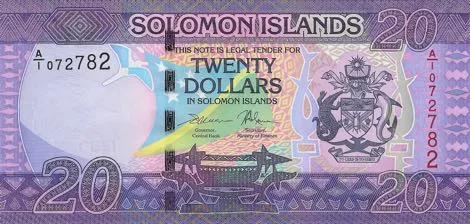
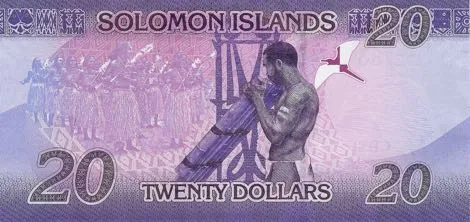
The first Solomon Islands banknotes, with sophisticated designs celebrating the archipelago's cultural diversity and natural wealth, projected the image of a nation proud of its heritage yet open to modernity. The chosen imagery—traditional carvings, endemic wildlife and coral landscapes—asserted a distinctive Oceanian identity.
The Young Currency's Challenges
The Solomon Islands dollar's first years revealed challenges specific to small island economies: volatile commodity prices, dependence on imports and vulnerability to external shocks. These structural constraints required particularly prudent and flexible monetary management.
Exchange-rate policy underwent several major adjustments to maintain economic competitiveness. The devaluation of 1981 (from 1:1 to 1,15 SBD/AUD) marked the first realistic adaptation to economic constraints, abandoning the initial symbolism in favour of economic effectiveness.
This period saw the first local financial markets develop: commercial banks, insurance companies and credit institutions facilitating financial intermediation in the national currency. This emerging financial infrastructure supported local private-sector development.
The real economy benefited from this monetary autonomy to develop specific sectoral policies: support for subsistence agriculture, promotion of traditional crafts and protection of emerging industries against excessive external competition.
| Indicator | 1978 | 1985 | 1990 | Change |
|---|---|---|---|---|
| GDP per capita (USD) | 800 | 650 | 950 | +18,7% |
| Exchange rate (SBD/USD) | 1,0 | 2,2 | 2,8 | -65% |
| Annual inflation | 12% | 8% | 6% | -50% |
| Reserves (months of imports) | 3 | 4 | 6 | ×2 |
Economic Consolidation and Crises (1990-2010)
The Economic Expansion of the 1990s
The 1990s marked a period of significant economic expansion driven by forestry development, modern gold mining and an emerging tourism sector. This economic diversification strengthened the Solomon Islands dollar's stability and improved its international position.
Forestry experienced a spectacular boom with the arrival of Asian investors (Malaysia and South Korea) who modernised tropical timber extraction and processing. This activity generated substantial export revenues that supported the national currency while financing the first extensive modern infrastructure.
Gold mining at Gold Ridge (Guadalcanal island) began in 1998 and temporarily transformed the national economy. The first of its kind in the archipelago, this modern mine generated significant tax revenues and created hundreds of skilled jobs, contributing substantially to national GDP.
This growth brought massive public investment in education, health and transport infrastructure. Financed by natural-resource revenues, this spending improved living conditions and created the foundations for more diversified economic development.
The Ethnic Crisis and Economic Collapse (1998-2003)
The eruption of ethnic tensions between Guadalcanal people and immigrants from Malaita in 1998 plunged the country into a major political and economic crisis that threatened the Solomon Islands dollar's very existence. This "Tension" (the local euphemism for civil war) revealed the structural weaknesses of post-colonial nation-building.
The collapse of the central state caused a dramatic fall in tax revenues and massive capital flight. The Solomon Islands dollar lost more than 40% of its value between 1999 and 2002, moving from 4,8 to 7,2 SBD/USD and illustrating small currencies' fragility in domestic political crises.
The halt in modern economic activity—the closure of Gold Ridge, interrupted logging and collapsed tourism—deprived the state of the resources needed to maintain public services and monetary stability. This massive economic regression called the viability of economic independence into question.
The paralysis of financial institutions and widespread insecurity caused a partial return to traditional exchange systems in rural areas. The resilience of these customary economic structures illustrates their enduring importance in contemporary Solomon Islands society.
A closer look at the banknotes
Reconstruction and Contemporary Challenges (2003-2024)
The RAMSI Mission and Monetary Stabilisation
The intervention of the Regional Assistance Mission to Solomon Islands (RAMSI) in July 2003 marked the beginning of economic reconstruction and monetary stabilisation. Led by Australia, this multinational mission gradually restored public order and the economic institutions needed for a modern economy to function.
Restructuring the central bank and financial system became an immediate priority. Australian and New Zealand technical advisers helped restore institutional credibility and reform monetary policy according to contemporary international standards.
This period saw the exchange rate gradually stabilise around 7-8 SBD/USD, a level more realistically reflecting national economic productivity. This relative stabilisation facilitated the recovery of investment and export activities.
The reconstruction of economic infrastructure—roads, telecommunications and port facilities—benefited from international financing (Australia, New Zealand, the European Union and World Bank), injecting foreign currency that supported the national balance of payments.
Economic Diversification and New Challenges
The post-RAMSI era saw the emergence of a proactive economic diversification strategy aimed at reducing excessive dependence on natural resources. This approach prioritised sustainable development, the use of fisheries resources and the promotion of a blue economy suited to the Oceanian island environment.
The tuna fishing industry experienced remarkable expansion with the establishment of modern processing plants (Noro and Tulagi), creating thousands of jobs and generating significant export revenues. This industry gradually became the nation's leading export sector.
Tourism developed cautiously, prioritising ecotourism and cultural tourism respectful of local traditions. This sustainable approach generated foreign-currency revenues while preserving the exceptional coral environment and authentic traditional cultures.
The emergence of a regional financial-services sector, inspired by the Fijian model, attracted foreign investment and diversified the urban economy. These activities generated skilled jobs for educated young people while reducing dependence on primary resources.
The Solomon Islands Dollar in the Contemporary Economy
Current Position and Economic Performance
Today, the Solomon Islands dollar reflects an economy undergoing gradual reconstruction but facing persistent structural challenges. With GDP of 1,6 billion USD for 700 000 inhabitants, the Solomon Islands maintains a modest but stable level of development, supported by diversified natural resources and an active diaspora.
Stabilised around 8-9 SBD/USD since 2010, the exchange rate reflects an acceptable balance between export competitiveness and domestic purchasing power. This relative stability facilitates economic planning and encourages long-term investment in productive sectors.
The CBSI's monetary policy prioritises price stability and support for economic growth. With inflation generally kept below 5%, this prudent management preserves household purchasing power while maintaining regional economic competitiveness.
Challenges nevertheless persist: strong dependence on imports (fuel, food and manufactured goods), vulnerability to climate shocks and the need to improve productivity to support rising living standards amid dynamic population growth.
The Challenges of Sustainable Development and Climate Resilience
Climate change poses an existential challenge for this small island developing state. Rising sea levels directly threaten several inhabited atolls, requiring substantial investment in adaptation and resilience that weighs on public finances and monetary stability.
Sustainable management of forest and fisheries resources determines long-term economic viability. Necessary for environmental preservation, conservation policies limit export revenues in the short term but ensure resource sustainability for future generations.
The emerging digital economy offers new development opportunities suited to island geography. Investment in modern telecommunications and technical training enables Solomon Islanders to access international services markets without the traditional constraints of maritime transport.
The Solomon Islands diaspora, mainly based in Australia and New Zealand, contributes significantly to the national economy through remittances representing more than 10% of GDP. These financial flows support rural families' living standards and bring valuable foreign exchange into the national economy.
Future Prospects and Development Strategies
Vision 2035 and Structural Transformations
The "Solomon Islands National Development Strategy 2016-2035" sets out an ambitious vision of structural economic transformation aimed at raising the country to middle-income status by 2035. This ambition requires profound reforms and massive investment in human capital and modern infrastructure.
The strategy prioritises economic diversification through commercial agriculture, modern aquaculture, sustainable tourism and light processing industries. This balanced approach aims to reduce dependence on extractive resources while creating skilled jobs for the growing youth population.
Regional integration is a priority, with active participation in Pacific Islands Forum and Melanesian Spearhead Group initiatives. These partnerships facilitate trade, technology transfers and labour mobility that benefit the Solomon Islands' economy.
Modernising public administration and improving economic governance aim to attract more foreign direct investment. Supported by international partners, these institutional reforms create a more favourable environment for business and entrepreneurial innovation.
Monetary and Financial Innovation
The Central Bank of Solomon Islands is actively exploring contemporary monetary innovations: central bank digital currency (CBDC), mobile payment systems and digital financial inclusion. These promising technologies could revolutionise access to financial services on isolated islands.
The development of digital financial services responds to the specific challenges of island geography. Already widely adopted, mobile money transfers reduce transaction costs and facilitate rural populations' inclusion in the formal monetary economy.
Fintech partnerships with regional companies (Australia and New Zealand) provide access to advanced technologies without the prohibitive costs of independent development. This technical cooperation is gradually modernising the national financial infrastructure.
The emergence of local capital markets, although modest, diversifies financing sources for local businesses. These developments reduce dependence on traditional bank credit and facilitate long-term productive investment.
| Sector | GDP Contribution 2024 | 2035 Target | Jobs (thousands) |
|---|---|---|---|
| Agriculture/Fishing | 34% | 28% | 180 |
| Industry | 18% | 25% | 45 |
| Services | 48% | 47% | 95 |
| Total GDP (USD billions) | 1,6 | 3,2 | 320 |
Cultural Identity and the Modern Economy
Balancing Tradition and Modernity
One of the most fascinating challenges in the Solomon Islands' development lies in the relationship between traditional customary economies and modern monetary systems. Far from being conflictual, this coexistence reveals creative synergies that enrich the national economic identity.
Customary land-tenure systems, governing more than 85% of national land, profoundly influence the forms of economic development. Although legally complex to manage, this communal ownership preserves social cohesion and ensures that economic activities remain rooted in their territories.
Traditional crafts are experiencing a remarkable revival through tourism and export markets. Solomon Islands woodcarvings, basketry and ceremonial objects are finding international outlets that give economic value to authentic cultural heritage.
This creative synthesis of tradition and modernity is expressed in contemporary Solomon Islands architecture, which integrates local materials and vernacular building techniques into modern projects. This approach reduces construction costs while preserving distinctive cultural identity.
Participatory Governance and Locally Driven Development
The Solomon Islands development model prioritises community participation and local governance in economic planning. This "bottom-up" approach ensures local ownership of development projects and their social sustainability.
Provincial councils and customary authorities play a central role in allocating resources and defining development priorities. Unique in the region, this decentralisation adapts economic policies to each island's and community's specific circumstances.
This participatory governance facilitates the emergence of local economic innovations: fishing cooperatives, farming groups and community ecotourism initiatives that diversify the rural economy while preserving traditional social structures.
Economic and financial education, integrated into school curricula, prepares younger generations to navigate effectively between traditional and modern economic systems. This hybrid education is a unique asset in the contemporary Oceanian context.
Conclusion: A Dollar at the Heart of an Oceanian Rebirth
The history of the Solomon Islands dollar, from its creation in 1977 to its current position, illustrates the complex but inspiring journey of an island nation seeking a balance between cultural preservation and modern economic development. Born from an Oceanian people's ambition to shape its monetary destiny, this currency now accompanies a society undergoing profound change.
The challenges overcome—ethnic crisis, economic collapse and post-conflict reconstruction—demonstrate Oceanian island societies' exceptional resilience and ability to adapt to external shocks. This historical experience is a valuable inheritance for facing the contemporary challenges of climate change and globalisation.
The Solomon Islands dollar symbolises this search for balance: a modern currency integrated into international financial networks, it coexists harmoniously with traditional exchange systems and accompanies an economy transitioning towards sustainability. This creative synthesis of tradition and innovation may be the principal lesson of the Solomon Islands' experience.
Today, the Solomon Islands looks to the future with cautious but determined optimism. Its geostrategic position at the heart of the South Pacific, its diversified natural resources and above all its rich cultural heritage are valuable assets for building sustainable prosperity respectful of the environment and community values.
The Solomon Islands dollar, the currency of a small island state of 700 000 people, thus carries the ambition of an Oceanian people determined to reconcile cultural authenticity with modern prosperity. In its very modesty, this unique experience offers valuable lessons about alternative paths of economic development in a world undergoing rapid climatic and geopolitical change.
This article draws on the editorial collection supplied in 2025. Figures and descriptions should be read in their original context. About the content